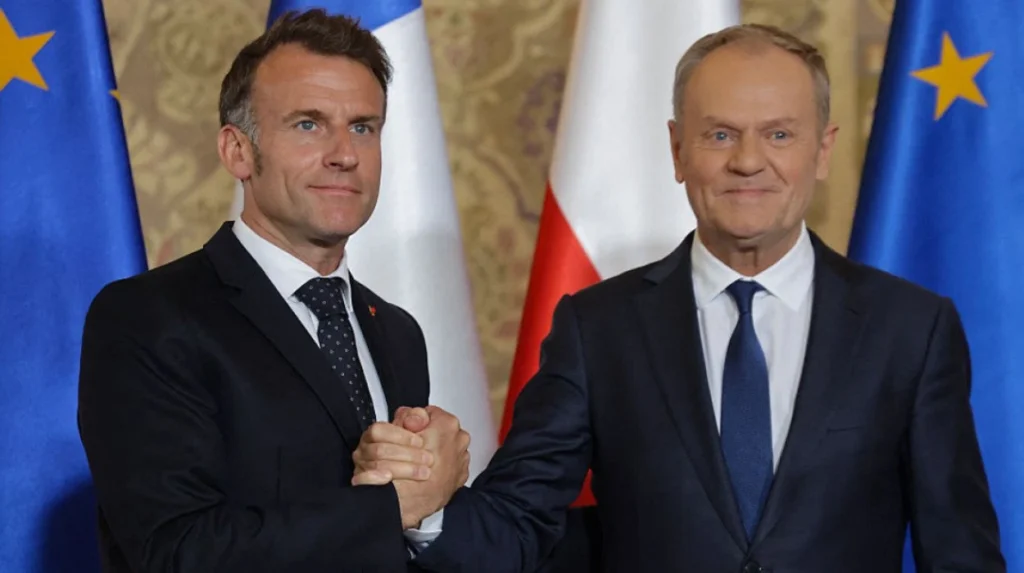
The April 2026 summit between France and Poland in Gdansk is indicative of re-prioritization of European defense in the middle of increased geopolitical uncertainty. The summit facilitated by Emmanuel Macron and Donald Tusk resulted in accords that go further than mere symbolic diplomacy to practical military cooperation. These are developed amidst the ongoing tension between the United States and Russia, and the changing transatlantic relations between the United States.
The results of the summit are based on the 2025 bilateral treaty that will enhance a common understanding that Europe needs to develop greater internal defense mechanisms. Both leaders made statements focusing on sovereignty and resilience, and it was a move into strategic independence without necessarily breaking out of NATO structures.
Historical Foundations of Bilateral Cooperation
Previous defense and intelligence partnerships provided the foundation of this alliance. In 2023 Poland acquired French satellite technology and in 2025 the military coordination was expanded through joint exercises. These measures put in place trust and technical compatibility, which are currently the foundation of the larger goals unveiled in Gdansk.
By the end of 2025, Poland had become an integral part of French reconnaissance systems that offered real-time intelligence of the eastern flank of NATO. This convergence indicates a slow yet a steady movement towards common operating infrastructure.
2025 Developments Shaping the Summit
In 2025, there was a growing call by European leaders to secure long term security. The idea presented by France to seek deterrence talks with European allies was picking up momentum as the threats to the region grew. At the same time, Poland increased the rate of defense expenditure and overcame the past pledges and became a key player in the security in the Eastern region.
These processes came together in Gdansk, where previous pacts were turned into practical structures most notably space and nuclear domains.
Satellite Cooperation as a Pillar of Strategic Autonomy
The satellite arrangement declared at the summit is one of the essential steps on the way to lessening the dependence on foreign intelligence systems. The project has been developed as a partnership between French and Polish defense as it aims at secure military communications and persistent surveillance.
The project is part of greater European endeavors to build autonomous technological infrastructure that can work under the conditions of contention.
Observation and Communications Integration
The proposed satellite network will be employed to supplement the current observation assets forming a dual layer network which will increase the situational awareness. Continuous coverage enables addressing the gaps revealed in the course of the last regional crises and constant monitoring of possible conflict zones.
Interoperability with NATO systems is guaranteed without national control over key data streams. This equilibrium is an indication of strategic orientation that incorporates cooperation in alliances with the sovereign capabilities.
Industrial and Economic Implications
The satellite project has important economic implications besides military benefits. The transfer of technologies and the contribution to local manufacturing makes Poland stronger in terms of its defense industry and more influential in Eastern Europe than France.
The partnership is also in line with the European Union programs that targeted to increase local defense production. Locating these projects in the framework of bilateral agreements, both nations strengthen their positions in the formation of the industrial base in the continent.
Nuclear Deterrence Consultations Expand European Security Debate
Among the most significant outcomes of the summit, there are nuclear deterrence discussions. The readiness of France to consult allies during strategic consultations is an important development to the traditionally isolated nuclear doctrine.
Although France has the monopoly of control over the nuclear assets, the entrance of partners like Poland brings a new dimension to European defense planning.
Macron’s Deterrence Vision and European Outreach
The 2026 plans by President Macron include a structure whereby the allies will play a role in deterring the situation by supporting one another instead of taking control. This contains a capability to give early warnings, missile defense integration, and logistical coordination.
The idea is a move to develop an architecture of European security that augments NATO and the issue of external dependencies. The move is further supported by the fact that France has planned to increase its nuclear weaponry by 2030.
Poland’s Strategic Calculations
In the case of Poland, engagement in deterrence dialogue will bolster its security posture in an area vulnerable to hybrid and conventional threats. The closer to the strategic flashpoints, the more urgent are credible defense guarantees.
The words of the Polish leadership suggest that it wants to build alliances that are able to prevent possible aggression without needless raising of tensions. This would be a balanced approach to national security priorities and wider regional stability.
Geopolitical Implications of Gdansk Summit Signals
The bilateral relations are not the only consequences of the agreements made in Gdansk. They are indicative of a larger change in European defense, in which regional powers assume a larger role in shared security.
This development takes place in a sophisticated geopolitical context due to changing alliances, threats and technological rivalry.
Eastern Flank Reinforcement Dynamics
The increased French-Polish cooperation strengthens the eastern flank of NATO by ensuring better intelligence and communication, as well as deterrence. These are to meet the weaknesses that were realized in the recent conflicts and military exercises.
The coordination of satellite systems and deterrence structures forms a more unified defense posture, decreasing the response time, and enhancing coordination of allied forces.
Multipolar Security Environment
Global security dynamics have become increasingly multipolar, with rising powers expanding their military and technological capabilities. Developments in 2025, including advances in space and missile systems, have intensified competition across multiple domains.
Within this context, the Gdansk summit reflects Europe’s attempt to adapt to a more complex environment. By combining traditional deterrence with modern technological investments, France and Poland position themselves at the forefront of this transition.
Alliance Dynamics and Transatlantic Considerations
The evolving partnership between France and Poland also raises questions about the future of transatlantic relations. While the alliance does not replace NATO, it introduces additional layers of coordination that may reshape existing structures.
This development reflects both pragmatic considerations and strategic recalibration in response to changing global priorities.
Balancing Autonomy and Cooperation
European leaders increasingly emphasize the need for strategic autonomy while maintaining strong ties with the United States. The Gdansk agreements illustrate this balance, combining independent capabilities with alliance integration.
This dual approach allows Europe to respond more effectively to regional challenges while preserving the benefits of collective defense arrangements.
Implications for NATO Cohesion
The expansion of bilateral and regional initiatives within NATO frameworks can enhance overall capabilities but also introduces coordination challenges. Ensuring alignment between national strategies and alliance objectives remains a critical task.
The Gdansk summit highlights the importance of clear communication and shared priorities in maintaining cohesion as new partnerships emerge.
Future Trajectories of European Defense Integration
The outcomes of the Gdansk summit suggest a trajectory toward deeper integration of European defense systems. Continued collaboration in space, nuclear strategy, and industrial development may redefine how security is managed across the continent.
At the same time, these efforts must navigate political, financial, and strategic constraints that could influence their implementation.
Technological Innovation and Military Strategy
Advances in satellite technology, cyber capabilities, and missile systems are reshaping modern warfare. The integration of these elements into national defense strategies requires sustained investment and coordination.
France and Poland’s collaboration demonstrates how technological innovation can serve as both a deterrent and a force multiplier in complex security environments.
Political and Strategic Sustainability
Long-term success depends on maintaining political consensus and securing adequate funding. Domestic considerations, including public opinion and economic pressures, will influence the pace and scope of implementation.
The ability to translate strategic visions into operational capabilities will determine whether the Gdansk agreements achieve their intended impact.
As France and Poland deepen their cooperation through satellite systems and deterrence consultations, the broader implications extend far beyond bilateral ties. The summit reflects a Europe navigating uncertainty with renewed emphasis on capability and coordination, raising questions about how emerging alliances will shape the continent’s security landscape in the years ahead.