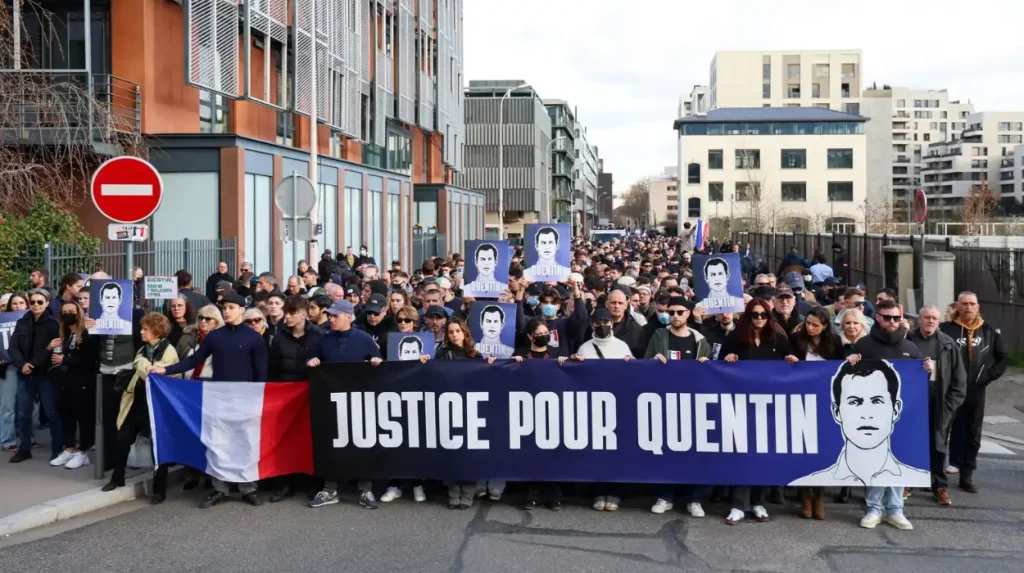
The murder of Quentin Deranque after violent clashes in Lyon has turned quickly into a criminal case to a political hot spot in the country. The confrontations came on the occasion that was called La France Insoumable and involved people who were related to militant activism, including those who had formerly been associated with formations that had been disbanded due to the state intervention. Several murder charges were returned by the prosecutors, an indication that the authorities are to take the case as a serious politically motivated violence, instead of a normal disorder.
This rate of legal reaction indicates the general sensitivity of France to the escalation of extremists following frequent incidences of unrest in the recent past. Governments have been keen to ensure that responsibility will be handed over in the court of law and not by political retaliation. This is to ensure that tensions are contained, but the general discourse has already taken the shift to ideological interpretation.
From Individual Tragedy to Political Symbol
Within a short time, the death of Deranque came to be used as a reference point by nationalist groups. The enormous memorial event in Lyon turned individual sorrow into mass action, which shows how events of street violence can trigger the process of political formation. These trends have escalated in the polarized weather in France whose demonstrations on the streets are mostly ideologically undertoned.
There were vast differences in narrations of the murder. The far-right was used to depict it as a manifestation of left-wing extremism that was allowed to run unchecked, whereas left-wing officials criticized violence but did not want to hold anyone to collective responsibility. This interpretive division supports the larger division that is defining French political debate in which events are more and more being prismed through partisanist opinions.
Government Messaging and Institutional Balance
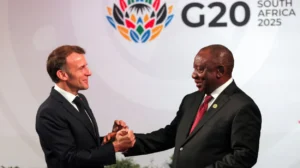
The national leadership reacted by urging people to be calm and should be institutional neutral. President Emmanuel Macron urged moderation, which is indicative of the government trying to avert a situation that may have led to an even more delicate political situation. The focus on the law process rather than political culpability highlights a bid to hold state believability in the presence of conflicting stories.
Simultaneously, diplomatic tensions were a short-term occurrence following the incident in response to external commentary. The French officials opposed the move to globalize the conflict, which indicated that domestic violence cases were to be left under the national jurisdiction. This position supports sovereignty without increasing the borders to heights.
Parliamentary Reaction in Brussels and Procedural Boundaries
Another battlefield was the European parliament where a motion to hold one minute of silence in honor of Deranque was voted down in a plenary session devoted to another geopolitical celebration. Strict rules of the agenda were mentioned, according to which the topic of the session could not be changed. As shown by the decision, institutional processes define the expression of politics in the European Union.
This was pushed forward by the members of the Patriots for Europe group and with the help of allied conservative blocs, and the cross-party alignment between right-leaning representatives. On the one hand, the gesture was perceived as an acknowledgment of political violence by its activators, whereas on the other hand, thematic boundaries should not be breached by the parliamentary authorities. The outcome revealed conflicts between symbolic and procedural politics.
Symbolism Versus Institutional Neutrality
Another common problem of supranational institutions highlighted in the debate is the difficulty in striking a balance between national sensitivities and collective priorities. Elaborating on the issue, the leadership of the European Parliament stressed that there were other unexploited commemoration opportunities that could be discussed during subsequent sessions. This technique emphasizes the observance of regulations and tries not to create the impression of favoritism.
Opponents claimed that refusing the request would be a way of promoting ideological asymmetries. The proponents respond that the increased agenda content in sessions would lead to incoherence and set precedence of politicized interventions. The conflict is demonstrative of the fact that procedural interpretation itself becomes a part of political competition.
Cross-Group Coordination and Strategic Positioning
Coordination between conservative and right-oriented groups on the European level was also exposed in the episode. Attempts to bring the issues of extremist violence to the EU chamber reflect how domestic cases are being used as a part of a larger transnational policy. This kind of coordination is indicative of the rising convergence between parties that may want to discuss security issues on a continental basis.
Left-leaning organizations did not involve themselves publicly over the request, probably because they did not want to magnify the problem. Their restraint implies that they know that symbolic fights can be polarizing when they grow beyond the boundaries of the procedure. This dynamic illustrates how silence may serve as a political tactic in delicate political situations.
Extremism Narratives and Electoral Dynamics in France
In France, the death of Deranque only increased the debate on the subject of political responsibility and safety of the people. The event comes when there is a recalibration of elections with parties positioning themselves before forthcoming elections. Extremely low-level encounters in the streets are likely to influence voter perceptions, especially when they are portrayed as ideological battles.
Nationals have exploited the case to underline the law-and-order appeals, and left-wing parties to condemn it without acknowledging a sense of collective responsibility. These opposing stories strengthen already existing divisions, which complicate the process of compromise. The political environment is thus a threat of becoming even more hardened as actors strive to consolidate their bases.
Dissolved Activist Networks and Ongoing Perceptions
The emphasis has been laid on military groups that have been disbanded by the government within the framework of anti-extremism steps. La Jeune Garde was one of these groups and it had been banned after several violent incidents. Even after its official breakup, political debate still has the impact of the historical associations.
The continuity of such references goes to show the influence of the past organizational affiliations on the current interpretations. Where legal action is taken against certain actors, the responsibility can be seen to be spread in a broader sense by popular conversation. Such disconnect between judicial specificity and political framing is a factor of polarization.
Electoral Incentives and Public Opinion Pressures
The incentives aimed at the far-right and far-left parties are to react vehemently. In the case of nationalism movements, the focus on the victimhood can support insecurity narratives. In the case of left-wing groups, it is imperative to decouple themselves with violence in order to have credibility. These conflicting needs increase rhetorical levels in campaign periods.
Political calculation is also affected by the reaction of the people. Major commemorative events and the press can use them to make local happenings national symbols. Like in the history of previous conflict periods, emotionally charged moments tend to shift the tenor of campaigns, bringing the theme of security and identity in the spotlight.
Broader Institutional Implications Across France and the EU
The two-way reaction of the Lyon judicial system to the parliamentary practices of Brussels proves that local events have begun to overlap with the supranational ruling. The politics of France is in contact with the EU institutional regulations, which form overlapping spheres of discussion. Each of them functions according to different frames, but the political discourse shifts freely between the two.
Extremist violence can only be handled through co-ordinated efforts by the law, political communication and civic participation. Officials need to be responsible and avoid escalation. The symbolic confrontation can easily lead to overemphasis that can only widen the divide, and the symbolic confrontation can be seen as a response that is not connected to the emotion of the people at all.
With judicial processes being developed, they will probably influence the way people perceive accountability and justice. At the same time, the European institutions can re-discuss the issue in subsequent meetings in case of persistent pressure. How much political leaders will strike the right balance between symbolism, procedure, and accountability during such a climate, characterized by ideological fragmentation, will determine whether or not the incident is a catalyst to renewed dialogue or increased polarization.