The United States declared that it would refuse the visa of the Palestinian Authority President Mahmoud Abbas and more than eighty top officials in Palestine, in effect barring their attendance at the United Nations general assembly in New York. This move, just justified by the US State Department as a security against actions, was disguised as a reaction to the Palestinian Authority in breaching obligations under previous peace models and its actions to pursue unilateral admissions of statehood at international courts, including the International Criminal Court and the ICJ.
The action has attracted universal condemnation, not only due to its tendency to hamper the role of an observer state in the United Nations, but also due to the fact that the action violates decades of precedents and commitments as stipulated in the 1947 UN Headquarters Agreement. The decision of the US by invoking national security without producing any new public evidence of threat posed legal and diplomatic issues concerning the host country duties to ensure that all accredited delegations have equal access to UN bodies.
The ban also coincides with a time of diplomatic stress on the Gaza conflict, and more than 35,000 civilian victims have been reported since October 2023, which stimulates a new examination of the international law framework and diplomatic dialogue as the conflict resolution tool. The silence of senior Palestinian voices in the General Assembly takes a major stakeholder out of multilateral discussion at a bad time in Middle East diplomacy.
France’s response and affirmation of diplomatic norms
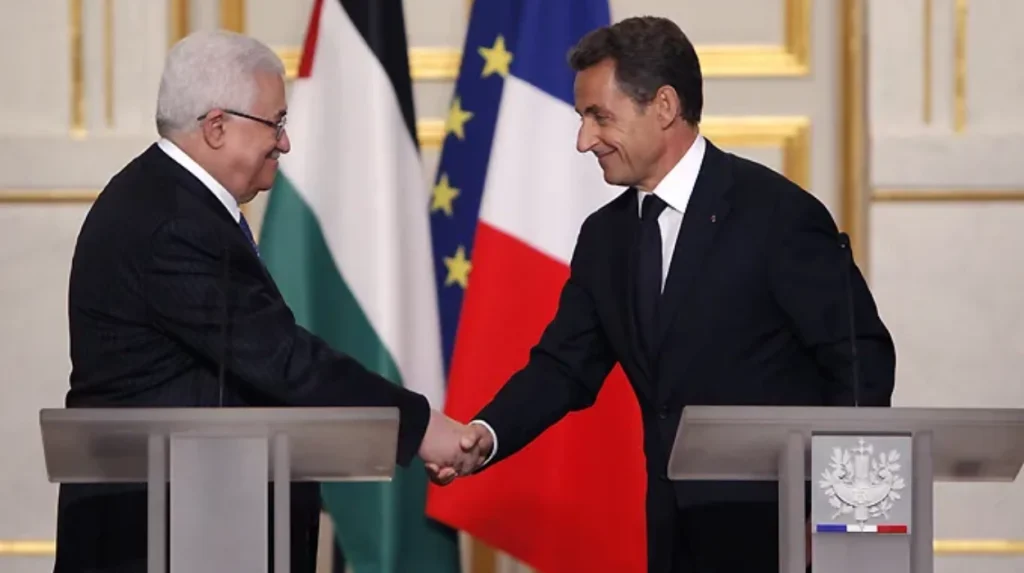
France was one of the first allies of the US to publicly criticize the visa ban. The Foreign Minister Jean-Noel Barrot reiterated the adherence of France to the rules of international diplomacy by stating that the UN General Assembly should not be closed to any delegations regardless of bilateral disagreements. French diplomats underscored that shutting down the Palestinian delegation destroys international processes that are meant to help dialogue and not hinder it.
President Emmanuel Macron feared limiting Palestinian involvement would only embolden unilateralism and undermine institutions which are already facing a decline in global legitimacy. He said that the most effective way of achieving regional stability has to involve communication to all actors with the inclusion of those that the US or any other considers politically inconvenient. The procedural insistence of France has been in line with its traditional promotion of multilateralism and rights of stateless or underrepresented people to participate at the UN level.
Alignment with broader European sentiment
The posture of France has taken root in the European Union. Spain, Ireland and Luxembourg all issued statements expressing criticism of the exclusion and the EU External Action Service underlined the need to respect the UN Headquarters Agreement. These governments consider the right to access to the proceedings of the UN as the basis of diplomacy, particularly in dealing with the long-running conflicts such as that between the Israelis and the Palestinians.
UN Secretariat spokesperson Stephane Dujarric confirmed that the UN has officially asked Washington to clarify to it on the visa refusal. Past experience has been an option of moving UN meetings where restrictions imposed by host countries are considered to act as a deterrent, in a case in point, a 1988 General Assembly session in Geneva was convened to host an expelled Palestinian delegation. Advocates who insist on contingency measures in the event of the US remaining inflexible have mentioned these historical touchpoints.
The legal framework and consequences for Palestinian diplomacy
The United States as a host country is bound by the 1947 agreement between the United Nations and the host country United Nations Headquarters Agreement to admit the representatives of the UN member and observer states. The exemptions can be granted only in the situations of verifiable and particular threats to national security, which are to be considered with openness. Lawyers and diplomats have noted that refusing a wide group of Palestinian officials without publicly recorded reasoning puts a stretch on the believability of this exemption and it could be incompatible with the principles underlying the agreement.
Since the permanent Palestinian Mission to the UN is still active, as its representatives are already accredited and headquartered in New York, the refusal of President Abbas and major leaders to participate in a large-scale global summit restricts the ability of Palestinian leaders to participate in direct negotiations, high-level meetings and side events as a diplomat. Such instances tend to be decisive in relation to coalition-building and the promotion of peace initiatives under the UN mechanism.
Disruption of the Palestinian diplomatic agenda
The dates of the visa rejections are also associated with attempts by some countries to declare Palestinian statehood and to develop resolutions concerning humanitarian access in Gaza. The Palestinian delegation becomes deprived of the both symbolic and practical ability to impact these talks with the absence of President Abbas. A number of proposals of draft resolutions such as the one offered by Norway and Chile on the formation of an international monitoring mechanism of the Gaza aid corridors, can now be advanced without the full participation of the Palestinians.
The Palestinian representatives have termed the US move as a breach of the international order since their marginalization cripples the peace negotiations and goes against the inclusive mandate of the UN. These issues have been reflected by the advocacy groups who have cautioned that such silencing of key diplomatic voices not only sabotages the peace process, but the architecture of rights-based global governance.
Implications for Middle East diplomacy and multilateral forums
The response of France to the visa ban can be described as the extension of its larger policy of strengthening the independent position of the European voice on Middle East issues. During the last one year, France has been at the forefront in the EU to issue arms embargo to those parties that breach humanitarian law in Gaza and request a rejuvenated support to UNRWA following a suspension of funds by some donor nations. France in its support to Palestinian accessibility to global institutions is indicative of a desire to confront Washington where it is needed to protect multilateral processes.
According to the observation of diplomats, Paris is interested in strategic balance within the region. By stressing that it supports the right of Israel to defend itself, France has severally insisted on the need to be proportionate, follow the humanitarian principles and incorporate the views of the Palestinians in determining the future order of affairs. This two-sided strategy is not merely positioning in terms of morality but it is also an acknowledgement of the practical concern that lasting peace needs believable involvement on both fronts.
Broader ripple effects on international institutions
A move by a host country (UN) to reject entry into an established observer country may establish a disturbing precedent. Analysts caution that such similar exclusions on political grounds may occur in future sessions and this erodes confidence in the impartiality and availability of the UN system. In case exceptions are politicized, nations might not be willing to enter into good-faith dialogue, undermining the peaceful means of solving conflicts.
This individual has already said on the subject, that the hard-line position adopted by France is not so much about showing the flag as it is about supporting the norms of procedure when trust and legitimacy in international institutions are being challenged. The relentless campaign in support of Palestinian involvement, particularly resisting allied action, is based on a belief in world rule of law and participatory diplomacy:
🇺🇸🇺🇳🇵🇸The US decision to deny visas to Palestinian representatives ahead of the UN General Assembly is deeply regrettable and a blow to diplomacy.
— Maxime PREVOT (@prevotmaxime) August 29, 2025
At a moment when there is a renewed momentum towards a two-state solution — with concrete commitments being made and international…
As global politics becomes increasingly polarized, ensuring inclusivity within international forums will be critical to navigating future crises. France’s defense of Palestinian representation may well influence how institutions interpret host country responsibilities and could catalyze further discussions on safeguarding access for politically marginalized groups.
The events surrounding the 2025 UN General Assembly reveal growing fractures in how global diplomacy is conducted and who gets a seat at the table. France’s proactive stance not only elevates the question of Palestinian rights but also calls into focus deeper issues regarding the credibility, consistency, and fairness of the international system itself. Whether other powers follow France’s lead in defending inclusivity over convenience will shape the future relevance of multilateral diplomacy.