The shadow diplomacy of France has reclaimed Paris as a pertinent, albeit an indirect, party in the mediation of conflict in the Middle East, especially in the April 2026 Israel-Lebanon ceasefire deal. As formal negotiations were driven largely by the United States, French diplomatic activity served as a parallel process, influencing terms that facilitated dialogue without having the central negotiating position.
This strategy is an indication of a calculated response to the changing geopolitical reality. As Israel and regional security structures continue to have a primary stake in Washington, France has re-established itself as a preparatory and facilitating participant, making an investment in relationship-building and pre-negotiation preparation. France has stressed that visibility is not always the key to influence, and their role is to facilitate results, not to dictate them.
Pre-negotiation groundwork and Lebanese engagement
The most noticeable example of France practicing shadow diplomacy is its long-term involvement to the Lebanese political leadership before the ceasefire. French officials fostered the discussion within the disorganized political system of Lebanon, trying to bring together the major players on the possibility of de-escalation and structured negotiations.
This preparation offered a diplomatic translucent zone between local facts and official negotiation models.
High-level Lebanese consultations
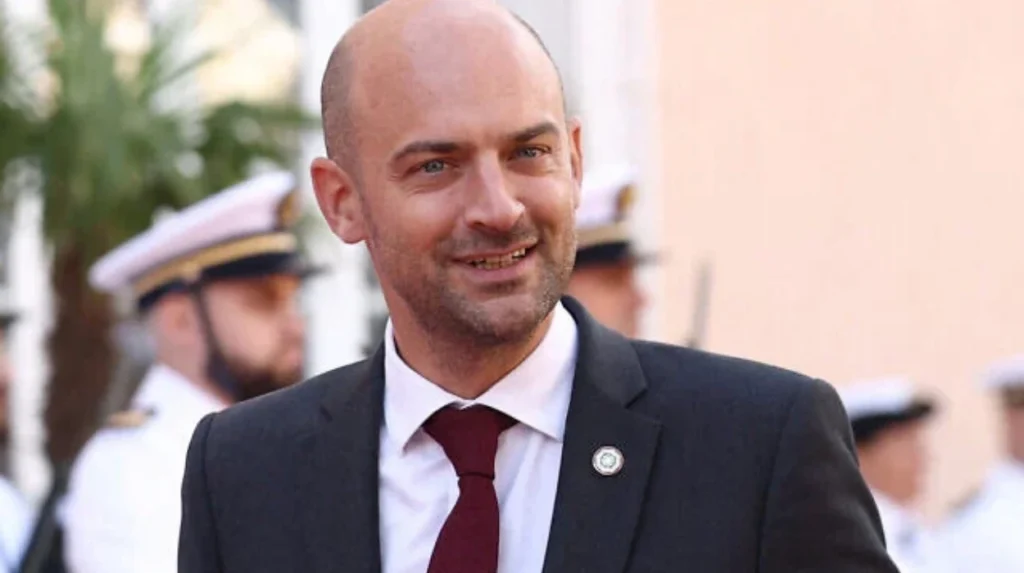
The President Emmanuel Macron and the Foreign Minister Jean-Noel Barrot kept in close contact with the Lebanese leaders, among them President Joseph Aoun and Prime Minister Nawaf Salam. These talks aimed at making Lebanese open to channels of negotiations and the necessity of institutional stability.
French diplomatic messages repeatedly highlighted the dangers of fragmentation of the state, and the work of ceasefire was seen as a necessity not only to the security of the region but to the political integrity of Lebanon.
Preparing the ground for indirect negotiations
French officials suggested that Lebanese counterparts signaled willingness to indirect or mediated participation with Israel under certain circumstances. These messages were sent before the April 2026 ceasefire, and it helped to create a diplomatic atmosphere favourable to a compromise.
Though France was not literally at the negotiation table, this preparatory work placed Paris as one of the facilitators of dialogue.
Context of escalation and 2025 conflict trajectory
The shadow diplomacy of France should be viewed in the context of increased hostilities in late 2025 and early 2026. The clashes between Israel and Hezbollah intensified greatly to include cross-border battles that led to the displacement of many people and destruction of infrastructure in southern Lebanon.
The magnitude of violence brought urgency and opportunity to diplomatic intervention.
Post-2025 escalation dynamics
Israeli military activities increased in intensity, after the collapse of the previous truce agreements, attacking what it termed Hezbollah infrastructure. Lebanese officials said there was massive civilian casualty, with hundreds of thousands displaced as of early 2026.
This increase brought into focus the shortcomings of past ceasefire initiatives and the necessity to initiate fresh diplomatic initiatives.
Revival of international mediation frameworks
The April 2026 ceasefire was based on previous diplomatic precedents, such as the enforcement principles of the United Nations Security Council Resolution 1701. France contributed to the revival of the discussion on compliance tools, especially relating to the placement of Hezbollah, in relation to the Litani River.
Such attempts are indicative of continuity in the long history of French involvement in Lebanese security arrangements despite new trends in the wider negotiation framework.
Diplomatic positioning and limits of French influence
The shadow diplomacy of France shows the continuity and the limitation of the role of the country in the region. Although Paris has had historic relations and networks in Lebanon, it is progressively mediating its influence with the coordination with the greater powers, especially the United States.
This was the duality of the present stage of French foreign policy in the Middle East.
Emphasis on dialogue and multilateralism
French officials have always held that sustainable ceasefires cannot be enforced, but they must be the result of inclusive dialogue. Barrot has emphasized the need to have either direct or indirect communication lines between Israel and Lebanon as a means of averting further escalation.
This stand is consistent with the overall French philosophy of diplomacy, which emphasizes on multilateral involvement and negotiated outcomes.
Structural limits in a US-dominated framework
In spite of its endeavors, France is a geopolitical environment where the United States is still the key actor in security arrangements with Israel. This fact restricts the capability of Paris to influence the results on its own.
Therefore, French diplomacy is a kind of supplementary force, which helps in sustaining the larger efforts, but attempts to secure its own significance.
Stakeholder responses and regional dynamics
The shadow diplomacy of France has had mixed reactions on the part of regional actors as it has raised different expectations and priorities. French involvement has been mostly embraced by Lebanese leaders, and seen by Israeli and other interested parties in a more pragmatic perspective.
These responses underscore the intricate nature of diplomacy, perception, and strategic interests.
Lebanese political alignment with French efforts
Lebanese officials have expressed support for French mediation initiatives, viewing them as a counterbalance to more security-focused approaches. Prime Minister Nawaf Salam has acknowledged the importance of coordinated efforts involving both France and the United States.
At the same time, Lebanese political actors remain cautious, emphasizing the need for guarantees against continued violations and sustained international support.
Israeli and non-state actor perspectives
Israel has given more attention to the issue of security in the framework of the ceasefire and has concentrated on enforcement and deterrence. French diplomatic work is seen as subordinate to US-directed ones that have more operational significance.
The Hezbollah and other allied groups have also expressed issues of violations and asymmetries of enforcement which highlights the vulnerability of the ceasefire environment.
Oversight mechanisms and reconstruction diplomacy
The shadow diplomacy of France goes beyond the facilitation of ceasefire to post-conflict control and rebuilding strategies. Paris has attempted to institutionalize its part by observing mechanisms and economic assistance pledges.
These initiatives are geared towards ensuring that diplomatic activities translate to real results on the ground.
Monitoring and compliance structures
France has been favorable to the formation of oversight committees that check compliance to ceasefire conditions and the UN resolutions. The mechanisms are aimed at enhancing transparency and accountability, but their success relies on collaboration among all parties.
Monitoring is a sign of acknowledging that ceasefires need to be managed and not to be brokered as a single instance.
Reconstruction and economic engagement
The French authorities have also promised to host global conferences that aim at restoring the infrastructural facilities of Lebanon and empowering its institutions. These programs are aimed at countering underlying weaknesses causing instability.
France has tried to consolidate its position by tying diplomacy to economic assistance, which will make it a long-term ally in the recovery of Lebanon.
Broader implications for European and regional diplomacy
The shadow diplomacy of France shows changing trends in the European involvement in the Middle Eastern conflicts. With the change in traditional power relations, European states are becoming more and more flexible and indirect in keeping influence.
This tendency represents not only the strategic necessity but the adaptation of the institutions.
Sustainability of shadow diplomacy models
The effectiveness of shadow diplomacy depends on its ability to produce measurable outcomes while maintaining credibility among stakeholders. If successful, it could provide a template for engagement in other regions where direct influence is limited.
However, the model also carries risks, including reduced visibility and dependence on the priorities of more dominant actors.
France’s shadow diplomacy in the Israel-Lebanon ceasefire process reflects a nuanced recalibration of influence, where presence is defined less by formal participation and more by the ability to shape conditions behind the scenes. As regional conflicts continue to evolve and multilateral frameworks face increasing strain, the durability of such indirect approaches may depend on whether they can consistently bridge the gap between diplomatic intent and on-the-ground realities in an increasingly fragmented geopolitical landscape.