The changing nuclear policy of France indicates a subtle shift of the traditionally autonomous deterrence stance of this nation to the more cooperative European security policy. With politics under Emmanuel Macron since 2025, policy indications since then have indicated that Paris would be open to consider longer strategic assurance to a small number of its allies without explicitly weakening national dominance over its nuclear portfolio.
This shift is anchored in the overall change of the threat environment in Europe after the war in Ukraine and further conflicts with Russia. The French recalibration is not a dogmatic restructuring of thinking but a strategic change that aims at enhancing credibility in deterring where NATO mechanisms have been seen as slow or politically strained.
Operationalization Through Joint Exercises
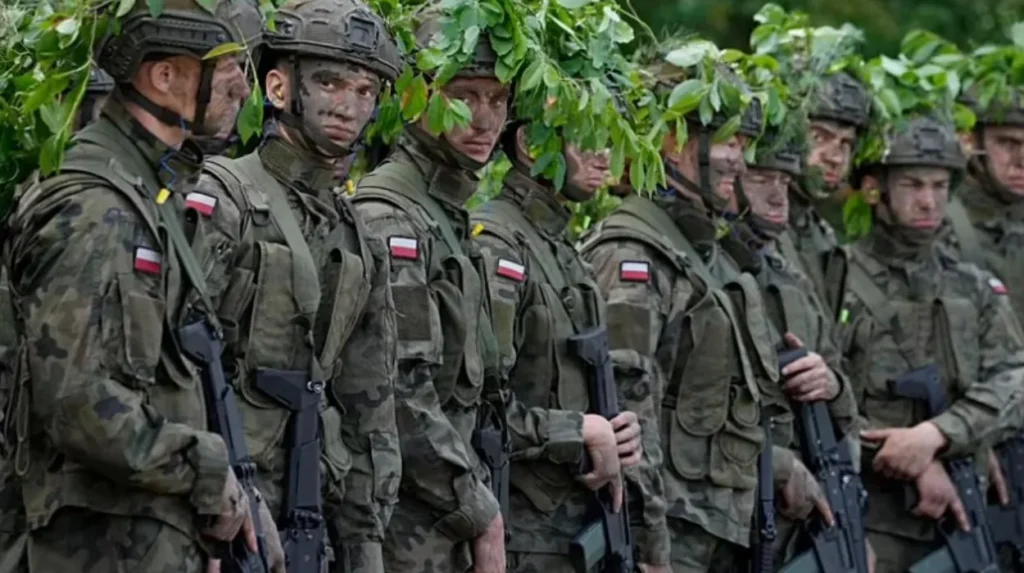
By 2026, the conceptual twist of France has been achieved with the joint exercises with Poland. These involve simulated nuclear-capable operations of Dassault Rafale aircrafts, which is an indication of preparing without the agreement of extending a guarantee under a treaty.
The purpose of these exercises is two-fold; therefore, enhancing interoperability and conveying deterrence resolve. Although officially, they are defensive maneuvers, due to being close to the strategic periphery of Russia, they are driven to a higher level of geopolitical importance.
Strategic Autonomy And European Defense
The policy of France also corresponds to its decades-long espousal of European strategic independence. By establishing itself as a supplier of nuclear-supported deterrence, Paris strengthens its roles in the forming European security structure.
Achieving this dynamic can be said to represent 2025 discussions in the European Union regarding decreasing dependency on external security assurances, especially when there is uncertainty in transatlantic political commitments.
France’s Nuclear Umbrella And Poland’s Security Calculus
The French nuclear umbrella prospect fits squarely in the security interests of Poland; which is influenced by geographical, historical, and emerging regional threats. The response of Warsaw in defense is becoming more indicative of seeking layered deterrence schemes beyond conventional alliances.
This newfound orientation towards France is not only creating strategic reassurance but also new twists to the defense planning in Poland.
Poland’s Strategic Vulnerabilities
The closeness and the position of Poland to both Russia and Belarus has positioned the country on the eastern flank of NATO. In 2025, with further intensification in operations in and around Kaliningrad and a deeper use of hybrid operations in Eastern Europe, concerns on the rapid escalation were reinforced.
Although NATO offers a mutual defense mechanism, Polish policy makers consider it necessary to build up extra layers of deterrence. The intervention of France provides a nuclear angle that supplements the conventional and allied capacity that exists.
Diversification Beyond NATO Structures
The French-Polish inter-operability goes slightly beyond the informal NATO arrangement. This is indicative of a wider European move towards flex flexible, bilateral security structures aimed at being quicker to respond to crises.
This diversification adds strength to a system but it also brings about overlapping command behaviours. Various deterrence models can enhance credibility, but they have the danger of deciding the coordination in high stress situations.
Deterrence Logic Versus Escalation Risks
The most important strategic paradox in a French nuclear umbrella in Poland is the very notion that the steps aimed to enhance the deterrent effect may also pose a significant risk of escalation. This binary determines a lot of recent European security policy.
Capability does not only define effectiveness of deterrence, but also perception; therefore the interpretation of such actions is quite crucial.
Reinforcing Credible Deterrence
According to proponents, these open displays of nuclear-capable deterrence will increase certainty and make enemies less likely to push the limits of their weapons development. The rationale is based on the post-2014 strategy of forward presence and responsive drills, employed by NATO.
Incorporating Poland into this sort of signaling makes France have a more credible deterrence on the eastern flank. The goal is to avoid one making a wrong calculation by explicitly sharing possible ramifications of aggression.
Russian Perceptions And Counter-Signaling
In Russian eyes, such developments are generally packaged in provocative terms. By 2025 and 2026, such exercises will be described by Moscow as the manifestations of the Western encirclement.
This interpretation is twofold, forming a loop of feedback. What might be seen as defensive, in Paris and Warsaw, in Moscow would pass as offensive, and vice versa, leading to countermeasures that create both distrust and suspicion.
Escalation Thresholds And Strategic Ambiguity
The French nuclear umbrella in Poland creates this tint of ambiguity which is arming in the sense that it is strategically useful and one that may trigger instability. This type of arrangement does not have well-established operational thresholds as in the formal alliances.
This uncertainty complicates adversarial calculations and increases uncertainty in times of crisis.
Absence Of Formal Trigger Mechanisms
France has not set out publicly any situation in which it would offer nuclear deterrence to Poland. This intentional ambiguity improves flexibility, but diminishes predictability.
In a case of hybrid warfare or limited attacks, it is especially difficult to define the level of defenses that should be resorted to. Ambiguity can prevent escalation, yet it can also enhance the chances of misreading.
Crisis Signaling Challenges
In the crisis, signaling intentions is essential. France could work up its attitude in drills, or in ardor, and Russia could retaliate by making its own troops more ready.
Absence of common interpretive schemes leads to misunderstanding of such signals. This is particularly dangerous with the tight schedules of the contemporary conflict, in which the effective communication becomes very important and challenging.
Institutional Tensions Within NATO
The French-Polish set up indicates larger institutional transformations in European security systems. Although NATO still holds a center stage, other structures are coming up in tandem with it.
All these parallel dynamics bring both agility and complexity to the dynamics of the alliance.
Parallel Deterrence Architectures Emerging
Bilateral and mini-lateral are on the rise as states pursue quicker decision making modalities. This is the case with the initiative by France in Poland, which is being more liberal on the model of deterrence.
Nonetheless, such structures may coincide with the command structures of NATO, which generates possible coordination difficulties in crisis situations.
Implications For Alliance Cohesion
NATO is concerned by some of its members that independent deterrence arrangements may water down the alliance cohesiveness. Leadership roles and escalation pathways may be obscured by the presence of numerous nuclear signaling channels.
Meanwhile, these programs can enhance general deterrence with redundancy. The trade-off between cohesion and flexibility is one of the challenges.
Strategic Narratives And Public Perception
Deterrence is also a construction of the narratives and perception of people: it is not purely a military phenomenon. The French-Polish arrangement shows that various audiences perceive the same policy in a contradictory manner.
These stories affect domestic and foreign response.
Diverging Domestic Narratives
The policy in France is expressed as a responsible input to European stability. The administratures underline restraint and defensive character of nuclear deterrence.
In Poland, the story is based on the need to feel secure. The rhetoric is indicative of a more nuanced approach towards more forceful methods of deterring- something, through which perceived victimhood is being addressed.
External And Regional Reactions
In other countries, the meaning is different. Russia accounts depict the arrangement as a pushy one, whereas other European nations strike a balance between reassurance and the risk of escalation.
Societal opinion is very important in supporting such policies. Political support can deteriorate over time in case deterrence is perceived to make us more vulnerable instead of more secure.
The Path Ahead For European Deterrence Stability
France’s nuclear umbrella over Poland represents a significant evolution in Europe’s security landscape, reflecting both adaptation to emerging threats and experimentation with new deterrence models. It underscores a broader shift toward flexible, multi-layered security arrangements that operate alongside traditional alliances.
The long-term impact of this approach depends on how effectively Europe manages the interplay between deterrence credibility and escalation control. As signaling becomes more complex and institutional boundaries blur, maintaining strategic clarity will be essential. Whether this evolving architecture enhances stability or introduces new risks will hinge on the ability of policymakers to align capability, communication, and coordination in an increasingly unpredictable security environment where even carefully calibrated deterrence measures can reshape the thresholds between caution and confrontation.