In July 2025, long-term consequences were passed by the National Court of Asylum Law (CNDA) of France: Palestinians of Gaza can now be accorded full refugee status due to persecution by group rather than peril to a person. Such growth of asylum law has placed France back squarely in the European refugee protection debate and the rest of Europe under the spotlight of the migration policy. It is not only the ruling, but a precedent, or rather exceptional case, because, on the one hand, the humanitarian situation in Gaza has been getting worse, and on the other hand, there has been a political litmus test to consider.
Reframing Refugee Protections in a Time of War
From Subsidiary to Full Refugee Status
Historically, France granted Palestinians from Gaza only subsidiary protection, a status providing temporary residence but limited rights. The CNDA’s new ruling changes that. It declares that Palestinians from Gaza face systemic threats based solely on their nationality, rendering individual persecution claims unnecessary.
This classification draws from the 1951 Geneva Convention but applies it more expansively. By recognizing the shared ethnic, political, and territorial identity of Gazans as a basis for persecution, the court introduces a shift in legal reasoning that may echo across other European jurisdictions.
The Legal Justification and Implications
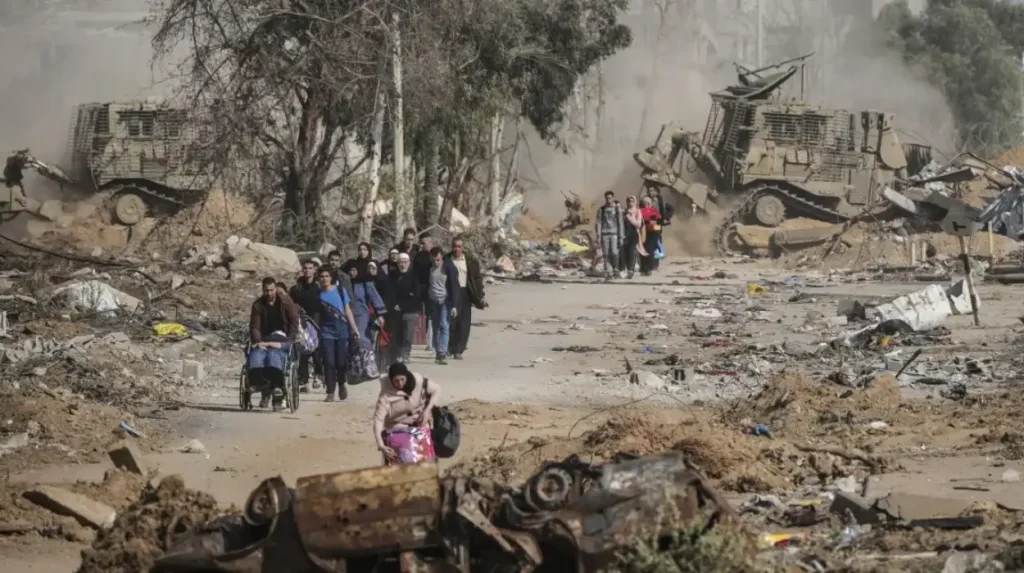
The court cited consistent, targeted violence in Gaza as constituting “acts of persecution of exceptional intensity.” References included ongoing IDF operations, widespread civilian casualties, and the collapse of healthcare and basic services. While France has not formally recognized a Palestinian state, the court’s interpretation bypasses diplomatic recognition and focuses instead on humanitarian realities.
This entitles eligible Gazans to a 10-year renewable residency permit in France, access to social services, and eventual naturalization options—rights previously inaccessible to most Palestinian asylum seekers.
Humanitarian Justification vs Political Fallout
Support From Rights Organizations
Advocates of refugees welcomed the decision as the first recognition of the humanitarian disaster in Gaza. Non viagra online granting agencies like the La Cimade and the French Human Rights League have maintained that it is in line with the European legal requirements and it gives dignity to the displaced Palestinians long languishing in a legal gray area.
To many, it is seen as the moral position in the face of the disunity in international reactions that had failed to match the seriousness that has characterized reactions to Gaza through long-term aid. It represents transition between emergency relief to long term resettlement which is an offer of protection.
Rising Domestic Backlash
But the French political reaction has not been universally favourable. According to the right-wing parties, the decision became known as a “migration madness,” predicting new flows of asylum seekers and emphasizing worries about national security and cultural unity. The National Rally headed by Marine Le Pen criticized the government that it did nothing to guard the French borders and the court had “opened the gates without debate.”
The July 2025 social media conversation was characterized by the growth of discussion of the ruling with reference to more general fears about identity, integration and social welfare ability. The government has rushed to point out that the ruling cannot be used to file offshore applications but only applies to Gazans who are already in French territory.
Europe’s Mixed Signals on Gaza and Migration
EU Reactions and Legal Implications
The ruling given by the CNDA may affect the asylum case law in the whole EU. The European law gives each of its members the freedom to decide on their own conditions of refugee status as long as they are determined through the Geneva Convention. Nevertheless, French collective acknowledgment of Gazans spells a legal and a political divergence with the existing EU standards.
France is the first country that responds to the Palestinians challenge to other EU members as Germany and the Netherlands still offer very little protection, which, however, is bound to make other member states reconsider their positions due to the new dynamics of the conflict and enforced displacement.
France’s Asylum Diplomacy and Bilateral Tensions
France is also navigating new asylum diplomacy with the UK. Under a joint “returns protocol,” France has increased deportations of irregular migrants arriving from British shores. However, its judgment on Gaza seems to be to make exceptions on humanitarian grounds, this being a two-tract approach, limiting economic departures, but broadening humanitarian rights.
Such a dichotomous solution might intensify the polarization in the EU, as the border control and the policy toward the refugees become more and more politicized. The French leadership of Gaza refugees can create a precedent in the legal field but could also stir a wave of opposition among countries fearing secondary migration.
Impact on Refugees and French Society
A Lifeline for the Displaced
The CNDA decision spells a new dawn to thousands of Gazans, who are in legal limbo living in France. It grants the legal status needed to utilize health care, education, and work without overhanging fear of deportation. The refugees who could not afford permanent dwelling or official employment can find a way of legal adjustment now.
As lawyers in the case explain, a great number of Gazans in France did not even enjoy basic protection status, in most cases, due to their status as stateless persons or as dependents of UNRWA, which should not form part of the traditional asylum framework.
Integration Challenges and Institutional Readiness
Still, recognition does not automatically ensure inclusion. Cultural integration, language acquisition, and employment remain significant hurdles. France’s underfunded asylum system already struggles with backlog and resettlement support. If refugee numbers increase, public services could face additional strain.
There are these doubts regarding the Macron administration which promises to invest in the integration infrastructure. Some municipalities in places such as Marseille and in Seine-Saint-Denis, where most of the asylum seekers find homes, have expressed opposition over their capacity to cater especially in houses and education.
This non-individualist vision is adopted in the CNDA ruling, where it is clearly understood that a population, not an individual person, is being targeted in the contemporary conflicts.
Legal and Moral Boundaries in International Refugee Law
Sovereignty vs International Obligations
France’s judiciary has asserted independence from political constraints, aligning asylum practice with international law rather than national mood. Yet, this creates friction with a government caught between upholding human rights and maintaining domestic support.
Interior Minister Gérald Darmanin emphasized that
“France will continue to control its borders”
but acknowledged the judiciary’s decision must be respected. The balance between humanitarian principles and migration control remains fragile.
Redefining Persecution in Modern Conflict
The Gaza case reflects a broader evolution in how persecution is defined. Traditional refugee frameworks often hinge on proving personal threat.This renaming may have secondary consequences to those attempting to seek asylum in Syria, Sudan, or Yemen- conflict areas where there may be collective rather than individual risk and where populations who have arguably been the most persecuted despite often failing to meet definition of refugee protection in narrow legal terms.
Such an individual has already covered the consequences of such a decision in a discussion dealing publicly with the implications that this decision entails both legally by recognizing the vulnerability of groups and more so, the administrative and political clash that will ensue.
🚨🇫🇷 BREAKING: France opens its doors to GAZA residents, offering refuge amid what it calls Israel's "INHUMAN" actions. A lifeline for the desperate will the world follow?🇫🇷🤝🇵🇸#Macron #France pic.twitter.com/MVJb0V6Wee
— Mansoor Dhillon 🇵🇸 (@MansoorDhillon_) July 15, 2025
As Europe Watches, France Sets a Precedent
France’s Gaza refugee policy may soon become a defining moment for both asylum law and political identity in Europe. The decision covers the distance between legal obligation and human suffering but does not answer those agonizing questions of scale, resources and popular agreement.
France appreciates the situation in Gaza as an international law persecution, which relieves not only thousands of people but also compels the neighbors to re-examine whether their current asylum systems still reflect the truths of modern world warfare. The question is no longer just how to offer refuge, but whether Europe’s political institutions are willing to uphold that refuge amid rising nationalism and fragmented solidarity.
As the dust settles on this landmark decision, all eyes will be on its implementation—and whether France’s example becomes an exception or a new European standard.