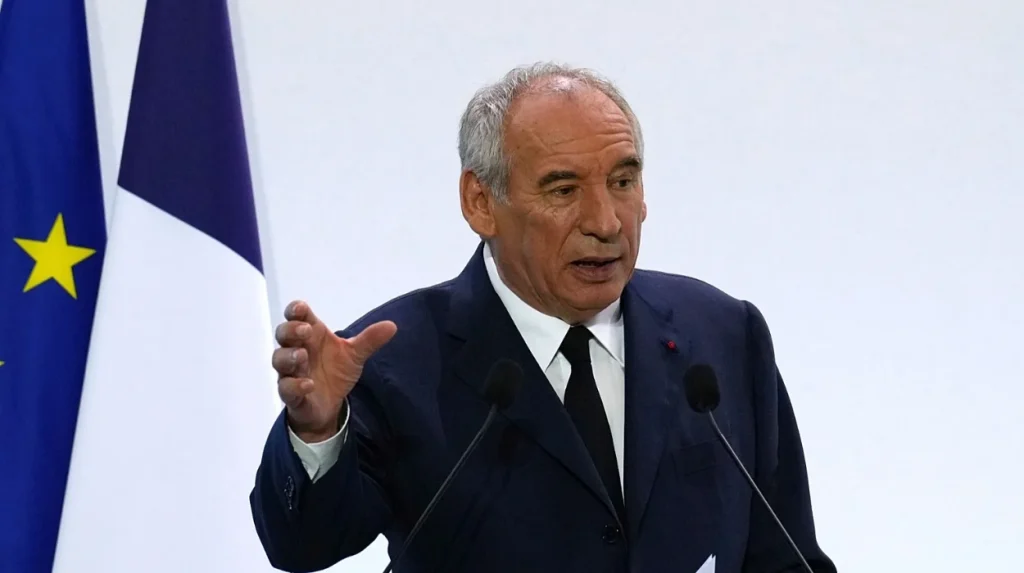
The removal of Prime Minister Francois Bayrou in September 2025 has launched France into a period of deep political instability. Bayrou lost a vote of confidence in the National Assembly by a vote of 364 to 194 after just nine months in office, becoming the fifth prime minister to lose such a vote since the election of President Emmanuel Macron to start his first term in 2017. That this history of short-lived government tells not just of leadership instability, but of fundamental structural problems in French democracy, legislative unity and national control in a time of economic and social insecurity.
This is even complicated by a fractured parliament, austerity backlash among the people and lack of political majority to anchor reforms. The political future of France, which is becoming more and more volatile, now rests on how Macron will redefine his leadership approach and regain confidence in the institutions of that country.
The political upheaval and its context
The premiership of Bayrou collapsed in his 2026 draft budget plan that aimed at reducing the public spending by EUR44 billion ($51 billion) within the next three years. The idea involved his freezing large scale welfare checks, reducing public holidays and cutting back on pension payments. Although the moves were presented as a needed step to stabilize a national debt that was above 114 percent of GDP, they caused a furor along the political spectrum.
The cuts were denounced as socially retrogressive by left-wing parties and criticized on the basis of what the far right saw as an attack on the French identity and the rights of workers. The move by Bayrou to ensure that the budget is attached to a vote of confidence as opposed to protracted bargaining backfired and hastened his ouster. His resignation was the most recent in a series of events of ousting prime ministers by collapses of a coalition or standoffs in the legislative process.
Macron’s leadership and political calculus
President Macron is now confronted with the equivalent task of finding a sixth prime-minister in eight years, in an incoherent National Assembly with no strong majority. As snap elections are considered politically risky, and potentially beneficial to the political interests of Marine Le Pen and her National Rally, Macron has been inclined to coalition-building. But his prior experience with executive governance, in particular Article 49.3 that permits the adoption of laws without a vote have undermined confidence within the Assembly and among the people.
This scene is not only a sign of a leadership gap but also a bigger problem of governance: the way one can introduce change in a country which is split not only ideologically, economically, but also generationally. The ability of Macron to maintain the legitimacy of the presidency and be able to withstand the instabilities in the legislature is now seriously being tested.
Social and economic implications
The downfall of Bayrou has reverberated outside the political fraternity. The people are getting the impact of stagnating wages, price increase, and worsening of the public services. The social contract was already stretched by the rhetoric of his government on fiscal responsibility in conflict with the daily reality of economic pressure. In a recent poll, about two-thirds of the French citizens consider austerity as a danger to social equity.
The protests such as movements like Bloquons Tout are already getting ready to organize mass protests, strike, and hold demonstrations. These actions have been promoted by trade unions, especially education and transport. The mood reminds of past periods of disturbances, such as the 2018 protests of the Gilets Jaunes, and brings the fear of a long period of disruptive and violent actions.
Economic market reactions and sovereign debt concerns
There has been a cautious nervous response in financial markets. French 10-year bonds yield increased higher than other bonds of the same magnitude and of European countries like Italy and Portugal, as there were speculations that the credit rating of France could be downgraded further. There is also an increased concern with the possibility of the government to finance the pensions, healthcare and wages of the public sector.
The instability has been observed by the ratings agencies as one of the critical risks in defining the fiscal path of France. The lack of transparent governance or long-term economic reform can lead France to a rise in the cost of borrowing and debt exodus, which will jeopardise the growth and recovery in an already weak European economy.
Regional instability and international consequences
The role played by France on the international scale has also been affected by the domestic instability in the country. No longer able to enjoy the same leverage as before, Macron, who used to be a key actor in the development of how the EU responded to the war in Ukraine and how it intended to gain greater defense and energy independence, is now diminished. His distracted domestic affairs and weak political goodwill in foreign countries are the things that might undermine his capacity to promote EU activities or to orchestrate collective action.
As Germany itself struggles to reestablish its own political adjustment, and the UK remains in the post-Brexit turbulence, the internal instability in France adds to the broader feeling of diminished European leadership. The time is now, and topics of NATO expansion, border protection, and increasing migration pressures require coordinated, concerted efforts.
Policy drift and diplomatic hesitations
Observers at the international level have cited increasing inconsistencies in the foreign policy of France with particular reference to North Africa and the Sahel where policy initiatives have either stalled or been watered down. Since the aftermath of the dismissal of Bayrou is that the diplomatic machine will experience an inertial period, incapable of pursuing the ambition of strategic plans.
This is a source of uncertainty that diminishes long-term planning in terms of trade, defence, and climate partnerships. Alliances can start re-calibrating views of French leadership, whilst adversaries use perceived vulnerabilities to take advantage over their regional ambitions.
Deeper democratic and institutional strains
A legislature incapable of creating sustainable coalitions is at the centre of the political crisis in France. Neither a majority of the centrist alliance nor that of the opposition has a majority and this has resulted into a stalemate over some of the essential reforms. The right wing through their successive failures by the government has been having a grand time and have used the chaos to put themselves forward as the alternative to political dysfunction.
This disarticulation of legislation undermines the confidence of voters. Regional and local elections have fallen markedly in turnout and political apathy among the young has soared. It is now seen by many that institution mechanisms cannot respond to modern challenges of climate change to housing to national identity.
The presidency under pressure
The presidency of Macron has turned more reactive as it has become characterized by crisis management than transformative leadership. Although he has not engaged in snap elections as such, in so doing he has increased criticism of executive overreach and bypassing democracy. The toppling of five prime ministers under his tenure is an indication of another more serious issue: a presidential system that requires a steady parliamentary backing which is no longer available in its classical structure.
Constitutional reform is also a question of the crisis. It has been argued by analysts whether the semi-presidential system of the present Fifth Republic is viable in terms of accommodating the realities of multiparty politics and polarized electorates. Devoid of reform, the legislative dynamic dysfunction can extend further beyond the tenure of Macron.
The fall of François Bayrou is not just the departure of another prime minister, it marks an inflection point in France’s democratic resilience. As Macron seeks yet another successor, the urgency for a political reset becomes unavoidable. Whether France can break the cycle of instability, restore public confidence, and reassert its role globally will depend on the leadership decisions made in the coming weeks and months. With no clear roadmap and multiple crises converging, France’s political journey in 2025 has become a defining test of its constitutional durability and its vision for the future.