France’s carrier pivot emerged after a drone strike targeted a French military asset in the United Arab Emirates, intensifying concerns about regional spillover following broader exchanges involving Iran, the United States, and Israel. The incident did not cause casualties, but it exposed the vulnerability of forward-deployed infrastructure in a theater already destabilized by cross-border attacks and retaliatory actions. In response, the French leadership redirected naval assets toward the eastern Mediterranean to reinforce deterrence and reassure partners.
The decision reflects a rapid recalibration of force posture. Rather than maintaining scheduled training movements elsewhere, Paris shifted toward a visible security presence near critical maritime corridors and Gulf airspace. The move signals that France views containment and protection of allies as interconnected priorities.
Drone Incident and Immediate Implications
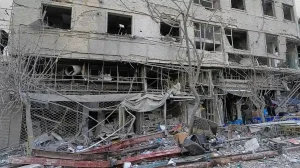
The strike on the French-associated facility in Abu Dhabi demonstrated how proxy dynamics can directly affect Western military infrastructure. Even limited damage carries symbolic weight, particularly when it targets logistics sites supporting multinational operations.
French authorities characterized the attack as disproportionate and indiscriminate, emphasizing the importance of safeguarding personnel and maintaining operational continuity. The response underscores that deterrence in the Gulf now extends beyond naval lanes to include land-based assets.
Regional Escalation Environment
The drone episode occurred alongside wider missile and drone exchanges in the region, increasing the risk of miscalculation. Smoke visible across parts of the Gulf highlighted how quickly localized strikes can generate broader anxiety.
France’s pivot therefore aligns with a stabilizing objective: preventing further attacks from escalating into systemic confrontation. The deployment seeks to signal that allied assets are not isolated and that responses will be coordinated.
Composition and Capabilities of the Strike Group
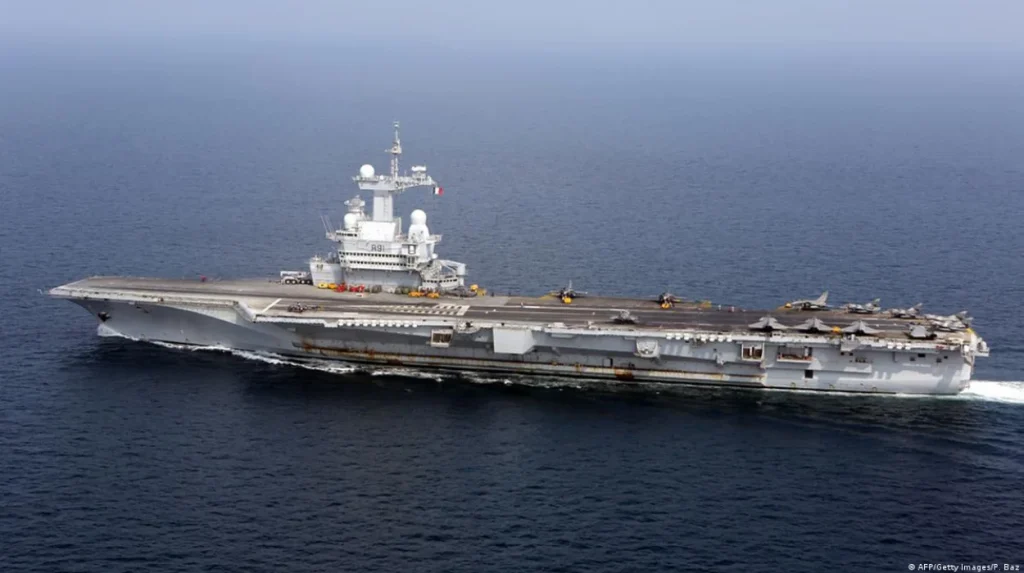
The redeployed naval formation centers on a nuclear-powered aircraft carrier supported by air defense frigates, destroyers, and replenishment vessels. This configuration provides layered protection, sustained operations, and rapid response capability.
The group’s air wing enhances surveillance, air superiority, and precision strike options. Its presence in the eastern Mediterranean places it within reach of strategic corridors connecting Europe, the Levant, and the Gulf.
Force Projection and Air Superiority
Carrier-based aircraft allow for flexible patrol patterns without reliance on regional airfields. This reduces diplomatic complications while maintaining credible reach.
The integration of destroyers and frigates ensures layered air and missile defense, critical in an environment shaped by drone swarms and ballistic threats. Such configurations are designed for endurance rather than short-term signaling alone.
Operational Readiness and Logistics
Replenishment ships within the group support sustained deployment cycles. This logistical backbone allows the force to remain active for extended periods if regional conditions demand it.
The move also reflects lessons learned from recent maritime security operations, where persistent presence proved more effective than intermittent patrols. Stability, rather than episodic deterrence, appears to be the guiding principle.
Deterrence Messaging Toward Tehran
France frames the pivot as vigilance rather than escalation. The emphasis remains on preventing further attacks while avoiding direct combat engagement.
By positioning naval assets near key waterways, Paris sends a message that allied infrastructure and regional partners are under active protection. This posture seeks to raise the cost of further asymmetric actions without committing to offensive escalation.
Coordinated European Signaling
France’s approach aligns with broader European statements emphasizing readiness to counter threats if necessary. Coordination with allies enhances the credibility of deterrence while preserving diplomatic channels.
This dual-track approach reflects Europe’s effort to balance strategic autonomy with alliance cohesion. The naval deployment complements diplomatic engagement rather than replacing it.
Interaction with Diplomatic Initiatives
The carrier pivot operates in parallel with multilateral diplomacy, including calls for international meetings and de-escalation efforts. Naval strength and diplomatic outreach are presented as mutually reinforcing.
This sequencing suggests that military presence is intended to stabilize conditions for negotiation rather than to foreclose them. The visible deployment provides leverage while leaving space for talks.
Gulf Ally Reassurance and Regional Partnerships
The United Arab Emirates remains central to France’s Gulf strategy, hosting expanded military cooperation agreements and defense partnerships. The drone strike against a French-associated site underscores the interconnected nature of security commitments.
By deploying naval assets, France signals reliability to Gulf partners who face persistent threats from regional proxies. This reassurance is particularly important given ongoing maritime disruptions affecting energy flows.
Protection of Energy Corridors
The eastern Mediterranean and adjacent waters remain strategic conduits for global trade. Any sustained instability risks affecting shipping insurance costs, transport timelines, and energy markets.
France’s carrier presence therefore serves both security and economic stabilization purposes. Deterrence contributes indirectly to safeguarding trade continuity.
Multinational Integration
The strike group’s interoperability with other European naval assets highlights shared operational planning. Joint systems enhance coordination in air defense and maritime surveillance.
Such integration reflects long-term defense alignment among European partners operating in complex theaters. The deployment reinforces that security challenges are increasingly collective rather than unilateral.
Lessons from Recent Regional Operations
France’s naval experience in previous maritime missions informed this pivot. Recent patrols in contested waters provided operational familiarity with drone threats and asymmetric naval risks.
These experiences shaped readiness for rapid redeployment. They also demonstrated the utility of sustained presence in deterring harassment without escalating into direct confrontation.
Proxy Network Dynamics
Iran’s regional relationships with various non-state actors have contributed to instability across multiple fronts. Naval deterrence aims to complicate calculations for such networks by increasing uncertainty around response thresholds.
This approach focuses on prevention rather than retaliation. The goal is to limit expansion of localized incidents into broader conflicts.
Regional Balance and Strategic Signaling
The pivot reinforces France’s ambition to act as a stabilizing actor in the Mediterranean and Gulf regions. It demonstrates capability without signaling offensive intent.
This balance is central to maintaining credibility among allies while avoiding unnecessary escalation. Strategic signaling remains calibrated rather than maximalist.
Operational Challenges and Future Outlook
Sustaining a forward naval presence requires continuous logistical coordination. Replenishment cycles, airspace considerations, and regional diplomatic sensitivities all shape operational planning.
Nevertheless, the deployment reflects a willingness to absorb short-term costs in exchange for deterrence benefits. Visibility and readiness appear to be prioritized over concealment.
Risk Management and Escalation Control
The presence of advanced air defense systems within the strike group reduces vulnerability to drone or missile threats. These safeguards mitigate but do not eliminate risk.
Careful command protocols and coordination with regional authorities remain essential to avoid unintended escalation. Clear communication channels help prevent misunderstandings.
Strategic Durability
Whether the carrier pivot evolves into a prolonged posture or remains temporary will depend on regional developments. The flexibility of naval assets allows adjustment in either direction.
The decision underscores France’s broader intent to maintain strategic influence in a multipolar security environment. Naval deployment becomes both a deterrent tool and a diplomatic signal.
As the carrier group moves into position, the central question becomes whether visible naval presence can stabilize the region without intensifying rival responses. France’s approach suggests confidence that deterrence, alliance reassurance, and diplomacy can operate simultaneously but the durability of that balance will depend on how regional actors interpret the message carried by the fleet’s arrival.