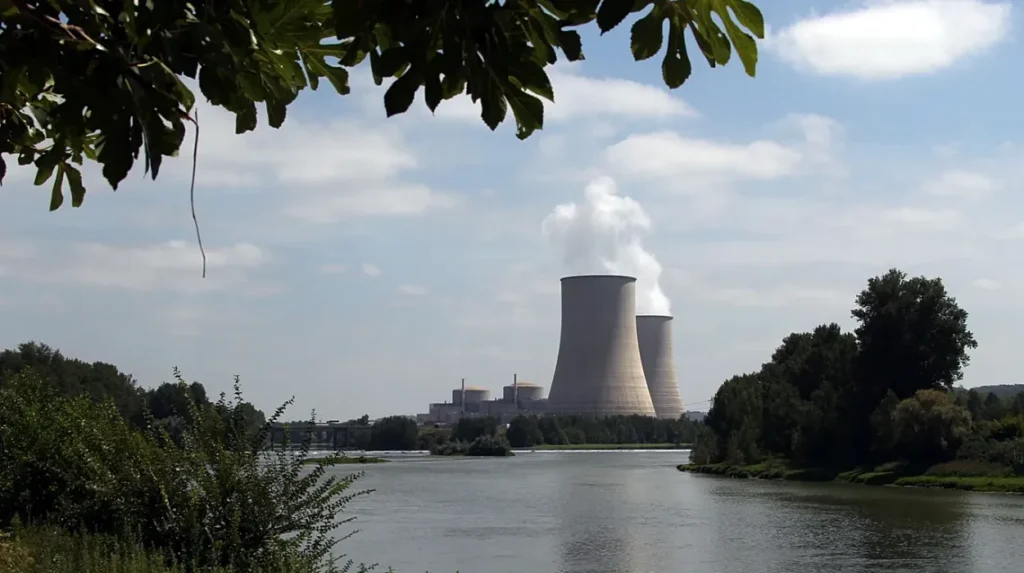
France’s nuclear energy infrastructure, long considered the backbone of the nation’s electricity supply, is facing an unprecedented crisis. On Wednesday, August 12, 2026, more than one-fifth of the country’s nuclear generating capacity—20.4%—went offline, marking the largest shortfall due to environmental constraints since at least 2015.
The combination of extreme heat, drought, and a massive jellyfish attack on the Gravelines nuclear power plant has triggered serious concerns about the vulnerability of France’s electricity system to climate change. According to the calculations of AFP using data supplied by the energy company EDF, 20.4% of France’s nuclear energy capacity was out of operation between 9:45 am and 10:00 am local time on August 12.
As many as 13 of the 57 reactors in EDF’s nuclear fleet were affected, out of which eight were shut down, while the other five were operating at a reduced capacity. Most of the energy shortage occurred due to shut-downs or partial shut-downs of five out of six reactors at the Gravelines facility, which is the biggest nuclear power plant in Europe, following an attack by jellyfish.
The Gravelines Incident: Jellyfish Overwhelm Cooling Systems
The Gravelines nuclear power plant, located on the northern coast of France near the English Channel, is home to six 900-megawatt reactors with a combined capacity of 5.4 gigawatts (GW). On Monday, August 11, a “massive and unpredictable influx of jellyfish” entered the plant’s seawater pumping stations, clogging filter drums and triggering automatic shutdowns. Three reactors were taken fully offline, while output at a fourth was cut by half, leaving just one reactor operating at full capacity. A sixth reactor was already offline for scheduled maintenance.
In a statement, EDF emphasized that
“this situation has no impact on the safety of the facilities, the safety of personnel, or the environment.”
The operator added that
“the plant teams are activated and are currently conducting the necessary diagnostics and interventions to safely restart the production units.”
By Wednesday morning, units 1 and 6 had returned to full power, while unit 2 was expected to reconnect by 11 p.m. the same day. However, units 3 and 4 were scheduled to remain offline until August 16 and 19, respectively.
Climate Change and Marine Ecology: A Growing Threat
The jellyfish infestation in Gravelines is far from being a unique occurrence but rather one of many incidents associated with climate change and destruction of the environment. It has been established that overfishing, plastic waste, and rising ocean temperatures are among the main reasons behind such circumstances which favor the proliferation and breeding of jellyfish in large amounts. The latter have become more common and powerful along the coasts of France due to the warming seas. The Gravelines plant was interrupted due to jellyfish on the same day in 2025 and in 2026, showing its seasonality.
As one energy analyst noted,
“jellyfish—often seen as a minor marine nuisance—are now capable of disrupting national power supplies.”
Heat and Drought: Compounding the Crisis
Beyond the jellyfish incident, extreme heat and drought have also played a significant role in the current nuclear shortfall. Multiple heatwaves and prolonged dry conditions this summer have forced EDF to shut down or derate several reactors in June and July due to high river temperatures and low water levels, which limit cooling capacity.
The production of nuclear energy is dependent on massive quantities of water to cool reactors. However, when water temperatures exceed legal limits or if there is a reduction in the quantity of water available, then reactors must be scaled down or completely shut down to avoid any negative impact on the environment and to ensure safety. The reasons for the scaling down or shutting down of other reactors aside from those in Gravelines are caused by the severe weather being experienced in the region. France experienced temperatures close to 40°C (104°F) in certain parts of the country due to the heat wave while electricity demand was at its peak in that period.
Energy Security and Grid Management
With nuclear power supplying about 70% of France’s electricity, such large-scale outages pose significant challenges to energy security and grid management. The loss of 3.2 GW of capacity at Gravelines alone—approximately 67% of the plant’s total output—represents a substantial blow to the national grid. To compensate, EDF and French authorities may need to rely more heavily on electricity imports, gas-fired plants, or demand-side measures such as voluntary consumption reductions.
The current shortfall comes at a particularly inopportune time, as France and much of Europe are grappling with record-breaking summer temperatures. The strain on the grid is compounded by the fact that neighboring countries are also experiencing heatwaves, limiting the availability of imports. In response, EDF has been working to bring affected reactors back online as quickly as possible, but the staggered restart schedule means that full capacity will not be restored until later in the month.
Environmental Impact: The Hidden Cost of Nuclear Cooling
In addition to the immediate effects of jellyfish and the heat on the operation of the nuclear power plant, the case serves as a reminder of the wider environmental effects of nuclear plants’ cooling process. According to the June 2026 report entitled “The Invisible Slaughter” published by the network of NGOs Sortir du Nucléaire, the annual number of fish, crustaceans, and jellyfish killed by French nuclear plants due to their cooling process amounts to no less than 5.9 billion. In addition to raising serious concerns about the environmental impact of producing nuclear energy, the report serves as another evidence of the problems of adjusting the industry to the new climate reality.
As one environmental activist stated,
“the same systems that are now vulnerable to jellyfish invasions are also responsible for killing billions of marine organisms every year.”
This dual reality—where nuclear plants are both victims and perpetrators of environmental stress—adds another layer of complexity to the ongoing debate over the future of nuclear energy in France and beyond.
Long-Term Adaptation and Policy Implications
The recurrent nature of these occurrences—from both heat waves and marine wildlife—brings up the question of sustainability of the French nuclear power network in the face of ongoing climate change. With more extreme weather conditions expected as a consequence of ongoing global warming, the probability of such disruptions occurring again becomes higher and higher. Therefore, policy-makers and energy managers should think about making adaptations in their nuclear power facilities to cope with the changing conditions, whether in the form of cooling or filtration system improvements, or by diversifying their energy sources. Certain voices suggest the need for rethinking the strategy of using nuclear energy because of the current crisis. At the same time, others argue that it is absolutely necessary for achieving climate targets.
As one energy policy analyst observed,
“the challenge is not whether to keep nuclear power, but how to make it resilient enough to withstand the pressures of a warming world.”
Looking Ahead: A Test of Resilience
In an attempt by France to restore its nuclear power capabilities in the next few days, the present situation has been quite instructive on the interconnectivity of energy, environmental and climatic issues. While the jellyfish attack at Gravelines is a very sensational one, the trend that is taking place shows the increasing impacts of the natural system on the human infrastructure. This time, the impacts of climate change have become real, immediate and disruptive whether through heat, drought or even marine species. For France, overcoming this crisis will involve not only technical fixes, but also a reflection on energy policies in response to the new realities. In terms of adaptation, the future of the French nuclear fleet in the face of climate change remains to be seen as a test case for France and perhaps other nations facing similar challenges.