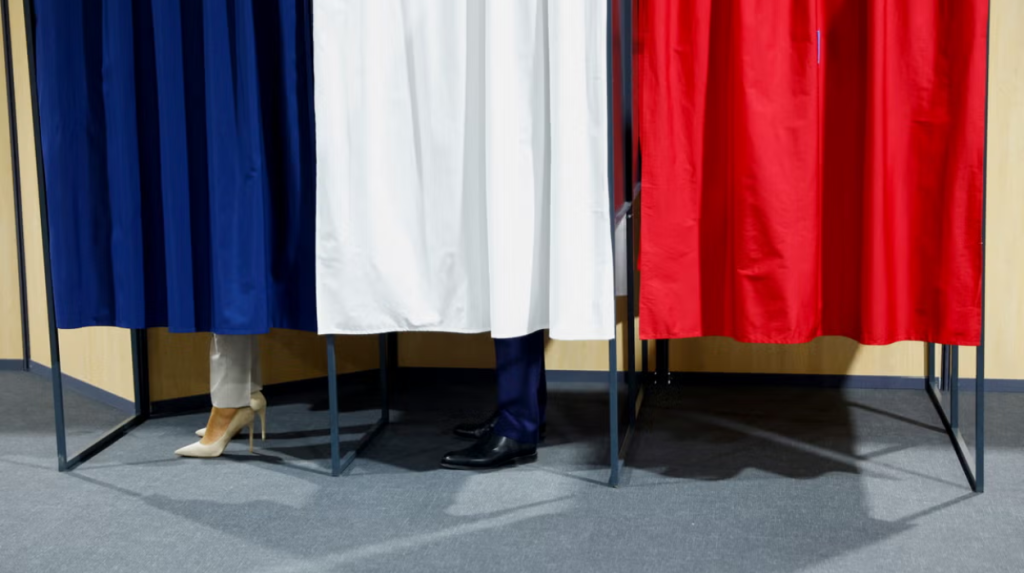
Although the next presidential election in France is more than a year away, the 2027 presidential election is already taking place with unusual vigor. Traditionally, the French presidential election season begins after the summer holidays in the last year before the presidential vote. However, this time the election campaign has started much earlier due to unprecedented levels of political uncertainty and the possibility of a far-right win that might alter the position of France within the EU and NATO.
The stakes here appear very high, given the constitutional bar of President Emmanuel Macron, who changed the course of French politics in 2017, from running for a third term. His exit has created a power vacuum as he has no clear successor and the divided centrist vote struggles to maintain its grip, facing threats from an resurgent far right and an assertive left.
Policy Debates Already Framed by the Presidential Race
Virtually every significant policy debate in France, from climate transition and industrial policy to social welfare and immigration, appears to be passing through the prism of the 2027 election.
What started as a seeming debate about the green transformation of Europe at the World Impact Summit in Paris last week turned into a campaign platform. The occasion was used by the top presidential candidates to outline their competing plans for the future of France, including the leader of the Green Party, Marine Tondelier; the far-right candidate, the President of the National Rally Party, Jordan Bardella; the former Prime Minister, Gabriel Attal, from the center position; Raphaël Glucksmann, a
In his comments about the election, Attal described it as a historic milestone, as he stated, “We reach a crucial moment of truth, not only for ourselves but for national and European politics.”
Business Lobby Moves Early to Shape the Agenda
The powerful business group in France, Medef, has also begun an early charm offensive by arranging meetings of powerful businessmen with potential presidential hopefuls such as Bardella, Attal, and Socialist leader Faure.
The organization has clearly stated that it has been able to strengthen its influence on policy positions related to taxation, labor reform, industrial policy, as well as EU regulation, however, showing how economic elite groups are preparing for an uncertain political transition.
Municipal Elections as a Political Dress Rehearsal
Political parties are approaching the upcoming local elections as a crucial proving ground for the presidential campaign. National Rally, a far-right party, aims to reinforce its position as France’s leading force by continuing to dominate local elections after its outstanding performance during the 2024 European elections.
Meanwhile, the centrist and left-wing parties are testing themselves through local races with the objective of demonstrating their pertinence after several years of electoral decline. As the pollster Bruno Jeanbart described, “this is a very long campaign.”
Fragmentation of the Political Center
However, it appears that an early candidate did not necessarily achieve victory. For instance, Prime Minister Edouard Philippe, who was believed to be a top aspirant, has witnessed his rating decline since he confirmed his candidacy.
Veteran centrist politician François Bayrou has long claimed that timeliness does not matter as much as proximity with respect to the election date, pointing out that political finance regulations in France are so tight that there is little need for early fund-raising.
Yet, Macron’s game-changing electoral victory in 2017 shattered the conventional left-right political system, resulting in a fractured political center with many figures vying to articulate a political platform different from that of far-right parties.
The Far-Right Threat and Mainstream Anxiety
The prospect of a far-right president: Either Jordan Bardella or Marine Le Pen, pending her appeal against embezzlement charges. This prospect has caused concern across the political spectrum and among the nation’s allies.
A National Rally victory would potentially reshape EU policy, migration policy, whether France stays aligned with NATO, and relations with Russia and the US. Analysts are warning that a Eurosceptic French presidency is set to shake EU cohesion in the midst of the war in Ukraine and days of uncertainty.
Crowded Candidate Field and Strategic Divisions
The political sphere is emerging in France. Confirmed contenders include Philippe, Tondelier, and Socialist Party lawmaker Jérôme Guedj. He is using the early campaign period to establish national recognition.
Other political figures widely speculated to run include former Prime Minister Dominique de Villepin, conservative politician Xavier Bertrand, and current Les Républicains leader Bruno Retailleau.
The French Justice Minister, Gerald Darmanin, says that
“too many centrist and center-right candidates could fragment votes and prevent traditional parties from advancing to a runoff.”
Competing Strategies: Unity or Political Darwinism
The political strategists are split about how to winnow the field. Some recommend holding early primaries to help unify candidates on the left and center, while others argue that allowing the race to continue will ensure that only the best candidate emerges naturally.
The former centrist minister called the wider campaign “extraordinary” and argued that more conventional methods may not be effective in what is a potentially transformative election.
Local Alliances as a Prelude to National Politics
The period between the two rounds of municipal elections is likely to provide the clearest indications of future alliances. French parties frequently create tactical coalitions to prevent ideological rivals from winning an election, and such alliances might presage coalitions that will be necessary to defeat the far right in 2027.
Whereas local elections reflect municipal concerns, they very often represent a microcosm of national political dynamics, determining which parties will openly cooperate or ultimately remain divided in light of populist challenges.