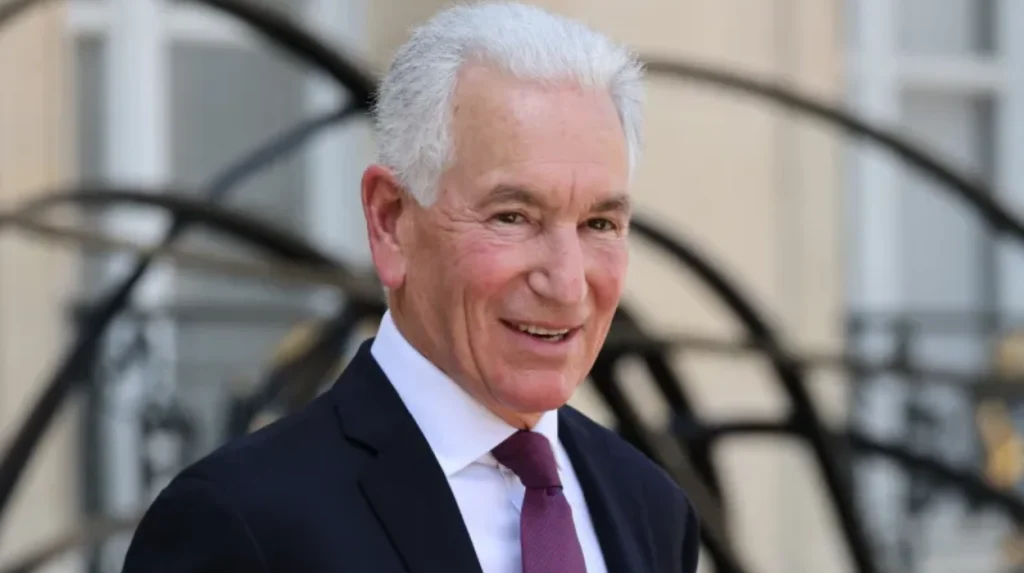
Summons of a U.S. Ambassador Charles Kushner took place in August 2025 directly in response to a letter he wrote to President Emmanuel Macron. The letter, which was published and was termed as being unacceptable by the French Ministry of Foreign Affairs was a joint statement that accused France of not acting vigorously enough in response to the increased cases of antisemitism after the 2023 Hamas attack on Israel.
This letter by Kushner alerted the situation that the Jewish life in France was under imminent danger and made references of the daily antisemitic attacks, the desecration of synagogues and targeted vandalism of the Jewish business spheres as well as gap in the education of the nation as most people were not aware of the Holocaust. He asked the Macron government to pass an anti-hate crime bill without exception and remain immune to any steps that can justify Hamas and its partners.
France Foreign Ministry reacted to it by referring to the classical convention, Vienna convention of 1961 which stated that foreign diplomats were not allowed to intrude in the internal affairs of the host nation. It has also said that Kushner risks damaging the transatlantic partnership, and there can be no denying the fact that such a cooperation is necessary even in terms of global politics.
French government reaction and diplomatic implications
France based his summoning of the Ambassador Kushner on pretexts of flouting Vienna Convention. Particularly, the government claimed that the letter issued by Kushner publicly was a violation of diplomacy rules and international policy in which national sovereignty was violated. This official diplomatic move is an indication that France does not view the letter as commentary, but interference.
A general message is also conveyed through the diplomatic protest. France does not oppose itself to scrutiny of its relationships with human rights, but is opposed to interventions, especially those, which seem to relate to politics and which may add to the abrasion of internal divisions.
Strained but strategic partnership
Nevertheless, France and the United States share a close strategic partnership even though there has been a confrontation between the two countries. Collaboration includes NATO liaison and coordination, anti-terrorist intelligence sharing, and aid to Ukraine. Analysts state that although this incident could have some initial turbulence, it is too critical that the relationship can be broken up over a single diplomatic incident.
The only doubt that has been left is how the U.S. will respond to it. A renewed expression of Kushner would intensify the tension level, whereas reorientation of the existing diplomatic contacts through back channels would not weaken the alliance.
The scope of antisemitism in France
France has the largest Jews in Western Europe, (approximately half a million). Antisemitic incidents in the US have been increasing sharply since the Israel-Hamas conflict of 2023. At the beginning of 2025, hundreds of hate crimes were reported in the Jewish communities. There are increasing numbers of informational attacks, physical attacks, graffiti, and intimidation in Paris suburbs or large cities.
Antisemitism in France did not just begin. Antisemitism goes back far in history, through such events as the Dreyfus affair, and Vichy France involvement during the Holocaust. As recent events go, fatal assaults like the 2012 Toulouse school shooting and the 2015 Hyper Cacher supermarket siege have become part of the social memory.
The present wave is an extension of a hazardous tendency according to which international hostilities trigger internal tensions. Local leaders have cautioned that impunity and fear are stoked by political rhetoric and by momo law enforcement response.
Government response and public discourse
The French government claims to be in full-swing against combatting antisemitism. Among the actions that have been agreed upon are more police within the vicinity of the Jewish institutions, new educational programs, and continuous monitoring of extremist groups. Still, opponents say enforcement is inconsistent and the police have practiced institutional racism in areas like law enforcement, causing disloyalty.
French Foreign Minister Jean-Baptiste Lemoyne declined to condemn France, insisting that any antisemitism is bad, but insisting that proportionate, balanced language is necessary against the Israelis. He also warned against politically exploiting antisemitism even by foreign officials.
Kushner’s background and political overtones
Charles Kushner is not just an ordinary diplomat. His direct family-related connections–father of Jared Kushner, senior advisor to former President Donald Trump,–position him as a politically significant man. Although officially nominated by President Biden, his conviction and pardon by former president Trump have also created some controversy.
This background makes his criticism extremely complicated. Although the words in the letter by Kushner touch on the valid human rights issues, the baggage the messenger carries is likely to have contributed to French sensitivities. His word, which a French official said was provocative, was not completely clear between advocacy and confrontation.
Antisemitism, diplomacy, and transatlantic trust
The foreign policy incident leads to an old and contested question, to what degree should states criticize one another on their human rights records and particularly between allies? France and the United States share a common stand on the aspect of proclaiming democratic values and protection of minorities. However, as this case reveals, the methods of conducting public diplomacy vary greatly.
American officials view Kushner’s letter as aligned with the U.S. tradition of vocal human rights advocacy. French officials interpret it as a breach of decorum and a potential domestic agitator. This divergence is symptomatic of broader tensions in how Western democracies navigate pluralism, security, and diplomacy.
Alliance friction or necessary recalibration?
This incident does not exist in isolation. In recent years, both France and the United States have faced criticism for their handling of racism and discrimination. Acknowledging mutual flaws may help both sides reframe the conflict as an opportunity for shared learning, rather than a zero-sum confrontation.
Future diplomatic engagements will likely focus on recalibrating language and channels. Formal summits may avoid public censure, but civil society dialogue and joint initiatives could continue behind the scenes.
Voices calling for deeper change
Romaine Paire, executive director of the European Network Against Racism, emphasized that long-term solutions require more than security responses. She said,
“Leadership on hate speech and proactive prosecution of offenders are crucial. Without decisive action from the top, public safety and social cohesion erode dangerously.”
France summons US Ambassador Kushner over ‘unacceptable’ letter about rising antisemitismhttps://t.co/2xUOlvu7bC
— Michelle L. Price (@michellelprice) August 24, 2025
How antisemitism cannot be disentangled from broader systemic issues of racism, extremism, and institutional inertia. Public outrage alone is insufficient. Transparent accountability and policy innovation are necessary across borders.
The reason why France ordered a summons of an ambassador is more than the response to just one letter- the intricate balance between foreign advocacy and internal legitimacy is only at a precarious stage. As the two states deal with this diplomatic challenge, they must negotiate a shared requirement, the defense of minority rights on the one hand and the preservation of mutual confidence in democratic partnership on the other.