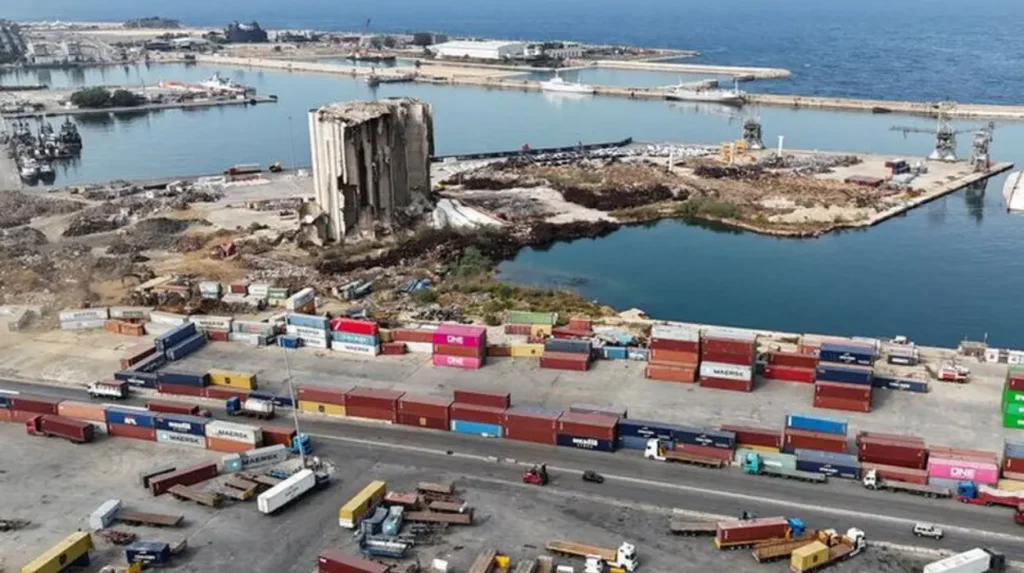
Six years after the Beirut port explosion ripped through Lebanon’s capital, the case has moved into its most decisive legal phase yet, reviving hopes among victims’ families that Beirut port blast justice may finally be within reach. The long-delayed investigation, led by Judge Tarek Bitar, was completed in March 2026 and referred to the public prosecutor for review, setting the stage for a possible indictment that could open the door to public trials.
The anniversary has therefore become more than a commemoration. For many families, it is a test of whether Lebanon’s judiciary can overcome years of political interference, legal challenges and procedural blocking that repeatedly stalled one of the country’s most sensitive investigations.
A blast that changed Beirut
This explosion, which occurred on 4 August 2020, was caused by the detonation of a large cache of ammonium nitrate stored in extremely unsafe conditions at Beirut port. In reporting over the years, it has been described as one of the biggest non-nuclear explosions ever recorded, resulting in the death of over 220 people, although some reports say the number exceeds 230 or even 236 while causing injuries to around 7,000 people. This incident also resulted in massive destruction in the area around Beirut, the capital of Lebanon, leaving destroyed neighborhoods and traumatized individuals. This is an important factor since it determines why the incident has never been seen as a simple criminal case.
How the case reached this point
The career of Judge Bitar has seen numerous attempts at his removal from the case through suspension or otherwise. In 2023, he returned to conducting the probe after a considerable period of dormancy, and by March 2026 he had finally closed the investigation process and forwarded the case further to be reviewed by the prosecutor. Recent reports state that there are now close to 70 suspects in the file, including political figures, judges, security personnel, and military individuals. As per the sources quoted in the reports, Judge Bitar has come to conclusive findings regarding the happenings on 4 August, and the case is now ready to be assessed by the prosecutor before any indictments can be made. The process is significant in that it is the first time in years that the case is moving towards a trial rather than away from it. It is hoped by the families that an indictment is issued before the end of 2026.
Families still pressing for truth
For the families of those killed, the legal milestone is important only if it leads to real accountability. Their position remains consistent: they want the truth, the names of the responsible officials and a court process that cannot be quietly buried by political pressure.
Family representative Peter Bou Saab captured that insistence in a statement reported this week, saying
“Our concern has always been the truth and justice,”
and adding that families
“will continue until we know the truth.”
The message reflects the broader mood among relatives, many of whom have spent six years organizing marches, memorials and sit-ins in a bid to keep the case alive.
That pressure has not been symbolic. Families and activists have repeatedly demonstrated outside government institutions, including parliament and the justice ministry, especially during moments when the investigation was suspended or when they feared it would be derailed again.
Officials now backing the case
The political atmosphere surrounding the investigation has changed as well. The President, Joseph Aoun, has openly supported the development of the investigation, showing his political support which the families have hardly experienced before. He referred to the indictment “as a necessity that can no longer tolerate further delay” and viewed justice in uncovering the whole truth and holding responsible those who had failed in their duties. Such political support is of importance since the port explosion investigation case has always been considered to be an opposition between the judiciary and Lebanese political elites.
During the previous phases of the investigation, it faced numerous complaints, lawsuits and institutional resistance since it was claimed that the case would endanger many politicians from different parties and security sectors. At least now, it seems that such a balance has changed for some time. The support of the presidency and the completion of the investigation itself have become the reasons for the families to think that the investigation would continue long enough to reach the indictment stage.
Rights groups keep the pressure on
Human rights organizations are still insisting that the case cannot be considered complete until justice is delivered in a form that is independent and credible. Amnesty International’s Reina Wehbi said the victims’ families and survivors remain stuck waiting for truth and justice, warning that “delayed justice” remains “incomplete justice.”
That argument matters because the Beirut port case has repeatedly been raised as an example of how legal delays can become a form of denial. Rights groups have said for years that Lebanon’s authorities have failed to conduct an effective, independent and impartial investigation, and that the lack of accountability has deepened public distrust in state institutions.
The groups’ concern is not only about the existence of an indictment but also about whether the inquiry will examine the full chain of responsibility. That includes officials accused of negligence, those who obstructed the inquiry and anyone who failed to secure the hazardous cargo after years of warnings.
Why the indictment matters
Assuming Bitar does decide to file an indictment, the next step would be for the case to be transferred to the Judicial Council for open trials. This would represent the biggest accountability trial in Lebanon in recent years and one of the few large scale prosecutions of officials in connection with a national disaster. Even so, there would be no guarantee that this process would go smoothly, since legal experts and rights activists observe that the real litmus test would be if the arrest warrants and other judicial decisions would be followed through, especially in cases when high-ranking officials are involved. It is clear from past experience how easy it is to obstruct this process through procedural obstacles. The families have learned this lesson. Their optimism today is tempered with caution, formed out of many years of letdowns.
A case larger than one explosion
The Beirut port blast is no longer only about one crime scene, one shipment or one failed investigation. It has become a national reckoning over negligence, impunity and the failure of Lebanon’s political and judicial systems to protect citizens or answer to them afterward.
That is why the anniversary reporting carries such emotional weight. Families are not simply mourning again; they are measuring whether the state that failed them in 2020 is finally ready to act with seriousness in 2026. Their answer remains conditional, but for the first time in years, it is not purely despairing.