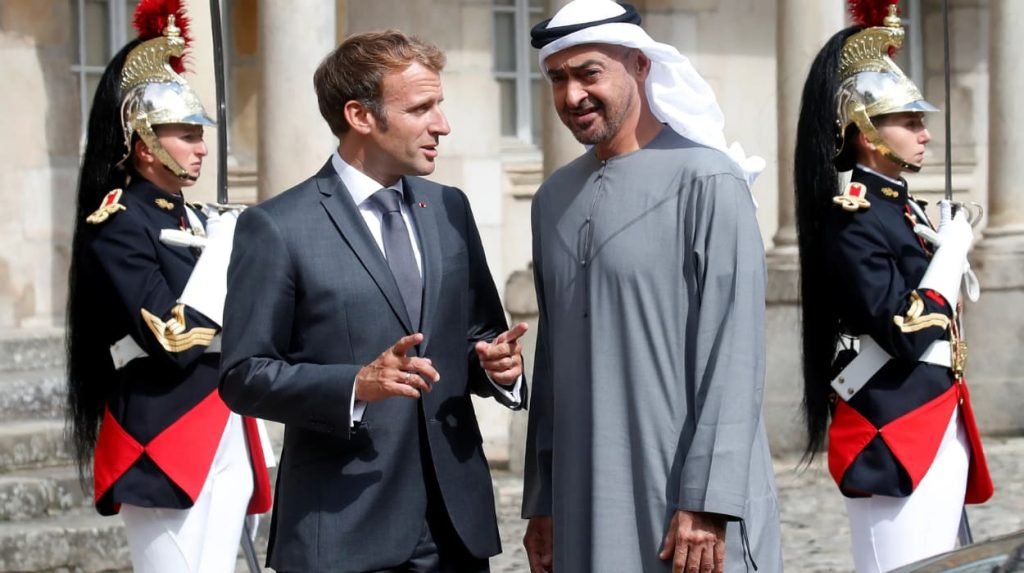
The France-UAE security relationship, which was established in 1995 and enhanced in 2009 by a bilateral defense agreement, is the foundation of French strategic involvement in the Gulf. This partnership is based on the long history of economical, political and defense collaboration that have since become a high trust relationship that is recognized by the regional and international stakeholders.
The presence of the French military in the United Arab Emirates is one of the distinguishing factors in the gulf. It is the sole Western power to have permanent military bases in the UAE, where it has a rapid deployment capability, in a vulnerable geopolitical location. The bases are all naval, air and land based, which improves the capability of France to respond to local contingencies and facilitate multilateral operations, including the Middle East and the Horn of Africa.
In the eyes of the UAE, the alliance will offer entry onto European defense facilities and technology. The connection is used as a means to strengthen Emirati defensive power and tactical independence as well as contributing to broader objectives like regional peace and energy security. The bilateral relationship between these two nations has been stretched to defense industry, collaboration in cyber area and collaborating in counterterrorism efforts.
Strengthening regional stability through coordinated defense efforts
France and the UAE have renewed their respective commitments to the security of the region and compliance with international law on multiple occasions. Their cooperation includes joint training, intelligence coordination, and strategic consultation to address the threats and crises within the region.
Shared response to geopolitical tensions
In the rekindled Iran-Israel conflict in June 2025, France had become more relevant in relation to the UAE. President of France, Emmanuel Macron came out publicly and declared that France was willing to give diplomatic and if the need arose, military assistance to its allies in the Gulf to ensure that the conflict did not escalate. Amid increasing pressure in the region, the UAE was happy to see the promise of France as a stabilizing force.
French presence in the UAE meant that the deployment of intelligence was rapid and monitored the airspace in the region which served to strengthen deterrence at a sensitive time. These working components are supplementary to wider political operations of de-escalating tension, which makes France a military and diplomatic conduit between the regional powers.
Defense cooperation and mutual readiness
The 2025 Gulf Shield military drill is an example of how far the France-UAE alliance in defense affairs goes. The purpose of these exercises is to mimic the real-time response to regional threats such as breaches of naval security and tactics of hybrid warfare. The maneuvers emphasize readiness toward each other and the possibility to organize forces with multilateral forces, such as those of NATO and members of the Gulf Cooperation Council.
The institutionalization of such capabilities strengthens a security architecture that does not just benefit the region, since strategic chokepoints such as the Strait of Hormuz are not compromised by frequent threats of state and non-state actors.
France’s broader geostrategic role enabled by the UAE alliance
The presence of France in the Gulf is enhanced by the fact that it is a Euro-Atlantic as well as an Indo-Pacific actor. Its partnership with the UAE allows Paris to exert influence on several theaters of strategic rivalry where France gets a unique multi-regional platform in global security.
Diplomatic access and multilateral leverage
The alliance that France has with the UAE also fortifies its foreign policy in international systems. France, being a permanent member of the UN Security Council, utilises its presence in the Gulf to mediate crises, promote peace efforts and coordinate the efforts of European, Arab and Indo-Pacific nations.
French activity in the Indian Ocean and Africa is carried out through the UAE as a logistical and diplomatic centre. This is a strategic access which enables France to engage in counter-piracy, maritime domain awareness, and humanitarian operations which enjoy the advantages of forward-operating bases and pre-positioned equipment.
Role in conflict mediation and policy alignment
The ability of France to be a diplomatic interlocutor is enhanced by the UAE alliance. During current peace negotiations in the Middle East, involving debates of the two-state solution, France frequently aligns policy goals with allies in the region such as the UAE to give extra weight to its proposals on the dais in forms like the UN and the Arab League. This identification increases the authority and practicality of peace efforts which began in Paris.
Implications for regional defense architecture and future challenges
The relations of France and the UAE on the topic of security have become an example of how bilateral defense relationships could be utilized to promote the stability in the region without sticking to the U.S.-focused models. France in a 2025 strategic assessment has highlighted alliances such as the UAE alliance as key to the changing approach of European defense autonomy and regional involvement.
Building a regional security buffer
The French presence in the Gulf, both in terms of troops and assets, assists in providing a layered security buffer to discourage any threats to smaller Gulf countries and to maritime infrastructure. This deterrence is especially critical given cyber threats, drone attacks, and grey zone warfare operations that are slowly becoming the hallmark of regional security challenges.
It also contributes to the innovation of the defense industry, specifically joint ventures into air defense, naval technology and cybersecurity. Such partnership brings about regional resilience, as well as declining dependence on external security providers in the long-run.
Managing volatility and adapting to shifts
The France-UAE partnership does not avoid the challenges of instability in Middle Eastern politics which proves to be persistent despite its success. Changing power relations, the threat of proxy war, and changing alliances demand flexibility. The focus on the institutionalization of defense coordination and resilience-building efforts demonstrates an understanding of these difficulties.
The political transformations within the country, both French and UAE, can also affect the re-calibration of the depth and extent of collaboration. Nevertheless, the fact that the two governments have had a long history of trust allows continuation and flexibility in terms of policy.
Humanitarian and political dimensions affecting security cooperation
French security collaboration with the UAE is undergoing the effect of more general political and humanitarian interests within the region. Since the two countries are engaged in international forums dealing with the Israeli-Palestinian conflict and the crises in the regional displacement, the relationship has a diplomatic and developmental aspect.
France’s role in political stabilization
The fact that France and Saudi Arabia co-chaired the 2025 High-level Conference on the Peaceful Settlement of the Question of Palestine, was a move towards more active involvement of the Europeans in Middle East peace processes. Paris stressed the demilitarization of militant factions and encouragement of responsible governments in the Palestinian lands, with the presence of the military being counterbalanced with frontline conflict settlement practices.
Linking humanitarian aid and strategic policy
The UAE is also an actor in humanitarian intervention as a host to the region in terms of logistics in aid delivery. The French development agencies and NGOs operate in partnership with Emirati platforms to facilitate the delivery of food, health care and education in war torn regions. This collaboration helps in the stability of civilians especially in Gaza and southern Lebanon where France has peacekeeping and developmental duties.
The France-UAE partnership can be enriched with the integrated model of humanitarian-security cooperation. It shows how contemporary-day defense partnerships can go beyond hard power and include state-building, conflict prevention and human resilience.
France and the UAE have cultivated a uniquely structured alliance that merges operational readiness with regional diplomacy and humanitarian coordination. This partnership reflects a forward-looking model of international defense relations rooted in mutual trust and strategic necessity. As regional risks diversify and evolve, the question of how such partnerships can anticipate future threats, support governance reforms, and integrate civilian protection will remain central to global security discussions. France’s position in the Gulf enabled by its Emirati alliance may well serve as a blueprint for adaptive and multidimensional strategic engagement in the years ahead.