Algeria’s parliament has unanimously passed a landmark law on December 23, 2025, declaring France’s 132-year colonization of the country a crime against humanity, demanding official apologies and reparations amid escalating diplomatic tensions. This move by the People’s National Assembly formalizes historical grievances into legal doctrine, listing atrocities like nuclear tests and resource plundering. It reignites Franco-Algerian friction, with Paris dismissing it as a hostile act.
Historical context of colonization
France’s colonization of Algeria began in 1830 with the invasion at Sidi Ferruch, transforming the North African territory into a settler colony until independence in 1962 after a brutal eight-year war that claimed over a million lives. The period saw systematic land expropriation, where European settlers seized fertile plains, displacing indigenous populations and enforcing a dual legal system favoring colonies over Algerians. Economic exploitation included forced labor on vineyards and mines, with Algeria’s wealth of oil, gas, phosphates funneled to metropolitan France, stifling local industry and education. The 1954-1962 war escalated horrors: torture camps, massacres like Sétif in 1945 killing 45,000, and napalm bombings, embedding deep trauma. Post-independence, memory wars persisted; France’s 2021 report acknowledged crimes but rejected reparations, fueling Algeria’s resolve to codify these as non-prescriptible state crimes.
This law revives the “droit à l’indemnité” principle, asserting timeless accountability for genocide-like acts, paralleling global reparations debates from slavery to genocides. The legislation meticulously enumerates violations: extrajudicial killings during pacification campaigns, psychological torture via internment, and environmental devastation from 17 nuclear tests in the Sahara (1960-1966), contaminating aquifers still affecting Tuareg nomads today. It frames colonization not as a civilizing mission but predatory imperialism, countering French narratives of infrastructure gifts like ports, which the law deems stolen labor fruits.
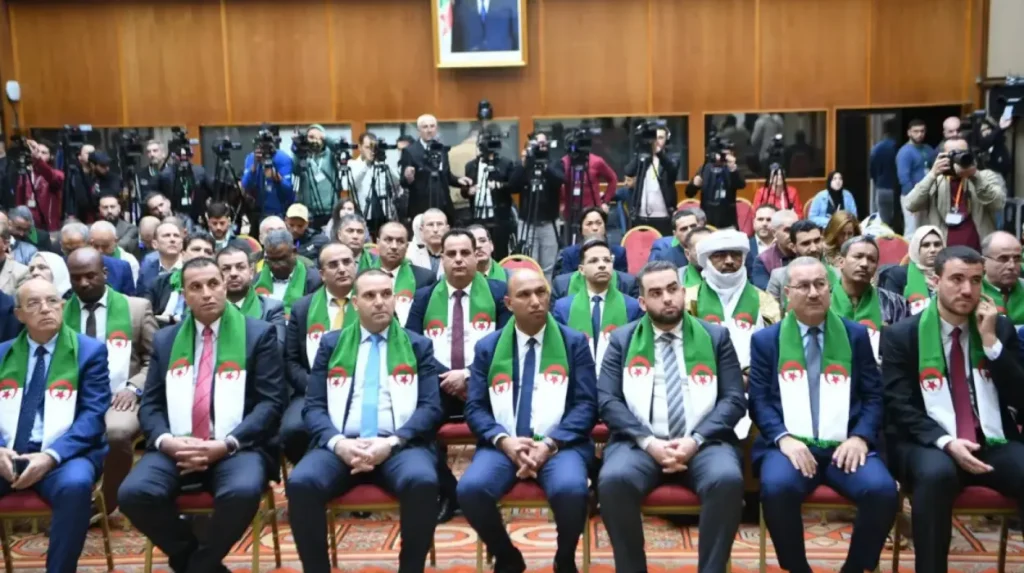
Parliamentary speaker Ibrahim Boughali emphasized post-passage that Algeria’s
“national memory is neither erasable nor negotiable,”
draping lawmakers in green-white flags as they chanted patriotic slogans. This symbolic theater underscores the bill’s five chapters and 27 articles, blending historical reckoning with forward legal tools. Experts like Hosni Kitouni note its domestic potency despite lacking international enforceability, potentially inspiring Tunisia and Morocco.
Provisions of the draft law
The law, titled
“to criminalize French colonization in Algeria,”
imposes 5-10 year prison terms and heavy fines for glorifying, justifying, or apologizing for colonialism in media, academia, or online platforms. It mandates France’s “legal responsibility” for material/moral damages, demanding “full and fair compensation”, an inalienable right covering looted archives, stolen artifacts like the Algiers skull, and economic losses estimated at trillions. Criminalization extends to attacks on resistance symbols or “remarks with colonial connotations,” with digital platforms liable for content moderation. Unanimously approved by 340 of 407 assembly members, it establishes mechanisms for recognition, apology, and prosecution of state crimes, rejecting statute of limitations for humanity offenses. Secondary clauses ban positive framing of colonial “benefits,” reshaping education and discourse to prioritize victim narratives.
This framework builds on Algeria’s 2021 memory law attempts, now fortified against revisionism; violators face not just jail but public shaming, aligning with global trends like Germany’s Holocaust denial bans. The text catalogs specifics: resource plundering via unequal treaties, enforced disappearances during the war (over 20,000), and cultural erasure through Arabic language suppression. By embedding reparations as rights, it pressures bilateral commissions, potentially unlocking frozen assets or museum returns. Boughali clarified no revenge targeted, but principled justice, positioning Algeria as anti-impérialisme vanguard across Africa.
Diplomatic tensions with France
Franco-Algerian ties, thawed under Macron’s 2017-2022 gestures like the Stasi report, soured post-2023 over Western Sahara, where Algeria backs Polisario against Morocco, a French ally. Recent diplomat arrests and gas deal disputes exacerbated rifts; France’s Sahara map recognition prompted Algeria’s ambassador expulsion. The law elicited swift rebuke: Foreign Ministry spokesman Pascal Confavreux called it a “manifestly hostile initiative” undermining reconciliation, refusing comment on foreign debates. Macron, who termed colonization a “crime against humanity” in 2021 sans apology, faces domestic pushback from right-wingers decrying Algiers’ “blackmail.”
Bilateral trade €12 billion annually, dominated by Algerian gas to Europe hangs precarious; Algiers threatens cuts amid Ukraine war energy crises. France’s harkis (pro-colonial Algerians abandoned post-1962) lobby against reparations, while Macron’s team eyes cultural exchanges to defuse. The vote, weeks after African Union reparations resolutions, amplifies pan-African solidarity, pressuring Paris on Rwanda, Mali legacies. Analysts predict stalled visa deals and military pacts, with Algeria pivoting to Russia, China for arms.
Domestic political motivations
President Tebboune’s regime, fresh from 2024 re-election, leverages the law to rally nationalists amid economic woes, youth unemployment at 30%, and hydrocarbon dependency. The FLN-dominated assembly uses it to eclipse Hirak protests’ democratic demands, channeling anger at 40,000 COVID mismanagement deaths into anti-French fervor. Unanimity masks factions; Islamists push Sharia-infused penalties, seculars fear speech curbs. It burnishes Tebboune’s strongman image pre-2027 polls, echoing Bouteflika’s 2010 memory commission.
Public reception surges patriotism; social media erupts with #CrimesColoniauxFrance, state TV replays war footage. Critics whisper authoritarian overreach, potentially jailing dissidents under “colonial remarks,” but popularity shields it. Economically, it justifies nationalizations, like 2025 Sonatrach expansions.
International legal implications
Legally toothless extraterritorially per Kitouni, no Hague enforceability yet symbolically seismic, akin to South Africa’s apartheid suits. It invokes UN Genocide Convention precedents, arguing colonization’s democide scale (1.5 million war deaths). Could spur ICJ cases if France ignores, or EU human rights challenges. Africa cheers: AU echoes in Kigali Declaration; Namibia eyes German precedents. France risks isolation in Francophonie, where Quebec, Senegal watch reparations dominoes.
The penal regime innovates: digital duties mirror EU DSA, but retroactively. Globally, it bolsters Global South claims Caribbean slavery, Native genocides challenging impunity norms.
Future ramifications and outlook
Short-term: Diplomatic freeze, trade dips 10-20%; long-term, forces Macron apology evolution, perhaps 2027 centennial gestures. Algeria gains soft power, hosting anti-colonial forums; France counters with migration pacts. Domestically, cements FLN hegemony but risks backlash if the economy falters sans reparations. Broader: Accelerates decolonization jurisprudence, inspiring India’s Raj claims, Indonesia’s Dutch suits. As climate reparations rise, Algeria positions as leader, demanding Sahara cleanup funds. Ultimately, it tests post-colonial healing: confrontation or dialogue?