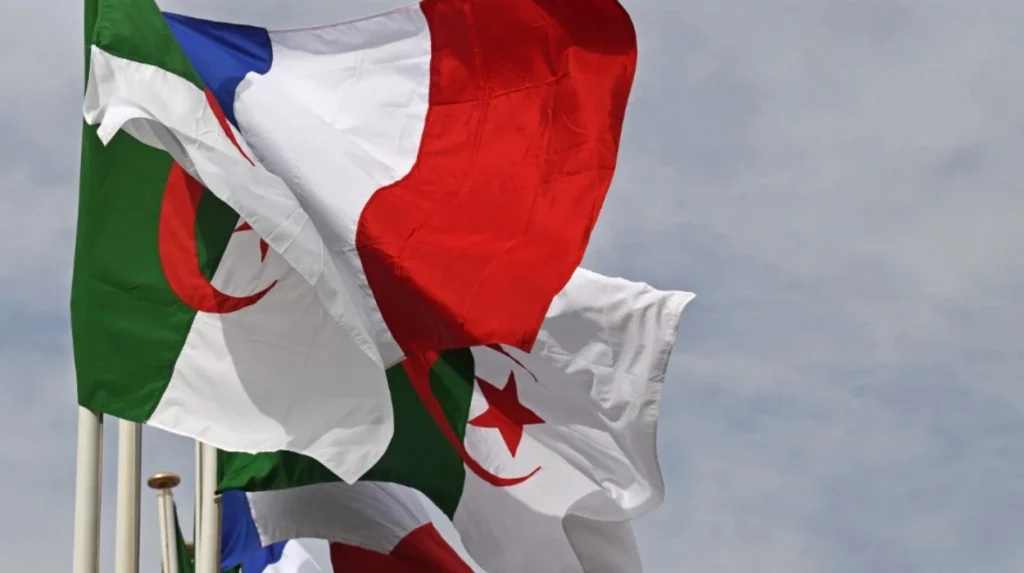
There is a saying that goes, “Every unhappy family is unhappy in its own way,” and this is also true of France and Algeria. France-Algeria relations have in recent times worsened because of a mix of diplomatic differences, immigration strategies, and past grievances.
Algeria was ruled by France for 132 years. Concluded in 1962 following an eight-year independence war, which continues to inform relations between Algiers and Paris. Algeria has pressed for an apology for colonial-era abuses and compensation for nuclear tests carried out in the Sahara Desert. At the same time, France has hesitated to do a complete mea culpa for fear of offending the grandchildren of the colonists and likely also to fear financial exposure.
Algeria was neither a protectorate nor a colony, but rather an integral part of Metropolitan France in the Third, Fourth, and Fifth Republics. France must keep Algeria at all costs because it had only recently been defeated in French Indochina in 1954, and the country needed the territory as an entrance to France’s African possessions, and also for its resources. Presently, the relationship between the two nations is tense due to various factors.
Dispute over Western Sahara
The spark most likely was ignited in July 2024. French President Emmanuel Macron then declared that France was behind Morocco’s Western Sahara autonomy proposal. He made the trip to Rabat in October and assured Morocco’s parliament that France would endorse Western Sahara autonomy under Moroccan control. This development upset Algeria, a backer of the Sahrawi independence struggle.
France is where it was in 1962. It is losing influence, this time in Africa, as former colonies Mali and Senegal wave goodbye to French soldiers and thus must bolster support elsewhere on the continent through Western Sahara and Morocco. In February 2025, France’s culture minister and French Senate speaker toured the Western Sahara, and Algeria retaliated by freezing relations with the French Senate.
Tensions surrounding immigration
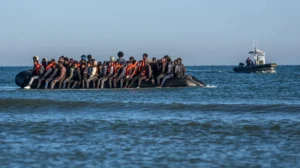
Paris has accused Algeria of not taking back deported Algerian nationals, causing tensions over immigration policy. A fatal February knife attack by an Algerian national, whom French authorities had tried to deport several times, has become a flashpoint, and in March Algeria refused to take back 60 Algerian nationals, an expulsion sought “as a priority” by the French interior ministry.
In February, an Algerian TikTok influencer living in France on a temporary residence permit was indicted on charges of “advocating an act of terrorism,” and four other Algerian TikTok influencers were arrested for inciting violence.
Interior Minister Bruno Retailleau broke the agreed-upon protocols with Algeria and invoked the fast-track procedure to expel illegal immigrants to expel Algerians with legitimate France residency visas. Algerians who appealed to French courts have beaten the expulsion orders.
Paris warned it would cancel visa waivers for Algerians who hold diplomatic passports, and stated it would “reconsider” the 1968 migration accord with Algeria, which simplified the residence of Algerians in France, although France won’t withdraw from the accord, as that will surely ruin any prospect of successful expulsions. Algeria will then invoke the 1962 Evian Accords that benefited Algerians: “In a mode of continuity with the colonial era, freedom of movement and right to settle were assured, and Algerians enjoyed the same rights as the French, except political rights.”
In a peacemaking move, the French interior ministry gave temporary visas to foreign imams because of Ramadan festival shortages. President Macron seized the moment of Eid al-Fitr to call Algerian President Abdelmadjid Tebboune for some damage control, and the Minister of Justice, who is a former Minister of the Interior, was sent to Algiers to attempt to mend fences.
Incidents in diplomacy
Algeria has recalled the French ambassador on several occasions because of issues such as proposed military exercises with Morocco, French diplomatic properties being rented at very low rates in Algeria, and mistreating Algerian passengers at Paris airports. These tensions were no doubt exacerbated by the probe of two French government officials, both French-Algerian nationals, accused of spying for Algeria.
In March, Algeria prohibited all French assistance to private schools. In September 2021, Algeria shut down its airspace for Moroccan civil and military planes, and French military planes, following President Macron’s allegations that Algeria was distorting the history of colonization, and that no Algerian nation existed before the era of French rule. If Algiers were to prohibit overflights by flights of commerce, that would tarnish Air France’s hectic round of flights to African destinations.
Issues from the past
The colonial legacy and nuclear testing in Algeria remain a source of tense relations. France has tested nuclear weapons in Algeria, then buried the waste material, and reportedly refused to provide Algeria with maps of the locations of the waste sites. However, France insists that it did so. These problems resulted in one of the most severe diplomatic crises between the two countries since 1962, when Algeria gained independence, since each country feels “more sinned against than sinning.”
Algeria engaged in two independence wars. The first was against France from 1954 to 1962; 1.5 million killed. The second against Islamist insurgents from 1991 to 2002 (150,000 killed), wars that have conditioned its defense position. Algeria was a member of the Non-Aligned Movement at its founding, primarily developing nations interested in decolonization and fair economic growth.