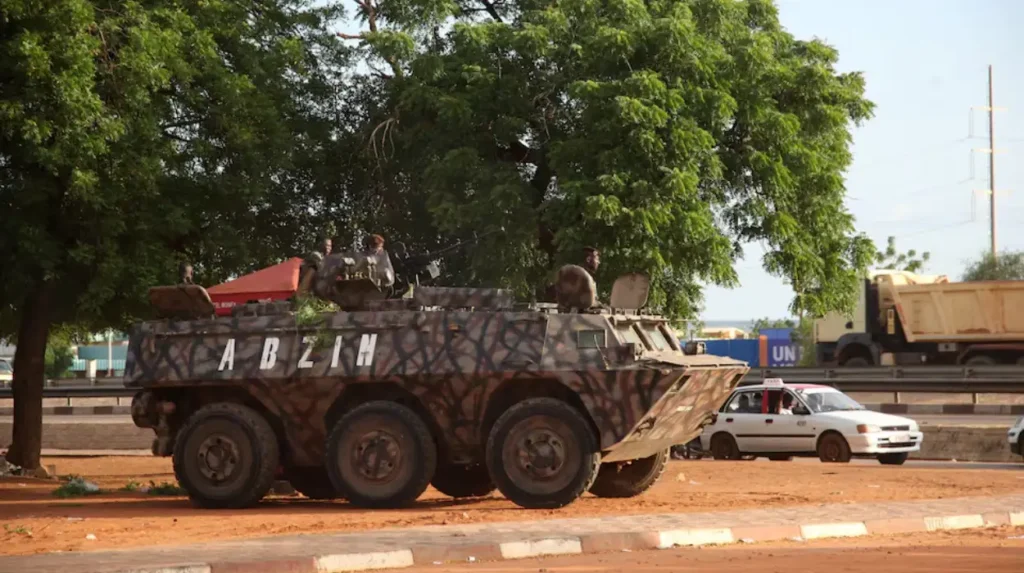
The failed mutiny that erupted in Niamey on August 29, 2026 has rapidly evolved from a disciplinary breach within Niger’s armed forces into a defining geopolitical flashpoint for the Sahel. What began as an overnight assault on Air Base 101, with gunfire echoing near the presidential palace and the state broadcaster, has been reframed by the military government as a foreign-backed destabilisation operation led by Paris. In the days that followed, Niamey’s messaging hardened: the Council of Ministers concluded that the attack was
“incited by a vast network of accomplices led by France,”
and that authorities had compiled “a substantial body of evidence” while reserving the right to take the matter to international courts.
This change in the discourse is more than just semantics. This is part of a conscious realignment of how Niger’s junta, led by General Abdourahamane Tiani, plans to present itself to both domestic and international audiences—as a besieged sovereignty, threatened by its erstwhile colonial master, and not a regime riven by internal dissent. The coup, which was swiftly put down by loyalists, with the assistance of Russia’s Africa Corps, now serves as the foundation for an even greater campaign against France.
Official Accusations: Niamey’s Case Against Paris
Niger’s government has moved quickly to consolidate its version of events. In a televised statement read after the Council of Ministers meeting, officials declared that the assault on Air Base 101 and adjacent strategic sites was not an isolated incident but part of a coordinated plot.
“The attack was incited by a vast network of accomplices led by France,”
the statement read, adding that Niamey possessed “a substantial body of evidence” and would consider pursuing legal action in international forums.
It is important to point out that this language transforms the situation from an internal affair into a case of state-sponsored intervention, which opens the case up for examination by organizations such as the International Court of Justice. These allegations have been supported by Captain Roger Gabriel of the 1st Parachute Battalion who appeared on national television and accused French and Chadian special forces of intending to intervene in favor of the rebels. According to Gabriel, Benin and Côte d’Ivoire had made themselves available to help the rebels with ECOWAS support, and that Gabriel had received calls during the course of the battle from individuals in Belgium, Dubai, and France. Although there is no confirmation by independent sources of these allegations, there is a purpose in their airing to the public eye.
France, for its part, has offered no substantive rebuttal beyond a standard refusal to engage. The French armed forces press office told the BBC it would “not comment” on Gabriel’s allegations, reiterating only that when French forces operate abroad they do so
“in coordination with our partners and in respect of state sovereignty.”
This silence, whether strategic or procedural, has allowed Niamey’s narrative to dominate the information space, particularly among domestic audiences already predisposed to view France with suspicion.
The Role of Russia’s Africa Corps: A Double-Edged Sword
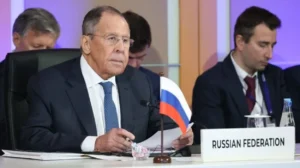
One of the most consequential dimensions of the mutiny is the visible role played by Russia’s Africa Corps in its suppression. Analysts note that loyalist forces, with critical support from Russian paramilitaries, drove rebels from Air Base 101 using kamikaze drones and heavy firepower, forcing surrenders and restoring control over key installations. Russia’s foreign ministry subsequently described the mutineers as
“extremists seemingly incited by European former colonial powers,”
echoing Niamey’s accusations and reinforcing the narrative of Western interference.
This is just one example of an ongoing process: after the July 2023 coup, Niger started cutting ties with France and the West, driving out French troops and turning towards Russia instead. With this mutiny, things are going even faster – with the junta now using paramilitaries from Russia’s Africa Corps to quell internal threats. But this comes at a price, too. As was noted by one of the analysts,
“this mutiny highlights the junta’s dependence on Russia’s Africa Corps mercenaries,”
thus leaving serious doubts about the sovereignty of Niger, even if it accuses France of violating it. Furthermore, the involvement of Russian forces makes regional relations even more complicated. The Alliance of Sahel States (AES), comprising Niger, Mali, and Burkina Faso, has demonstrated its solidarity with Tiani’s regime, calling the mutiny a “betrayal” and stating that “the plotters have been contained and thwarted.” But this new partnership with Russia might make some other AU and ECOWAS members feel uncomfortable, given the growing Russian influence in the Sahel region.
Domestic Fallout: Consolidating Power Through Crisis
For General Tiani, the mutiny presents both a threat and an opportunity. On one hand, the fact that elements within the military were willing to challenge his authority exposes the fragility of his regime. On the other, the crisis has allowed him to consolidate power by framing dissent as treason and foreign collusion. Pro-junta rallies in Niamey following the mutiny featured crowds waving Nigerien and Russian flags, chanting anti-imperialist slogans, and explicitly accusing France, the EU, and ECOWAS of orchestrating the unrest.
The government’s decision to air footage of a substantial weapons cache recovered from the mutineers on September 2 further reinforced this narrative. By showcasing the seized materiel, authorities aimed to demonstrate the seriousness of the threat and justify their crackdown on suspected collaborators. At least three members of the presidential guard were killed during the clashes, and dozens of soldiers were reportedly killed or arrested, though exact numbers remain unverified.
This dual narrative—portraying the mutiny as both an internal discipline breach and a foreign-backed plot—allows the junta to pursue multiple objectives simultaneously. Domestically, it justifies purges within the military and the suppression of dissent. Internationally, it reinforces Niger’s anti-colonial messaging and strengthens its alignment with Russia and other non-Western partners.
Regional and International Reactions: A Divided Continent
International reactions to the mutiny are varied, mirroring the wider debates about the political future of Niger. While the African Union denounced the unrest and appealed for calm, it has refrained from endorsing the claims of an outside plot that Niamey made. ECOWAS, which has persistently sought to reestablish constitutional order in Niger, has not yet released any statement regarding the mutiny, although its member countries are probably watching the developments closely. For its part, Russia has taken the chance to promote its own view of Western involvement in African matters.
By labeling the mutineers as “extremists seemingly incited by European former colonial powers,” Moscow portrayed itself as a protector of African sovereignty against neocolonial interference. Such a statement would resonate well with many people in the Sahel, where anti-French sentiments have grown in the recent past because of failure in countering terrorism and resentment against colonial past. The United States and EU have kept mostly silent, probably being cautious about escalating the situation or backing up Niamey’s claims. Nonetheless, their lack of reaction could be seen as their implicit endorsement of the French position as the main Western mediator in the area.
Implications for Sahel Geopolitics: A New Phase of Confrontation
The mutiny and its aftermath signal a new phase in Sahel geopolitics, one characterized by heightened confrontation between Niger and its former colonial ruler, and a deepening reliance on Russian security support. For France, the accusations represent another blow to its already diminished influence in the region. Despite withdrawing its troops from Niger in 2024, Paris continues to be portrayed as a meddling power seeking to undermine sovereign governments.
For Russia, the crisis offers an opportunity to expand its footprint in the Sahel, both militarily and diplomatically. The visible role of Africa Corps in suppressing the mutiny demonstrates Moscow’s willingness to provide tangible security support to allied regimes, even as it faces criticism for human rights abuses and destabilizing activities elsewhere in Africa.
For Niger itself, the mutiny underscores the precariousness of Tiani’s rule. While the junta has successfully framed the incident as a foreign plot, the underlying tensions within the military remain unresolved. Future challenges are likely, particularly if economic conditions deteriorate or if regional pressures mount.
A Defining Moment for Niger and the Sahel
While the attempted coup of August 29, 2026 will eventually be remembered more for the days of fighting in Niamey than anything else, it was the geopolitical shockwave set off by the accusation against France that has made the most profound impact. By claiming that France was behind the revolt, the junta in Niger has set its stance clearly and definitively: it will never allow the interference of the West and will instead depend on other powers in order to preserve its independence. It only remains to be seen whether the policy will help bring stability or further isolate Niger.