Vanuatu has taken its long‑running sovereignty fight with France to the world’s highest court, asking the International Court of Justice (ICJ) to rule that two tiny, uninhabited Pacific islands belong to Vanuatu and to draw a single maritime boundary between the two states’ exclusive economic zones. The petition, dated 31 August 2026, and made known to the International Court of Justice on 1 September, represents the most definitive step yet in a struggle which has elements of decolonization, geo-strategy, and economics because of the lucrative prospects of managing fishing rights and seabed resources. However, the first problem facing this case is the requirement that France consent to the court’s jurisdiction.
The islands at the heart of the case
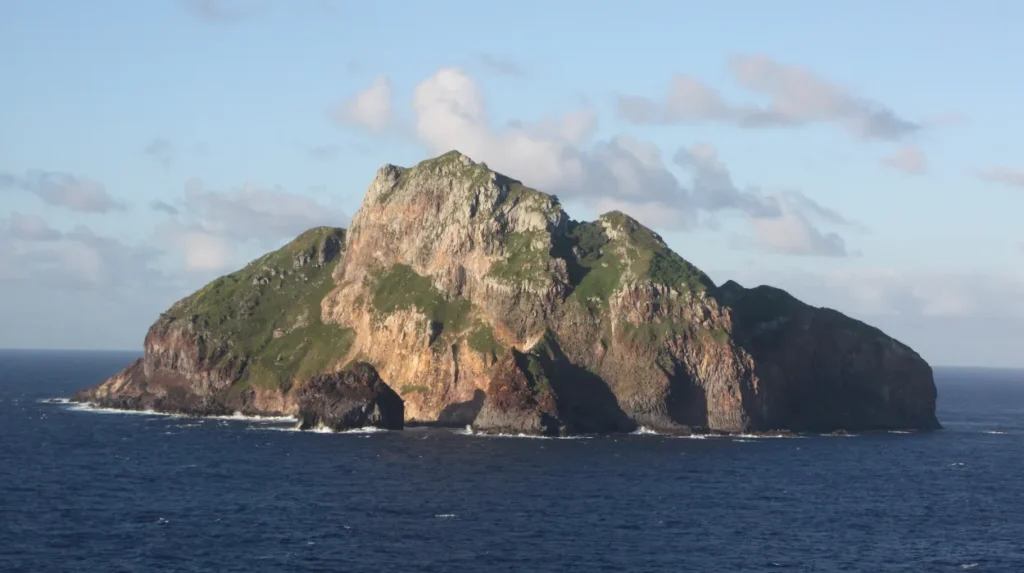
The conflict revolves around Matthew Island (locally known in Vanuatu as Umaenupne) and Hunter Island (also called Umaeneg/Leka), which are small volcanic islands located about 300 km to the east and southeast of New Caledonia, and the southeast of the main group of islands belonging to Vanuatu. Although not inhabited, their legal significance is huge since sovereignty over them means controlling the area of territorial water, exclusive economic zone (EEZ), and continental shelf, which under international law may be up to 200 nautical miles and hold many rights to fisheries and seabed resources. For Vanuatu, a small island developing state where its economy depends heavily on fishing and tourism, every kilometer of EEZ counts. For France, the islands help ensure control over a large maritime space around New Caledonia.
Vanuatu’s legal move at the ICJ
Vanuatu’s application asks the ICJ for two main outcomes: first, a declaration that Vanuatu holds sovereignty over Matthew and Hunter; second, an order establishing a single maritime boundary delimiting the EEZs and continental shelves of Vanuatu and France (with respect to New Caledonia). Port‑Vila filed the case under Article 38(5) of the ICJ Rules of Court, a procedural route known as forum prorogatum that allows a state to bring a case against another that has not pre‑accepted the Court’s compulsory jurisdiction. The practical effect is clear: the ICJ will transmit the application to Paris and then wait. As the Court stated in its press release,
“No action will be taken in the proceedings unless and until France consents to the Court’s jurisdiction in the case.”
This jurisdictional gatekeeper is not a minor detail. France terminated its general acceptance of ICJ compulsory jurisdiction in 1974 following the Nuclear Tests cases and has since only accepted the Court’s jurisdiction on an ad hoc basis in specific disputes. While Paris has consented in the past—in 2003 and 2006, for example—there is no indication yet that it will do so here. Without that consent, the case stalls at the threshold, regardless of the strength of Vanuatu’s historical or legal arguments.
Competing histories: colonial maps and post‑independence claims
The case made by Vanuatu is that of rectifying what it perceives as a historical colonial injustice. Indeed, being the former Anglo-French Condominium of the New Hebrides, the entity that became Vanuatu in 1980 came out of a complicated process of decolonisation wherein Britain and France ruled the islands jointly. The government of Port-Vila asserts that Matthew and Hunter were not properly disentangled from the condominium prior to independence and France’s later decision to include the islets within the New Caledonian territories was an infringement on the territorial integrity of the archipelago. Furthermore, Vanuatu underscores that Indigenous populations were not consulted during the process and French control of the area can be seen more as a vestige of colonialism than an expression of sovereignty.
Conversely, the case made by France is that of interpreting the mid 20th century agreements differently. Indeed, according to Paris, the country has been exercising legitimate and undisrupted sovereignty since the mid 1960s after signing a 1965 agreement with the UK that stipulates that Matthew and Hunter are under New Caledonia’s jurisdiction and not the Anglo-French condominium.
The French Foreign Ministry has acknowledged a “long‑standing dispute” dating to Vanuatu’s independence but has signalled there is “no question of ceding sovereignty.” Foreign Minister Jean‑Noël Barrot has reaffirmed “French sovereignty” over the territory, underscoring Paris’s determination to hold the line.
From stalled talks to the courtroom
The path to The Hague followed a series of diplomatic efforts that ultimately broke down. Bilateral negotiations took place in 2018 and 2019, then were revived with an agreement in 2025 to hold new rounds of talks. A second round in Paris in early summer 2026 ended without progress, prompting Vanuatu to announce it would pursue legal action. After those talks, Vanuatu’s Deputy Prime Minister and Finance Minister Johnny Koanapo declared,
“Our position on sovereignty remains unchanged. Matthew and Hunter have always belonged and will always belong to the people of Vanuatu.”
That line captures Port‑Vila’s core narrative: the islands are historically and legally Vanuatuan, and France’s presence is an anomaly to be corrected.
On its side, France has yet to respond in public to the ICJ filing, by September 2026, which might indicate an ongoing internal consideration over whether to take part in proceedings before the Court or not. In view of the political importance of New Caledonia and the role of France in the Pacific region, entering into ICJ procedures would be politically risky for the French government, particularly since far-right figures have already exploited the dispute as a political platform. On the other hand, refusing to participate in ICJ procedures altogether could attract criticisms in the Pacific region.
Why the law of the sea matters: rocks, reefs, and EEZs
Even if France consents and the case proceeds to the merits, the outcome will hinge on technical questions under the UN Convention on the Law of the Sea (UNCLOS), to which both states are parties. A central provision is Article 121(3), which states that
“Rocks which cannot sustain human habitation or economic life of their own shall have no exclusive economic zone or continental shelf.”
Because Matthew and Hunter are uninhabited volcanic rocks with no fresh water or resident population, this rule could limit or negate any EEZ generated from the islands themselves.
This point of law is very important. If the ICJ decides that the islets are “rocks” within the meaning of Article 121(3), the possession of them might not entitle the state a 200-nautical-mile EEZ. On the other hand, the maritime boundary may be determined based on different baselines with respect to geographical and proportional principles. Thus, the benefit from the victory might not be economic. In the case of Vanuatu v Australia, the claim of the plaintiff is very broad under the UNCLOS where it aims at determining a boundary line for both EEZ and continental shelf between the states.
Strategic stakes in a shifting Pacific
This conflict takes place within the context of increasing strategic rivalry in the Pacific Ocean, where China’s growing influence, the political status of New Caledonia, and the continued presence of France in the region have increased tensions. Other Pacific countries view the conflict between Vanuatu and France as an example of how small states can use international law to contest maritime spaces. An arbitration decision in favor of Vanuatu, even if it is limited in scope, will encourage further legal challenges of this kind, while a decision in favor of France or one involving procedural dismissal of the case will affirm the status quo.
France views the islands as part of a wider Pacific strategy involving military presence, development aid, and diplomacy through the Pacific Islands Forum and other bodies. The loss of sovereignty over Matthew and Hunter islands will mean not only the reduction of France’s maritime jurisdiction but will show that it is vulnerable in its broader territorial order in the region. Vanuatu will benefit from any success in expanding its EEZ.
What comes next: consent, counter‑claims, and delay tactics
The immediate next step is procedural: France must decide whether to accept ICJ jurisdiction. If it does, the Court will set a timetable for written pleadings, followed by oral hearings, likely stretching over many months. Paris could also explore preliminary objections—arguing, for example, that the dispute is inadmissible or that the Court lacks jurisdiction even with consent—tactics that can delay a merits ruling for years. If France refuses consent, the case ends at the threshold, though Vanuatu could still pursue political pressure through regional bodies and the UN General Assembly.
In parallel, both sides may continue to signal their positions through diplomacy and media. Vanuatu is likely to emphasise decolonisation and self‑determination narratives, while France will stress historical continuity and legal title. The tone of those exchanges will matter not only for the legal case but also for broader France–Pacific relations at a time when New Caledonia’s future remains a live political question.