The European Union is being pushed into a new phase of climate emergency politics, with its crisis management commissioner warning that the bloc must invest more and move faster as France braces for another punishing heatwave and widening wildfire danger. The message is clear: Europe is no longer dealing with isolated summer disasters, but with a recurring climate-driven crisis that is straining emergency systems, budgets and political patience.
The message from Hadja Lahbib is timely, given that France and Spain are battling fires, displacing many and preparing themselves for heat waves, which may return in the coming days. She speaks in the wake of approval by the European Commission of a study recommending that €70 billion per year be invested on climate change adaptation until 2050.
Heat And Fire Pressure
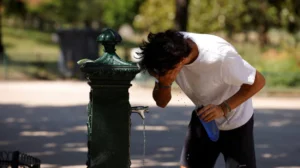
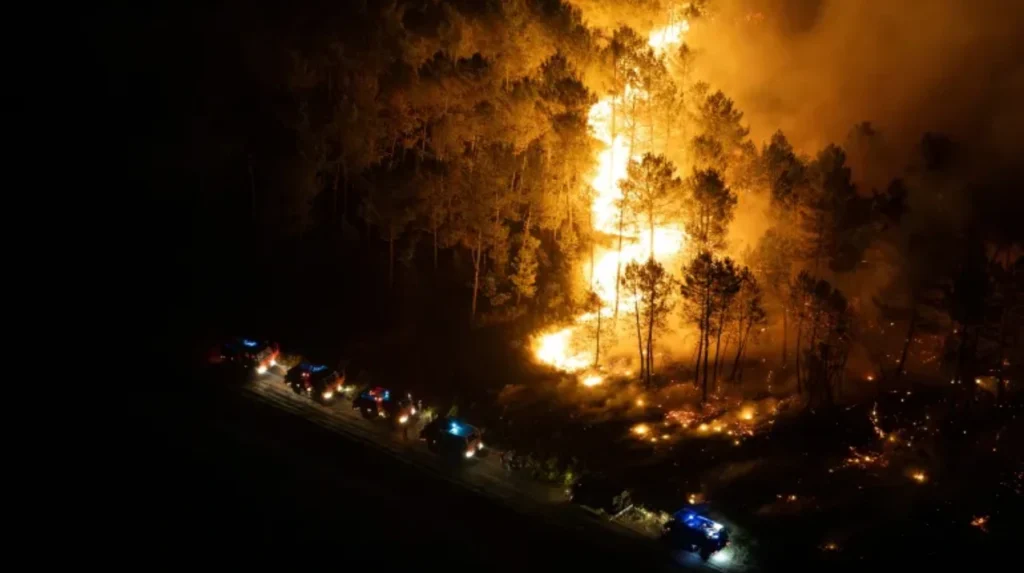
The country will experience what is considered another harsh wave of heat with dry wind and high temperatures expected to exacerbate the situation amid the worst wildfire outbreak in the continent in years. According to Reuters, seven aircraft and four helicopters were sent to France from the EU as well as six aircraft and three firefighting brigades to Spain and in addition, Brussels also deployed more than 770 firefighters in vulnerable areas before the start of the peak period. The scope of the problem does not concern only France but also other places. For instance, in southwestern France, a wildfire near Bordeaux destroyed about 42,000 hectares of land, 240 houses and forced the evacuation of some 220,000 people whereas in Spain, wildfires forced up to 60,000 and 75,000 people respectively depending on the stage of the reportage.
Lahbib’s Warning
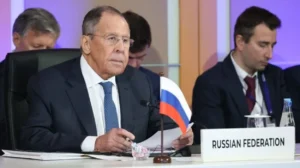
Lahbib’s central argument is that Europe cannot keep treating wildfires as a purely emergency-service problem. She said the EU’s response to wildfires must evolve alongside climate change, and that member states should use more of the available resources not only on aircraft and rapid response, but also on forest management and public education about risky behavior.
“Our response must evolve just as quickly,”
Lahbib said, arguing that the bloc needs to accelerate its adaptation plans because climate change is already reshaping the scale and timing of fire seasons.
Her warning also reflects the reality that EU crisis support is partly a backstop, not a full substitute for national preparedness. The bloc’s Civil Protection Mechanism and rescEU can deploy resources across borders, but primary responsibility for wildfire management still rests with national governments.
Money And Capacity
The financing problem itself is getting to be as serious as the fire problem. According to an EU Commission study carried out in January, the EU, member countries, and the private sector ought to invest in climate adaptation roughly €70 billion per year until 2050, which includes roughly €30 billion on infrastructure, €21 billion on ecosystems, and €12 billion on food security. The countries most in need of climate adaptation were France, Italy, Germany, and Spain.
This study also indicated that current financing for adaptation was inadequate and that climate risk and adaptation needs should be better integrated into national budget planning. In other words, Lahbib’s appeal is not just rhetoric. It reflects a broader Commission policy line that Europe’s resilience deficit is already costly and growing. The crisis management budget is also strained. According to Reuters, the Commission planned to dedicate €10.7 billion to crisis management funding in the coming EU budget, but the compromise made by member countries reduced the number to €9.1 billion, and this could matter if Europe faces multiple disasters in one summer.
Why The Fires Spread
The wildfires now raging in France, Spain and parts of southern Europe are being driven by a dangerous combination of drought, heat and wind, with scientists repeatedly linking those conditions to human-driven climate change. Reuters and other outlets reported that Europe is the world’s fastest-warming continent and that climate change is increasing the frequency and severity of heatwaves, droughts and wildfire outbreaks.
In France, some fires have behaved in ways that underline how the problem is changing. CGTN reported that the Gironde blaze produced an unprecedented pyrocumulonimbus, a fire cloud that can create its own winds and lightning, making the fire far harder to control. Wildfire experts also warned that so-called sixth-generation fires, which generate enormous energy and can become nearly impossible to suppress directly, may become more common as temperatures rise.
That scientific warning matters because it suggests the EU is not just battling a larger number of fires, but a different kind of fire environment altogether. Once a blaze starts creating its own weather, the role of firefighters shifts from control to protection, containment and evacuation.
Human Cost Mounts
The human price has been steep too. According to official health data from France, more than 5,700 excess deaths were recorded in that country’s heat wave in June, demonstrating the wider public health effects of extreme heat beyond just the infernos. Severe drought conditions have been noted in the vegetation in the country, according to the official weather and health authorities, making ignition easier. It has also been emphasized multiple times that people should be careful because the majority of these fires are caused by human beings.
According to French authorities, people were asked to stay away from barbecues during their heat warnings because they were the cause of almost all fires there. The emergency workers have also been affected by this crisis. As was reported by France, some firefighters have lost their lives battling these blazes, and authorities in both France and Spain have issued repeated warnings that the coming hours and days will be decisive.
Europe’s Wider Exposure
Lahbib’s remarks were not limited to the Iberian Peninsula and France. She warned that “extreme conditions” were looming for Hungary, Slovakia and the Czech Republic as well, suggesting the fire and heat threat is spreading eastward and could soon stretch EU rescue capacity even further.
That wider warning is important because it shows the EU’s crisis model is being tested across multiple regions at once. When the same reserve aircraft, firefighters and logistics systems are needed in France, Spain and potentially Central Europe, the question becomes whether existing mutual-aid mechanisms can keep up with a climate that is producing more simultaneous emergencies.
The Commission has already tried to strengthen the machinery. It is buying a permanent fleet of 12 Canadair firefighting planes and five helicopters for delivery between 2027 and 2030, while the rescEU reserve currently includes 22 firefighting aircraft and five helicopters contracted from member states.
Policy Implications
The policy lesson from the current crisis is fairly clear: while Europe may still have the tools for action, it lacks the wiggle room for procrastination. What Lahbib’s commentary is telling us is that adapting to climate change must be seen as security policy rather than an environmental issue. It requires more money, planning, land management and a public campaign on wildfire dynamics. It also involves admitting that the old strategy of mobilizing everything only when the fire breaks out will not work anymore when it takes just a few hours for heat, drought and windy conditions to turn a local fire into a regional disaster.
The EU’s own climate framework supports that direction. The bloc has a goal of climate neutrality by 2050 and a 2030 emissions-reduction target, and it adopted an Adaptation Strategy in 2021 to build a climate-resilient Europe. Lahbib’s intervention suggests that those goals now need to be matched by faster spending and sharper implementation.commission.