Elon Musk’s latest intervention in French politics has added a new layer of volatility to the country’s already tense pre-election atmosphere. By calling Marine Le Pen “France’s last hope”, the world’s richest man has not only endorsed a far-right presidential contender, but also triggered a fresh debate in France about foreign influence, digital power, and the growing political role of global tech billionaires.
It is important because it represents the nexus of a number of high-stake issues: the effort by Le Pen to legitimize her movement, the growing trend towards political messages by Musk, and French sensitivities about any attempts by others to interfere in their internal democracy. What would have been brushed off as just another social media post has now become a political occurrence with consequences for 2027.
A direct endorsement from Musk
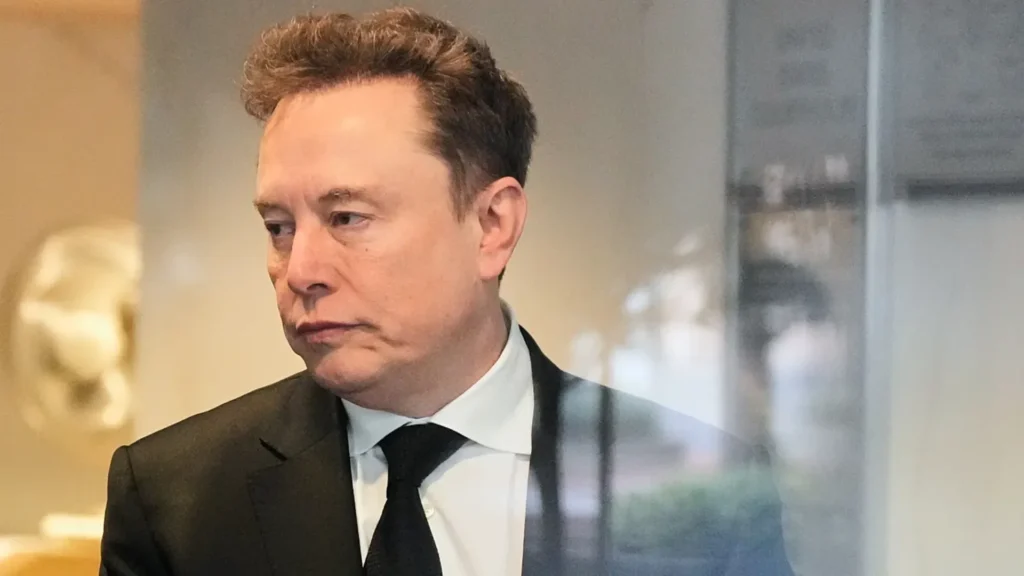
Musk’s endorsement came in a post on X, the platform he owns, where he backed Le Pen and described her as “France’s last hope”.
There were no subtleties in the language used. This was a clear political statement, couched in bold rhetoric and made known to the whole world. According to media reports, the statement ignited the debate on whether a foreign tycoon should be interfering in the political battles in France. It is equally important to note that this comes at a very critical time. Marine Le Pen is gearing up to contest the presidency again in 2027. This election bid has already been defined by controversies, legal wrangles and the attempt by the National Rally to project itself as a governing political force. The public endorsement by Musk is giving her international recognition but she is also open to the criticism that she is gaining foreign exposure.
Why the reaction was so sharp
The response in France was not just about Musk’s opinion. It was about who he is, how much influence he has, and what it means when such a figure weighs in on an election in another democratic state. Reports on the story described the reaction in terms of “foreign influence concerns” and “interference claims,” reflecting a broader anxiety that political debate is being shaped by actors outside the country’s democratic system.
Such worries have arisen because Musk is not your average commentator. Firstly, Musk is the owner of the platform X which reaches a great number of people. It has been reported that the number of Musk’s followers on his account on this platform is about 240 million. Such numbers count a lot. If such a person endorses some candidate for presidency, the message is spread to much wider audience than usual. This is another reason why the case should not be underestimated. Indeed, this case cannot be regarded only as a reflection of Le Pen’s politics. Here we can observe the ability of platform owners to influence political process outside their own country. The reactions of French citizens also show us how the citizens of any country fear foreign intervention in the process of electing their leaders.
Le Pen’s political position
It would be safe to say that Marine Le Pen is used to making controversial statements, and in this case, the endorsement comes right in the middle of a very long process of political redemption. She is the head of the National Rally, the party which for years has been seeking to come out of its political periphery into the mainstream. It is already well-known that she is striving for the French presidency, and news sources claim that she has announced her intention to run for the presidency in 2027, which would be the fourth time she tries to become the French president. However, this particular campaign takes place against the backdrop of her involvement in some legal troubles. As reported, she has been convicted of misusing the funding of the European Parliament and has been actively participating in the appeals concerning that issue. In addition, the news stated that the appeal court reduced the duration of her ban as a result of that conviction, while she still is challenging it.
Musk’s endorsement therefore does more than offer support. It helps Le Pen project resilience. By receiving backing from one of the world’s most visible entrepreneurs, she can present herself as part of a larger global populist current rather than a politician isolated by legal and institutional battles. But the same endorsement can also reinforce the idea that her candidacy relies on loud external patronage instead of broad domestic consensus.
Musk’s broader political pattern
This is not the first time Musk has been drawn into European politics. Coverage of the Le Pen story noted that he has repeatedly boosted right-wing and far-right figures across Europe, making this endorsement part of a wider pattern rather than a one-off intervention. That matters because it suggests ideological consistency, not random commentary.
For many observers, Musk’s political activity now appears inseparable from his platform ownership and his public brand. He is not just speaking as a private citizen; he is speaking as the owner of a global communication system with extraordinary reach. In that setting, a phrase like “France’s last hope” is not merely rhetorical flourish. It becomes a political signal, one that can shape perceptions among supporters, opponents, journalists, and international audiences alike.
That broader pattern also explains why the episode resonated beyond France. Across Europe, political actors and analysts have grown more attentive to the role of online platforms, algorithmic amplification, and foreign-aligned messaging in national elections. Musk’s support for Le Pen fits neatly into that debate, and the reaction suggests the continent is increasingly willing to scrutinize such interventions as political acts rather than harmless commentary.
The legal and electoral backdrop
Le Pen’s presidential run in 2027 does not begin on equal terms with the opposition. The news has suggested that she is appealing her conviction and making desperate attempts to preserve her political career amid the consequences of the European Parliament funding scandal. It is relevant because of the impact on the process of the election and the campaign narrative in connection with the legal status of Le Pen. Legal issues play a crucial role in her political comeback. As the news says, she claims that she is going to take part in the race for the presidency in 2027 and still appeal the conviction. It means that her campaign unfolds in combination with the legal defense one.
This is why the story has such strong journalistic value. It is not just a headline about an Elon Musk post. It is a snapshot of a broader political struggle involving party branding, judicial accountability, election timing, and the transnational influence of online elites. In practical terms, it shows how one viral message can be folded into an already complex national campaign.
What the statement means politically
Musk’s choice of words matters as much as the endorsement itself. Calling Le Pen “France’s last hope” suggests urgency, finality, and a civilizational framing of politics. It implies that France is in crisis and that Le Pen represents the only viable escape route. That language is powerful because it converts a partisan preference into a broader national rescue narrative.
This kind of framing works well politically for Le Pen in that it raises her status from that of one of many candidates to a symbol of something larger. It appeals to the emotional nature of populist politics, where the leaders are often portrayed as being the last line of defense against some form of degradation or chaos. At the same time, however, the strategy is dangerous because the criticism could also employ the same rhetoric in order to claim that the endorsement has no relevance to French democracy and is instead an ideological projection from afar. Thus, the controversy goes beyond a matter of etiquette; it speaks to the role of digital influence in elections, the porousness of national politics in the face of foreign voices, and the increasingly accepted practice of billionaires’ political activism.
The wider significance for Europe
The encounter between Le Pen and Musk is bound to be seen as yet another instance of how the world’s tech magnates are not content with staying away from politics. Such actions may serve as an amplification of an ideology, motivate followers, and throw opponents off balance without having to go through any traditional media channels or party politics. What complicates matters further is that the backing was for a politician who already had connections to the far-right camp, making the message much more politically symbolic. For France, the matter is not just about helping Le Pen with her campaign through Musk’s endorsement but about how such endorsements might skew political debate at home by giving the word of a rich foreigner more weight than that of voters, political parties, and domestic institutions.
For Le Pen, the timing is one that presents both opportunities and challenges. She has acquired a strong international ally, but also a point where her success can be blamed on outside forces that have their own ideologies. This is something that is bound to trail her campaign through to the 2027 election campaign cycle. What Musk has managed to do with his endorsement of Le Pen is that he has accomplished what the greatest political acts usually achieve – they shift focus, widen the divide, and prompt a wider discussion on power. The headline belongs to Le Pen, but the real story is about who gets to meddle in the democratic process in the platform age.