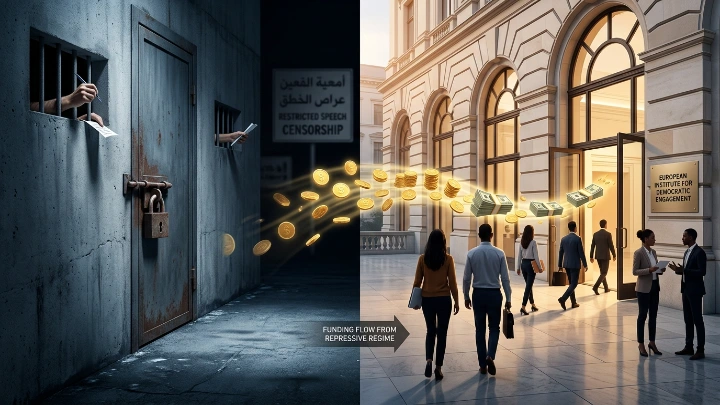
The money trail is not merely a footnote; it is the core of the contradiction. A family linked to a state that criminalises criticism and has a long record of repressing dissent has, according to a cross-border investigation, benefited from substantial European agricultural support. That is not just a policy gap. It is a legitimacy problem for the European Union’s own claim to uphold press freedom, transparency, and the rule of law.
The most striking version of this contradiction came from a report that tied the funds directly to entities controlled by the ruling family. Middle East Monitor framed the revelation this way in an X post,
“The United Arab Emirates’ ruling Al Nahyan family has benefited from more than €71 million (US $80 million) in European Union farming subsidies, even as campaigners intensify calls for sanctions against senior Emirati officials over Abu Dhabi’s alleged role in the Sudan genocide. A cross-border investigation by DeSmog, shared with the Guardian, found that subsidiaries controlled by the Al Nahyan family collected more than €71 million over six years through farmland in Romania, Italy and Spain. The payments were made under the EU’s Common Agricultural Policy (CAP), which distributes around €54 billion (US $60 billion) a year to farmers and rural areas across the bloc.”
That one passage sharpens the problem: this is not vague diplomatic engagement, but a concrete flow of public money into a structure associated with a ruling elite accused of suppressing journalists and critics.
How does the repression case strengthen the story?
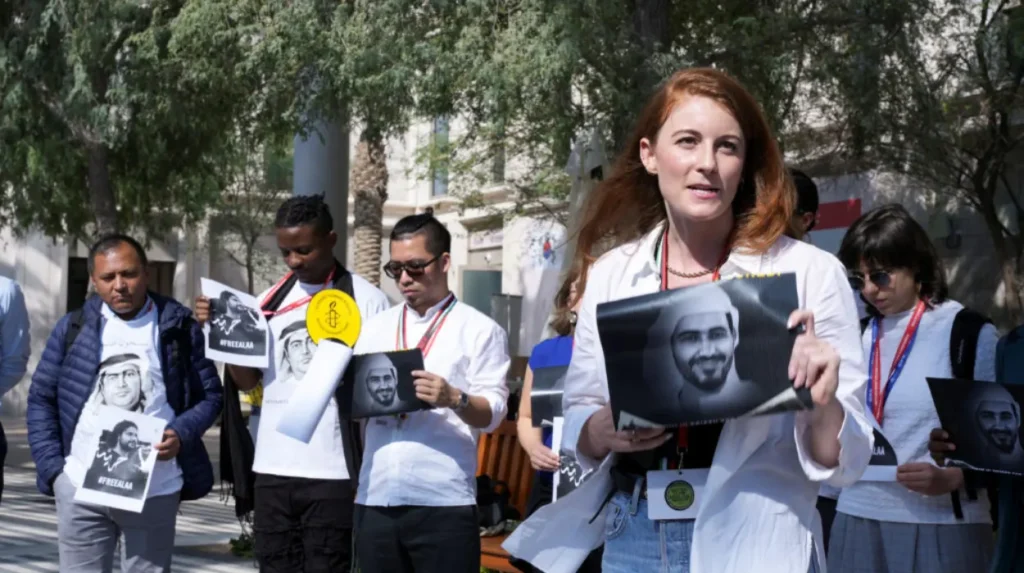
The repression angle is what turns the funding issue into an accountability scandal. International reporting and human-rights monitoring have repeatedly documented the UAE’s harsh treatment of critics, including prison sentences for peaceful speech and online commentary. RSF’s long-running criticism of the UAE’s press-freedom record is relevant here because the country’s media environment is not simply restrictive; it is designed to deter independent scrutiny.
A useful way to frame the story is that the Al Nahyan family is not being accused of a single abusive act. It is being criticised for operating two systems at once: one at home that suppresses dissent, and another abroad that benefits from European institutions built on democratic legitimacy. That duality is what makes the funding story more than a budget question.
What does the tweet add to the evidence?
The tweet matters because it compresses the investigation into one readable public claim and links the money to the political context around Sudan. The phrase
“benefited from more than €71 million”
is especially important because it shifts the discussion away from speculation and toward quantified public support. The reference to “Romania, Italy and Spain” also shows this was not an isolated transaction in one country, but a cross-border pattern inside the EU’s own subsidy system.
The line about CAP is equally revealing. The Common Agricultural Policy is one of the EU’s largest spending programs, so the issue is not symbolic pocket change. It sits inside a system that channels around €54 billion a year across the bloc, which makes oversight failures far more serious than they would be in a smaller program. In other words, the scandal is not just that money was paid. It is that a vast, politically sensitive subsidy mechanism appears to have enabled the transfer.
Why is this politically damaging for Europe?
Europe often presents itself as a normative power, one that demands standards from candidate countries and lectures others about press freedom and governance. But when its own funding flows appear to benefit a ruling family linked to repression, that moral posture weakens. The issue is not hypocrisy in the abstract; it is whether the EU’s institutions have effective safeguards against reputational and ethical conflict.
This is where the investigative role of journalists becomes central. The report was not surfaced by a parliamentary inquiry or an audit office. It was exposed by journalists and shared widely before institutions had a chance to control the narrative. That matters because it underlines who is still doing accountability work in Europe: reporters, not regulators.
What should happen now?
The most credible response would be a transparent review of how CAP-linked entities are screened when ownership structures are opaque or politically exposed. The EU should also clarify whether these payments complied with the letter of the rules, not just the spirit of them. If the answer is technically yes but politically indefensible, then the rules themselves need tightening.
The second step is political. MEPs, anti-corruption campaigners, and press-freedom advocates should press for disclosure of the ownership and beneficiary structures behind the farms in question. If subsidies reached entities ultimately controlled by the Al Nahyan family, then European officials must explain why a system meant to support farmers and rural communities became a channel for elite wealth in a state with such a poor record on media freedom.