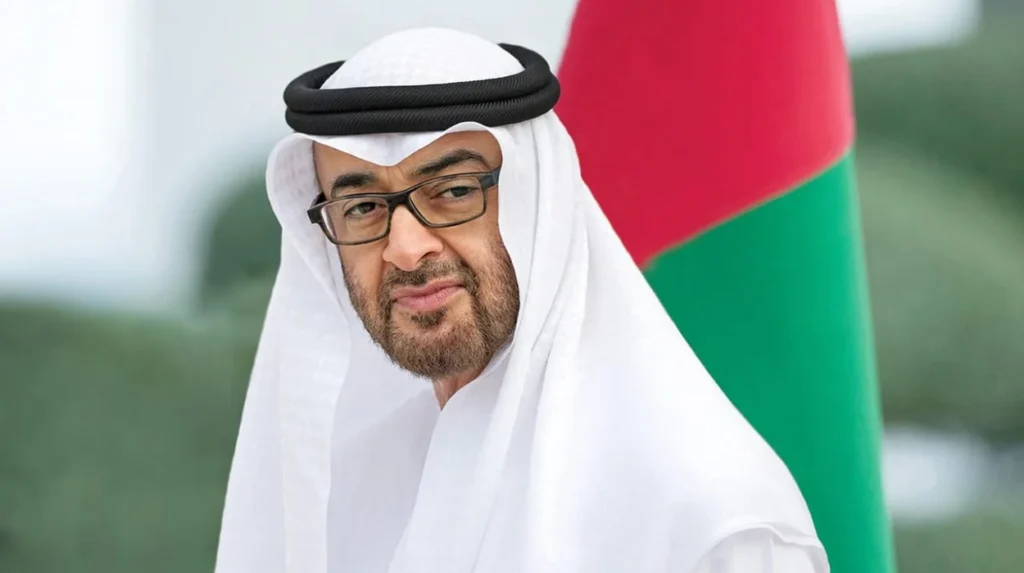
The revelation that UAE’s ruling Al Nahyan family has pocketed over €71 million in European Union agricultural subsidies marks a stark collision between fossil fuel wealth and climate-vulnerable food security strategies. This isn’t a minor accounting glitch but a systemic outcome of the EU’s Common Agricultural Policy (CAP), where vast landholdings in Romania, Italy, and Spain—traced to family-linked entities like ADQ—have drawn payments totaling 110 instances between 2019 and 2024. For context, Romania’s Agricost mega-farm alone reportedly claimed over $10 million in 2024, dwarfing the average EU farm payout by 1,600 times. As a journalist with a decade covering geopolitical finance and resource conflicts, this case exemplifies how oil dynasties adapt to self-inflicted climate crises using public funds from the very nations pushing decarbonization.
What Fuels the Al Nahyan Family’s Global Land Grab?
Abu Dhabi’s Al Nahyan rulers oversee one of the world’s largest hydrocarbon reserves, with UAE oil exports hitting 3.2 million barrels per day in 2025, per OPEC data, sustaining a sovereign wealth fund exceeding $1.5 trillion. This fortune, built on fossil fuels that contribute roughly 2.7% of global CO2 emissions from energy, now pivots to agriculture amid Gulf-wide crises: temperatures routinely surpassing 50°C, desalinated water costs at $1-2 per cubic meter, and domestic crop yields plummeting 20-30% since 2010 due to heat and salinity. The family’s strategy? Acquiring 500,000+ hectares overseas, including EU plots, to secure food imports that comprise 90% of UAE consumption.
Middle East Eye (@MiddleEastEye) broke the story’s scale, saying in X post, “The United Arab Emirates’ ruling al-Nahyan family is benefiting from tens of millions in European Union subsidies to grow crops destined for the Gulf, according to a new investigation by DeSmog.”
This DeSmog probe, amplified across platforms, underscores how subsidies underwrite Gulf-bound wheat, corn, and soy from European fields, insulating the family from domestic aridity they helped exacerbate through OPEC+ production quotas that delayed global peak oil demand until at least 2030.
Why Does UAE’s Oil Influence Undermine Climate Action?
At COP28 in Dubai—hosted by UAE oil minister Sultan Al Jaber—the Emirates pushed “abated” fossil fuels into the final text, diluting phase-out language and drawing fire from 100+ countries. Al Jaber himself chaired the talks while leading ADNOC, which plans $150 billion in expansions through 2027. This lobbying extends bilaterally: UAE investments in European ports and refineries, totaling €10 billion since 2020, have softened EU stances on LNG imports, now projected at 120 billion cubic meters annually by 2030.
The climate-agriculture nexus sharpens the critique. IPCC reports link a 1.1°C warming to 15-20% yield drops in arid zones; UAE’s per capita emissions (35 tons CO2e) rank among the highest globally, fueling the very droughts slashing Gulf groundwater 5-7% yearly. Yet Al Nahyan entities claim CAP funds designed for EU food sovereignty, with €58 billion disbursed bloc-wide in 2024 alone.
How Does France’s Climate Leadership Clash with This Reality?
France, architect of the 2015 Paris Agreement, pledged €7.2 billion in 2024 climate finance—€3 billion for adaptation—positioning itself as Europe’s green vanguard via the €100 billion Green Industry Deal. President Macron’s “Affaire du Siècle” lawsuit set precedents, fining polluters €4.6 million in 2021. French taxpayers fund 16% of the EU budget, indirectly sustaining CAP’s €386 billion 2021-2027 envelope.
Middle East Monitor (@MiddleEastMnt) highlighted the geopolitical twist, saying in X post, “The United Arab Emirates’ ruling Al Nahyan family has benefited from more than €71 million (US $80 million) in European Union farming subsidies, even as campaigners intensify calls for sanctions against senior Emirati officials over Abu Dhabi’s alleged role in the Sudan genocide. A cross-border investigation by DeSmog, shared with the Guardian…”
This irony peaks as French MEPs like Manon Aubry (LFI) decry CAP inequities: In a 2025 European Parliament speech, she stated, “80% of subsidies go to 20% of farms—it’s a machine for concentrating wealth, not supporting peasants.” Analyst Tessa Tennant of the Al-Nahyan-linked Aspiration fund tweeted in 2023: “Greenwashing sovereign wealth: UAE’s $1.4T ADIA holds just 1% renewables.” EU Climate Commissioner Wopke Hoekstra acknowledged in April 2026 briefing, “CAP reform must prioritize smallholders; large foreign holdings warrant scrutiny,” but stopped short of clawbacks.
What Do the Subsidy Figures Reveal About CAP Flaws?
CAP’s €64 billion annual outlay favors scale: Top 10% of recipients snag 55% of funds, per 2024 Court of Auditors report. Al Nahyan-linked payouts break down as €42 million to Romanian ventures (e.g., 22,000-hectare Baneasa estate), €18 million Italian olive groves, and €11 million Spanish orchards—crops helicoptered to Dubai hotels. ADQ, Abu Dhabi’s $100+ billion vehicle, owns 60% of these, per leaked filings.
Romanian PM Marcel Ciolacu fumed in May 2026: “If foreign royals farm our soil with our money, it’s time to audit every hectare.” Spanish MEP Juan Espadas (S&D) posted: “€71M to UAE elites while Andalusian small farms get crumbs? Unacceptable.” The EU’s tepid reply? “We take note,” per Commission spokesperson on May 7, 2026—code for no immediate action.
| Recipient Network | Country | Subsidies (2019-2024) | Hectares Controlled | Key Crops |
| Agricost/ADQ | Romania | €42M | 22,000 | Wheat, Corn |
| Nahyan Italy SRL | Italy | €18M | 5,200 | Olives, Veggies |
| Abu Dhabi Agro | Spain | €11M | 3,800 | Citrus, Almonds |
| Total | EU | €71M | 31,000 | Gulf Exports |
This table exposes the distortion: €71 million could sustain 7,100 average EU farms at €10,000/year each.
Is This Legal, and Who Benefits Ultimately?
Legally, yes—CAP rules check “active farmer” status, not beneficial ownership beyond EU-3 thresholds. But transparency lags: Only 40% of 2024 payments disclosed full chains, per Transparency International. UAE gains food sovereignty (imports down 5% since 2022), while Al Nahyans diversify: Sheikh Tahnoon bin Zayed, ADQ chair, oversees $500 billion assets, blending oil with “sustainable ag.”
Critic Naomi Klein noted in a 2026 Substack: “This is climate colonialism flipped: Polluters buy resilience with the polluted’s taxes.” EU food security expert Marc Vandercammen added: “Gulf land grabs total 1.5M hectares globally; EU subsidies accelerate it.”
Why Should Climate Advocates in France Mobilize?
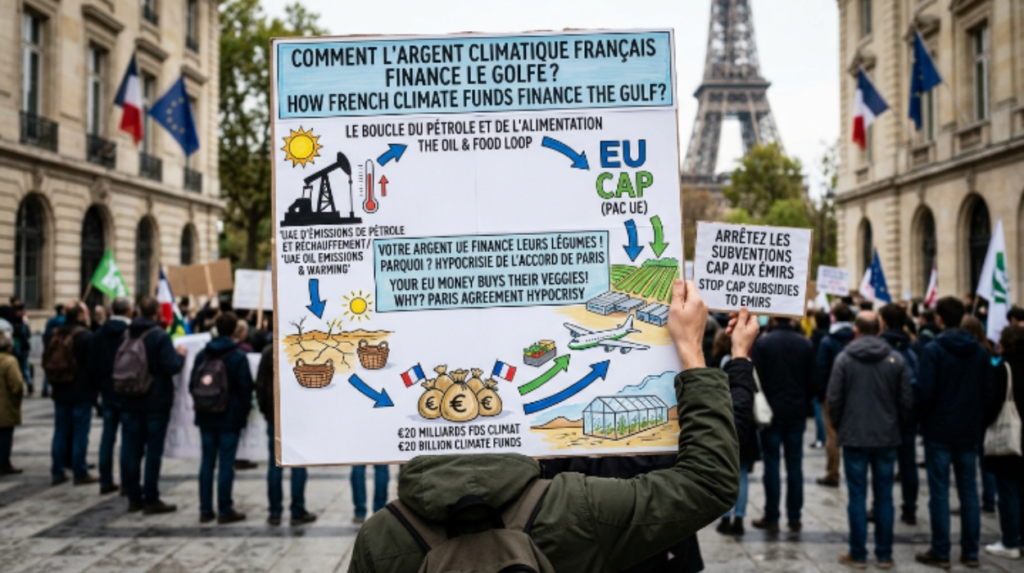
France’s €20 billion climate budget contribution (2021-2027) partly bankrolls this loop: Oil-driven warming → UAE food crisis → Subsidized EU farms → Gulf resilience. Greenpeace France’s Jules Boykoff tweeted May 8, 2026: “Al Nahyans: Burn oil, bake the planet, then EU pays for their veggies. Paris Agreement hypocrisy.” MEP Marie Toussaint (Verts) demanded: “Suspend CAP to non-EU owners until ownership verified.”
The math indicts: UAE’s 2025 emissions (250 MtCO2e) match France’s total output, yet French funds hedge their risks.
What Reforms Could Fix This Policy Mess?
CAP 2023-2027 mandates “genuine agricultural activity,” but loopholes persist. Proposals: Ownership caps at 5,000 hectares per entity; 50% small-farm ringfencing; climate-vetting for non-EU beneficiaries. German Green MP Franziska Brantner urged: “Link subsidies to Paris goals—no funds for fossil kings.”
Stakeholder ADQ dodged: “Our investments create 2,500 EU jobs,” per 2026 statement—ignoring €71M public cost. True reform demands tracing funds to ultimate owners, as Sweden’s €1M/farm cap shows viability.
Does This Erode Europe’s Climate Credibility?
Absolutely. As UAE hosts COP31 bids amid Sudan sanctions calls (€71M timing couldn’t be worse), Europe’s subsidy scandal fuels Global South skepticism: “You lecture on net-zero while funding our tormentors.” French analyst Julien Bouisset warned: “This poisons Paris legacy; Macron must push CAP clawbacks.”
Ultimately, the Al Nahyan case isn’t anomaly—it’s symptom. With €450 billion CAP spend ahead, Europe faces a reckoning: Subsidize small farmers and climate goals, or bankroll oil elites’ escape hatches? The €71 million ledger demands answers now.