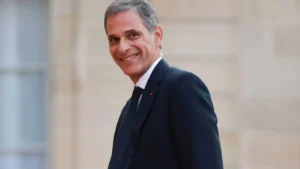
During a recent presentation in the National Assembly, French Prime Minister Sébastien Lecornu made clear how dangerously close the situation in the Middle East has become. The lack of progress being made in negotiations to resolve conflicts illustrates the degree to which tensions have increased in the region. For example, when he spoke on May 5, 2026, Lecornu stated that he was extremely concerned about the increasing risk of renewed fighting and that the fragile ceasefire was clearly in jeopardy. He went on to describe how the collapse of the current ceasefire would have a detrimental effect not only on France, but also on the entire planet.
In his presentation, Lecornu expressed that time was of the essence and that failure to find a solution would have severe implications for all involved. He emphasized that
“not only do we have to stop fighting, but we are very much in danger of being at war with each other again.”
This declaration shows that France has reached a critical point in its diplomatic efforts to become a peacemaker in these conflicts.
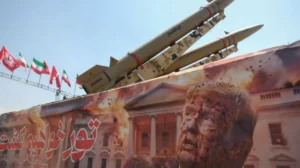
A review of the events leading up to Lecornu’s warning reveals how quickly France has had to react to unpredictable developments that have escalated each step forward. For instance, since the beginning of 2026, France has been directly involved in the Iran-Israel conflict. The initial confrontation occurred on February 28, 2026, when Iran responded to the coordinated attacks launched against it by both Israel and the USA with military strikes against both countries’ military forces in addition to Gulf states that are aligned with the USA.
Escalation Roots and French Diplomatic Response
Analyzing the situation surrounding the Iranian missile strikes has led to a developing consensus that the strikes have been responsible for damaging the attempts made to find a diplomatic solution to the current dispute in the region, which essentially characterizes Lecornu’s condemnation of those acts as unacceptable; therefore, France’s position can best be described as having elements of both condemnation and a call for restraint, which is consistent with President Macron’s earlier comments and actions.
More explicitly, in regard to the US and Iran’s respective lack of action towards moderation during heightened tensions in the Strait of Hormuz, President Macron’s stance is fully consistent with that of Lecornu in his statement to the French Parliament. Additionally, President Macron’s statements regarding the missiles reportedly launched into the United Arab Emirates were made in a manner consistent with the overall French commitment to having a diplomatic approach to foreign policy will continue, but this approach must be balanced with firmness.
Witnessing the coordinated messaging and actions taken by French government leaders at a high level as a direct effort to demonstrate unity in France’s foreign policy efforts is encouraging. Lecornu stated to the French Parliament that there is to be additional statements made by France in the very near future but gave no further details as to what those would be, implying that France is deciding to focus its energy on private, behind-the-scenes diplomatic efforts rather than on public diplomatic statements regarding this current dispute.
The events currently happening in the French political scene are being actively discussed with supporters viewing the current strategy as a wise move to maintain French leverage in multilateral organizations such as the United Nations and in discussions being held regarding the Middle East with other European Union member countries, while many members of the French political opposition contend that the current diplomatic actions are not giving France decisive leadership on the global stage.
Implications for French Politics and Economy
From a French political perspective, Lecornu’s intervention carries significant weight, as it ties the Middle East quagmire directly to national interests. The Prime Minister’s focus on energy sector transparency, particularly with TotalEnergies’ profits, addresses growing public concerns over how global conflicts inflate domestic fuel prices. By committing to regular fiscal disclosures, the government aims to counter narratives of elite profiteering amid hardship, a sensitive issue in an election-conscious environment. This move reflects Macron’s broader strategy of technocratic governance, where data-driven transparency is wielded as a tool against populist critiques.
Economically, the stakes could not be higher. The closure of the Strait of Hormuz disrupted a substantial portion of global oil flows, with France, as a net energy importer, feeling the pinch through heightened inflation and supply chain vulnerabilities. Lecornu’s remarks implicitly link these pressures to the stalling talks, warning that failure to revive negotiations could prolong these disruptions. In French political affairs, such economic linkages often amplify calls for policy shifts, with opposition parties leveraging the crisis to demand reduced reliance on Middle Eastern energy sources.
President Macron’s related actions further contextualize France’s engagement. His meeting with Iranian representatives, as noted in recent social media updates, and his de-escalation pleas signal an active role beyond mere rhetoric. Yet, Lecornu’s more somber tone in parliament suggests internal assessments are graver than public optimism might imply. This duality in French messaging—optimistic diplomacy paired with dire warnings—highlights the tightrope walked by the Macron administration in balancing alliance commitments with national sovereignty.
Broader Geopolitical Ramifications and French Strategy
Looking outward, the stalling of Middle East talks under French scrutiny reveals shifting power dynamics. The indefinite US extension of the truce, while stabilizing in the short term, lacks the robustness needed for long-term peace, a point Lecornu subtly critiqued by stressing the risk of renewed hostilities. France’s insistence on a “strictly defensive” position in the conflict, as echoed in broader governmental statements, positions it as a voice of restraint amid more hawkish allies. This stance aligns with historical French foreign policy, emphasizing multilateralism and autonomy from US-led initiatives.
In the realm of French political affairs, Lecornu’s address serves as a litmus test for governmental cohesion. His ability to weather opposition disruptions while delivering key messages demonstrates seasoned parliamentary command, yet it also exposes fault lines. Critics from across the spectrum—ranging from far-left pacifists to right-wing nationalists—have seized on the crisis to question Macron’s leadership, arguing that France’s influence in the Middle East has waned. Proponents counter that Lecornu’s candor, including his bold rejection of “fantasies and lies,” restores credibility to French diplomacy.
As tensions escalate, the French government’s promise of forthcoming statements hints at evolving strategies. Whether this involves intensified EU coordination, direct engagement with regional players, or domestic policy adjustments remains to be seen. For now, Lecornu’s warning stands as a pivotal moment, encapsulating France’s precarious position at the intersection of global conflict and internal politics.