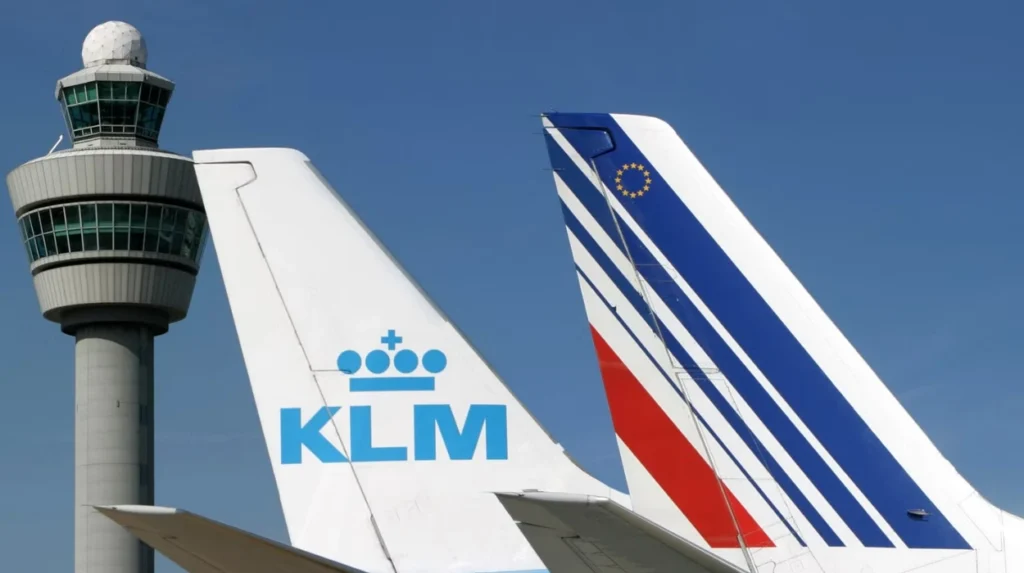
With global tensions increasing, uncertainty and danger exist in the airline industry in France. Air France-KLM has reduced their projected capacity growth for 2026 from a range of 3% to 5% to an expected decrease to between 2% and 4%. Disruptions from the ongoing war in the Middle East have created significant increases in fuel usage costs, which is expected to increase the airlines’ fuel cost for the fiscal year ending June 30, 2026, by $2.4 billion of which approximately $1.1 billion of those costs will be realized in the second quarter of 2026.
The state of France owns this airline and has a significant stake through a number of nationalized industries. Thus, a reduction in airline revenue creates not just a financial disruption for the airline but also serves as a potential source of contention in French politics.
French economic nationalism has collided with the international conflicts of today, and the economic uncertainty created by the current volatility in the energy market is forcing the French government to contend with how to support the airline, despite both being confronted with a significant decline in revenues.
Q1 Resilience Masks Mounting Geopolitical Storm
Air France-KLM’s first-quarter performance offered a glimmer of defiance against the gathering clouds. Revenue climbed 4.4% year-on-year to €7.5 billion, while the operating result clocked in at a manageable minus €27 million—far superior to the €389 million loss that analysts had penciled in. Even the net loss of €252 million represented only a 1% deterioration from the prior year, signaling robust underlying demand for travel despite the shadows of war. However, these figures, as the company itself cautioned, do not yet fully capture the fuel price spike. Hedging mechanisms and pricing lags meant Q1 costs remained somewhat insulated, but the true reckoning looms large.
Chief Executive Benjamin Smith laid it bare in the earnings call, stating
“fuel-price increases were not yet showing up in the reported Q1 numbers but were expected to pressure coming quarters.”
This forward-looking candor highlights Air France-KLM’s limited direct exposure to Middle Eastern routes compared to peers like Lufthansa or British Airways, yet it underscores how indirect channels primarily through kerosene prices amplify the pain.
From a French political lens, this fuel shock intersects directly with Macron’s energy independence agenda. France, heavily reliant on imports despite its nuclear prowess, has pushed for diversified supply chains under the “ReArm Europe” initiative. Yet, the Middle East war exposes the limits of such rhetoric. As Iranian actions disrupt Gulf shipping lanes and OPEC+ responses falter, Paris finds its state-backed airline paying the price literally.
Strategic Responses and the Fuel Hedging Lifeline
Air France-KLM’s management has not been passive. The company has proactively raised fares to claw back some of the fuel burden, a move analysts describe as evidence of sustained travel demand even amid uncertainty.
“The airline said it would keep using fuel hedging to soften the impact,”
and early signs suggest this strategy is holding, with hedges covering a portion of expected volumes at pre-spike rates. Capacity discipline is another pillar: the trimmed 2026 outlook reflects not panic but prudence, prioritizing profitability over aggressive expansion.
Politically, this plays into debates over state intervention. The French government’s 28% stake in Air France (via the state holding company) and influence over KLM through the group structure positions it as a quasi-sovereign asset. During the 2020-2022 pandemic, Macron orchestrated a €15 billion rescue package, framing it as safeguarding “strategic sovereignty.”
Now, with the Air France-KLM Middle East war outlook darkening, similar calls may echo in the Elysée. Left-wing lawmakers from La France Insoumise decry “corporate welfare,” while centrists defend subsidies as vital for employment—Air France-KLM supports over 80,000 jobs in France alone. Marine Tondelier of the Greens has already tweeted critiques, linking fuel woes to Macron’s reluctance to accelerate aviation decarbonization taxes, which could have cushioned such shocks through diversified revenues.
Broader Industry Echoes and French Exceptionalism
The Air France-KLM saga is no isolated incident; it mirrors a continental crisis. European airports have warned of a “tough outlook,” with flight disruptions cascading from security closures to rerouting inefficiencies. Earlier in 2026, Air France-KLM suspended Middle East services, including to Dubai and Israel, extending pauses to May 3 amid security fears, a pattern seen since January when flights were halted post-escalation. Broader airlines worldwide have followed suit, canceling routes as the war grinds on, reshaping global aviation maps.
Yet, France’s political class views Air France-KLM through a uniquely national prism. Unlike fully private carriers, its travails fuel discourse on “strategic autonomy,” a Macron buzzword. The ceasefire following U.S.-Iran tensions in early April briefly lifted shares 14%, but renewed hostilities dashed hopes.
Analysts note the company’s response aligns with “ongoing strong travel demand,” but in Parisian thinktanks, the narrative pivots to geopolitics: Has France’s alignment with U.S.-led coalitions in the Middle East vocally endorsed by Foreign Minister Jean-Noël Barrot backfired economically?
Political Implications: Macron’s High-Stakes Balancing Act
Delving deeper into French political affairs, the Air France-KLM Middle East war outlook trim exposes fault lines in Macron’s seventh year. With parliamentary elections looming and approval ratings hovering below 30%, economic headwinds like this amplify accusations of elitism. The far-right lambasts “globalist” exposure, proposing tariffs on non-EU fuel imports, a populist salve ignoring WTO rules. Meanwhile, socialists push for nationalization, harking back to pre-privatization eras when the state fully controlled Air France.
Macron’s team counters with data: Q1’s outperformance proves resilience, and hedging mitigates risks. But statements like Smith’s “the biggest blow is yet to come” (echoed in industry coverage) haunt the narrative. If Q2 delivers the €940 million fuel hit as feared, expect Senate hearings grilling Transport Minister François Duroc on support measures. This could catalyze a broader aviation policy rethink, tying into the 2026 Finance Bill debates on green levies and subsidies.
Historically, French presidents have rallied around Air France during crises—Chirac in 2001 post-9/11, Hollande in 2015 amid terror threats. Macron, ever the reformer, might opt for market-friendly tweaks: enhanced hedging mandates or route diversification incentives. Yet, in a polarized Assemblée Nationale, any bailout risks alienating fiscal hawks.
Long-Term Horizons: Reshaping French Skies
Looking ahead, the Air France-KLM Middle East war outlook adjustment signals a paradigm shift. Prolonged conflict could entrench higher fuel baselines, forcing capacity caps into 2027. Positively, fare hikes and premium demand (business travel rebounding) offer buffers. Politically, it bolsters calls for energy security: Macron’s nuclear expansion, while domestic-focused, indirectly aids airlines via stable power for ground ops, but oil remains the Achilles’ heel.
As the war’s tentacles tighten, Paris must reconcile grandeur with pragmatism lest its winged emblem falters under geopolitical crossfire.