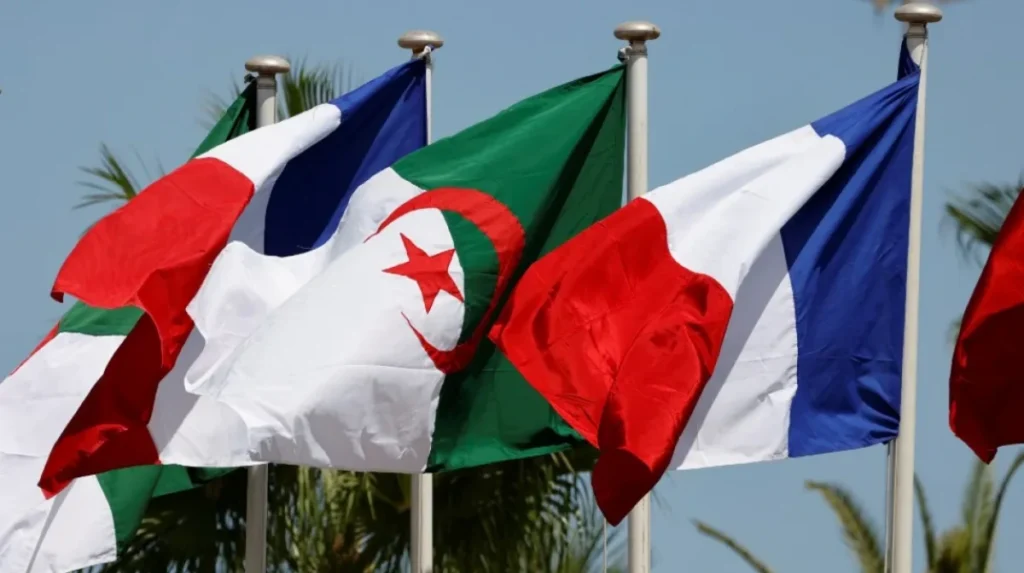
These are the latest stages of the relationship between France and Algeria that can be described as one of the most tense since the post-colonial settlement of 1962. The dynamic between France and Algeria has changed to both controlled collaboration to constant diplomatic tensions, which is influenced by migration issues, historical recollection, and regional alliances. What was a formal alliance based on security coordination and economic exchange, has more and more become a tit-for-tat retaliation and symbolic escalation.
The heart of this disintegration is a set of political choices in 2025 which exacerbated already existing fault lines. The French attitude towards the Moroccan sovereignty over Western Sahara underwent a backlash in Algiers, which perceives that the matter has been a direct threat to its posture in the region. Together with the disagreements in the deportation process and mutual expulsion of diplomatic officials in April 2025, diplomatic relations have become significantly reduced. The avenues that could have been used to manage crises in the past are limited and both governments are depending on the use of popular communication instead of holding secret negotiations.
Domestic political incentives driving confrontation
The development of the internal political discourse of France has been instrumental in its becoming more rigid in its attitude to Algeria. The interior minister Bruno Retailleau has made migration control and national security the key stones of the state power and he wants the review of the migration framework of 1968 applied to Algerian citizens in France. This treaty, which has traditionally been regarded as a stabilizing tool in bilateral relations, has now turned into a point of domestic political disputes.
The strategy of Retailleau is indicative of a larger strategic calculation in certain sections of the French political spectrum: that apparent firmness in relation to Algeria indicates domination of immigration and sovereignty issues. Practically, this has made Algeria a proxy matter in domestic electoral politics, with policy constituencies on migration starting to be understood in terms of national identity and credibility in security issues, as opposed to foreign policy consistency.
Macron’s rhetorical counterbalance and political constraints
President Emmanuel Macron has tried to work the diplomatic relationship by making overtures to historical responsibility and strategic pragmatism but his stance is now an ever-tighter constraint of domestic polarization. The way he describes hardline critics as being out of touch or politically reckless is an attempt by him to justify diplomatic continuity, though has further enhanced the understanding of political discontinuity in the executive strategy.
This rhetorical rift has strengthened the so-called Algeria trap of any move toward diplomatic normalization being met by political repercussions at home. Initial attempts in early 2026 to reestablish security coordination mechanisms between Paris and Algiers did not take off, in part because of unresolved issues that were related to the breakdown in diplomatic relations in 2025. The outcome is policy environment where diplomacy is time and again, sidelined to the electoral positioning.
Structural entanglement of history, identity, and electoral politics
The history of colonialism still trends the story of politics between France and Algeria to date. The Algerian War and its consequences are still engrained in the discourse of people, and it affects the way in which both states perceive current conflicts. This historical context has come to be highly politicized in the context of the 2027 French presidential cycle, with divergent views on colonial responsibility and national identity shaping campaign discourse.
To some groups in the French political right, Algeria is frequently viewed through a security lens that connects the migration, integration and cultural unity. This framing makes a complex bilateral relationship to be a simplified political symbol, one that can be mobilized in times of election competition. On the other hand, in Algeria, the French policy decisions are often understood as the repetitions of the historical asymmetries, which strengthens the mistrust to the diplomatic negotiations.
Electoral amplification of bilateral disputes
The policy towards Algeria is being influenced more by the electoral motive instead of strategic thinking in the long term. With the 2027 campaign in sight, every diplomatic event has an increased political sting and opposition parties are using bilateral tensions to put the credibility of the government to the test. The Algeria question has therefore been incorporated into more general discussions on sovereignty, migration, and power of the state in France.
This interaction forms a vicious cycle where domestic political competition enhances diplomatic crises. Decisions involving policies that otherwise would be considered administrative or procedural, are used as signs of political strength or weakness. Consequently, even limited differences in diplomacy can be easily escalated not due to its strategic importance, but because of its domestic political value.
Institutional consequences and diplomatic stagnation
The accumulation of diplomatic decline has been the undermining of institutionalized relations that used to form the Franco-Algerian relations in the past. There has been disruption in security cooperation, consular coordination as well as migration management structures at a different level. Previously untouched by electoral pressures and popular challenge, these mechanisms have been brought into the open to electoral forces and popular challenge.
The mutual expulsion of diplomatic personnel in 2025 was a breakthrough in this institutional disintegration. This was not a negotiated reset, but a prolonged phase of administrative paralysis, in which continuity of operations was substituted by periods of crisis management. This change has decreased the ability of the two states to collectively solve common problems like irregular migration, coordination of counterterrorism and instability in the Sahel.
The risk of long-term diplomatic entrenchment
The continuity of the Algeria trap brings into play the possibility of institutionalized conflict, where hostility at the diplomatic level becomes the norm in the political system. When these tensions are integrated into the electoral strategy, they are hard to unwind and at a high political cost. This sets up a structural obstacle to reconciliation, even in the event that strategic interests would otherwise incline towards cooperation.
There is less manoeuvre space in this environment to diplomatic actors. Bureaucratic and consular staff members are being increasingly bound by political dictums that are influenced by domestic electoral politics as opposed to bilateral imperative. The result of this in the long term is the slow diminishing of the professional diplomatic apparatus that has traditionally supported Franco-Algerian interactions.
Electoral horizon and the persistence of strategic ambiguity
As France moves toward the 2027 presidential election, the Algeria file is likely to remain a recurring feature of political debate. Its persistence reflects not only unresolved bilateral grievances but also its utility within domestic political competition. The challenge for policymakers lies in disentangling strategic necessity from electoral opportunism in a context where the two have become deeply intertwined.
The central uncertainty is whether any future administration will possess sufficient political capital to de-escalate tensions without being perceived as compromising national interests. As diplomatic channels remain constrained and political incentives continue to favor confrontation, the Algeria trap risks becoming more than a campaign issue, it may evolve into a defining structural feature of Franco-Algerian relations, shaping not only the 2027 election but the diplomatic architecture that follows it.