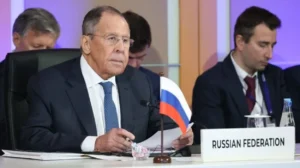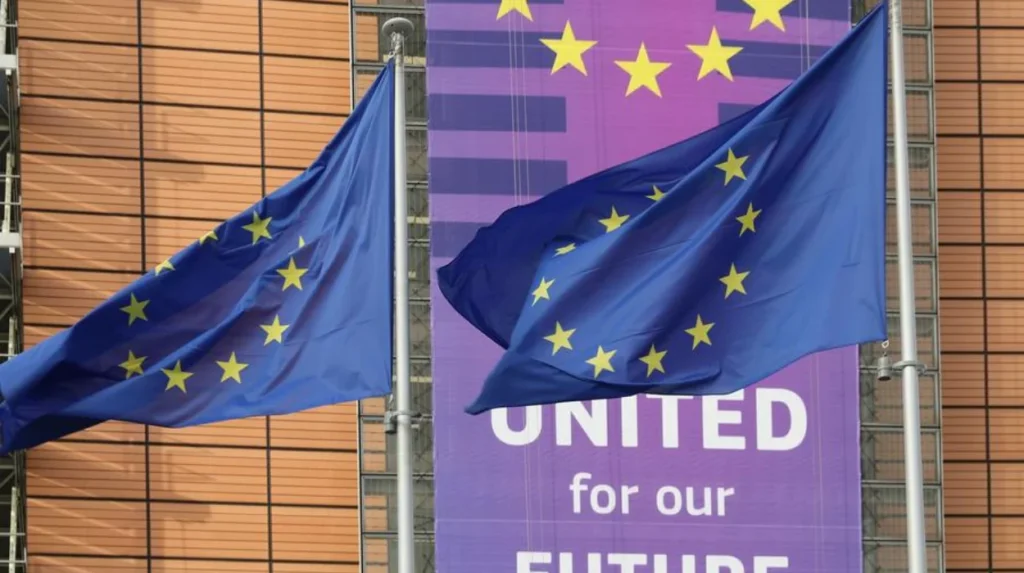
The future of EU autonomy, multilateralism, and power are becoming more interlinked, as the global system switches its polarity to a multipolar one. The European Union is maneuvering in an environment that is defined by the competing centres of power, the United States, Russia and China that are asserting their influence in the sphere of security, trade, and technology. In such a context, EU strategic autonomy is presented as the tool to safeguard the ability to make independent decisions but stay integrated into the structures of international cooperation.
By 2025, European institutions went beyond rhetorical commitments, with autonomy being included in policy planning both in the defence sector, industrial sector, and the digital sector. The current war in Ukraine and the increased competition in the world economy have strengthened the idea that the structural risks of dependence on one security or economic partner are inevitable. Consequently, autonomy is becoming more perceived as a stabilising instrument enabling the EU to interact with various actors without being strategically limited.
Enhancing domestic unity to affect power.
Internal unity is what determines the success of EU multilateral engagement. The struggle to coordinate policies among member states is thus key in increasing the external influence and credibility of the Union.
Strategic positioning between competing power blocs
The policy of the EU is a sign of trying to establish itself as not inferior to or separate from the powerful nations. Rather, it attempts to be a counterbalancing element that can interact with other geopolitical actors and be internally coherent. Such a stance implies institutional resilience as well as the capacity to exert influence in multilateral arenas.
The transformation of multilateral engagement
Multilateralism is core to the identity of the EU, although it has changed in practice with shifting power dynamics. Instead of using consensus-based structures only, the EU is more integrating institutional participation with capacity-building strategies, which are important so that the EU can take independent actions when the multilateral mechanisms freeze.
Balancing Multilateral Norms with Power Realities
The conflict between geopolitical realities and normative commitments is a characteristic of much of the debate over autonomy within the EU. As the European leaders have always preached on the principle of rule based international order, recent developments have highlighted the constraints that norms have in the absence of force.
Ever since 2025, the world institutions have been under increased strain as larger powers have become more transactional. The effectiveness of multilateral mechanisms has been undermined by the use of the power of veto in the international bodies and selective adherence to international agreements. This change has forced the EU to re-evaluate its relationship with these institutions.
Preserving rule-based frameworks under pressure
There is still a strong focus by European policymakers on how compliance with international law and international cooperation can be vital to long-term stability. Yet, to maintain such structures, there is a growing need to support them with convincing economic and strategic powers.
Avoiding the role of a passive rule-taker
The common apprehension in the policy circles of the EU is the danger of being a rule-taker in regimes where the larger powers are the dominant powers. In response to this, the EU has rallied its regulatory and economic power, thus, coming into multilateral negotiations as a participant that can influence the results instead of having to adjust to them.
Security and Defence as Foundations of Autonomy
Security and defence are just essential areas where multilateralism, power and the future of EU autonomy collide most directly. As long as the EU remains a part of a wider transatlantic security framework, independent capabilities are increasingly perceived to be needed.
This growth of defence expenditure and the growth in joint efforts since 2024 is an attempt to close capability gaps. Nevertheless, there is still a complicated relationship between European independence and alliances that exist, and it needs to be well-coordinated to prevent duplication or division.
Complementarity with existing security structures
The EU has always positioned its defence effort as a complementary effort as opposed to a competitive effort. This would enable Europe to enhance its own capabilities and keep in line with established security arrangements.
Building independent operational capacity
Attempts to establish joint force arrangements and coordinated planning processes point to a slow evolution of more independence. These efforts are meant to empower the EU to address the crises in the region without necessarily depending on the external actors, especially in the regions that are not within the traditional mandate of the alliances.
Political constraints and member-state divergence
Although this has been achieved, variations among the member states still influence the rate of integration. Differences in the perception of threats, and strategic priorities present a challenge in reaching a consensus on the more profound cooperation in defence which constrains the pace at which autonomy can be achieved.
Economic and Technological Dimensions of Power
The level of economic power and technological prowess is at the heart of dictating the extent of EU autonomy. The internal market of the Union gives a great leverage but external dependency in key areas points to persistent weaknesses.
The EU has been increasingly applying its regulating structures to have an impact on the global market, with standards that have an influence outside its borders. Such regulatory authority is a major tool of ensuring independence within a competitive global context.
Regulatory influence as a strategic asset
The EU has become a global standard-setter in such areas as digital governance and competition policy due to European regulations. The Union also increases its independence by controlling the terms of engagement despite the areas where it does not have the leading industrial actors.
Addressing supply chain dependencies
Diversifying supply chains and domestic production are increasingly taking place since 2025. Nonetheless, global markets are interconnected, so absolute independence is hardly possible, which supports the necessity of a balanced strategy.
Innovation and technological sovereignty challenges
Although the EU has gone a step further in coming up with innovation ecosystems, it still confronts the challenges of competition with other economies that are technologically advanced. This gap is critical in the context of making autonomy beyond regulation into the real production and innovation ability.
The Evolution of EU Multilateral Engagement
The EU is experiencing a change in its contribution in the multilateral institutions as they attempt to balance their normative identity with the reality of power politics. Instead of giving up multilateralism, the Union is transforming its strategy to make it relevant in a more fragmented global system.
This development is not only strengthening established institutions but also experimenting with new types of collaboration that are responsive to new geopolitical realities.
Adapting to institutional fragmentation
With growing pressures and tension on global institutions, the EU is considering new ways to cooperate, such as smaller and issue-focused partnerships. These frameworks are flexible and yet are bound by a wider multilateral decedent.
Strengthening internal cohesion for external influence
The effectiveness of EU multilateral engagement depends on internal unity. Efforts to align policies across member states are therefore central to enhancing the Union’s external influence and credibility.
Governance Challenges and Strategic Trade-offs
The future of EU autonomy is closely tied to internal governance dynamics. Diverging national interests and varying levels of economic and military capacity create a complex environment for policy coordination.
Balancing national sovereignty with collective action remains one of the most significant challenges facing the EU as it seeks to deepen autonomy.
Managing divergent member-state priorities
Different member states approach autonomy from distinct perspectives, shaped by geography, history, and economic structure. These differences influence decisions on defence spending, industrial policy, and external partnerships.
Institutional innovation and policy integration
To address these challenges, the EU has introduced new mechanisms for coordination and funding. These initiatives aim to streamline decision-making and enhance the effectiveness of collective action, though their long-term impact remains uncertain.
Future Trajectories of EU Autonomy in Global Context
Multilateralism, power, and the future of EU autonomy will continue to evolve as global dynamics shift. The EU’s ability to navigate these changes will depend on its capacity to integrate normative commitments with practical capabilities.
What emerges is a model of strategic autonomy that is neither absolute nor static. Instead, it reflects a continuous process of adaptation, shaped by both internal developments and external pressures. As global competition intensifies and institutional frameworks are tested, the EU’s approach to autonomy may redefine how middle powers operate within a system increasingly dominated by larger actors.
The central question is whether the EU can sustain this balance between cooperation and independence while maintaining internal cohesion. The answer will not only determine Europe’s role in the global order but also influence the broader trajectory of multilateral governance in an era where power and principles are increasingly intertwined.