The role of France in the rising Iran-related conflict is becoming more and more characterized with a strict condition according to which it will not engage in the war activities unless there is a clear political, legal, and operational frame. This strategy is indicative of a conscious purpose not to get involved in open-ended military escalation based on the dynamics of the battlefield instead of being part of a formal international consensus.
French authorities have continuously pointed out that any intervention should be pegged on outlined goals and multilateral legitimacy. France, as Minister Delegue Éleonore Caroit has pointed out in condensed form, does not desire to engage in a war without a guarantee and without order, and the insistence of Paris that military action must be conducted by rule not by ex post facto.
Legal Constraints And Institutional Guardrails
The reason as to why France will not participate in the Iran war without a rule is closely related to the fact that international law has always been the cornerstone of military action in France. The French policy has always preferred United Nations sanctions or at least close multilateral alignment before engaging in a large-scale conflict.
Reliance On International Legal Frameworks
France has been vocal in denouncing unilateral strikes within the region which had not gone through the United Nations Security Council. The official diplomatic communications of 2025 used the term as an example of untrustworthy behaviour when it is not based on the collective authorization mechanisms.
This legal framing does not just stand in symbolism. It directly affects the decision-making thresholds in the French executive, where the adherence to international humanitarian law and proportionality principles continues to play a pivotal role in any deliberation of the use of force.
Collective Defence But Limited Engagement
France too has indicated that it is not opposed to any military intervention. It has recognized, along with Germany and the United Kingdom, that allied interests can be safeguarded by means of necessary and proportionate defensive action in response to missile or drone threats.
Yet this is a language which is intentionally narrow. It divides defensive protection and the involvement in offensive campaigns, which strengthens the stance of France that it will have no involvement in regime-shaping or open-ended war missions in Iran.
Economic Pressure And Domestic Political Constraints
The domestic fiscal and political reality also influences France in refusing to engage in the war in Iran without any rules. The economic cost of permanent regional build-up has proved to be a major issue among policy makers in 2026.
Rising Fiscal Exposure From Regional Instability
In 2026, the governmental internal evaluations revealed that tensions within the Middle East would cost France in the billions of euros due to energy shocks, maritime insecurity, and military preparedness budgets. These demands come at a time when France is already striving to bring its public finances into balance and achieve deficit reduction goals.
The sensitivity of making a commitment to an increased military presence in a volatile theater is evident by the fact that Prime Minister Sebastien Lecornu had hinted that billions of dollars of proposed expenditure might have to be frozen. To policymakers, a war that lacks definite boundaries is an uncertain financial burden.
Public Opinion And Political Risk
Domestic sentiment further reinforces caution. The French opinion in 2025 was tired of long-term foreign interventions, especially in those countries which were seen as politically ambiguous and strategically unpredictable.
The government minimizes domestic political exposure by demanding organized rules of engagement. It enables Paris to retain credibility in its alliance without the impression that it is entering into another open-ended Middle East war.
Strategic Balancing Between Washington And Tehran
The place of France is also influenced by its effort to strike a balance between its relationships with the United States as well as the relations with Iran without being wholly devoted to the maximalist goals of both parties.
Managing Alliance Pressure From The United States
The philosophy of the Iran conflict developed by Washington has been towards taking decisive military action, which is geared towards degradation of Iranian capabilities and strategic realignment. France, nevertheless, has always been opposed to being dragged into a campaign which has not been diplomatically sequenced.
With a mandate of a rules-based structure, Paris aligns itself with NATO allies without compromising control on escalation levels. This enables France to aid defensive organisations without promoting wider-scale offensive approach changes.
Diplomatic Signaling Toward Iran
Concurrently, France has argued that Iran is one of the major contributors to the escalation in the region because of missile and drone operations impacting various theatres. However French diplomacy still emphasizes that the structural tensions would not be solved by military solutions only.
This two-way strategy allows France to maintain the conceptual openness of diplomatic channels and at the same time denounce destabilizing behavior. It maintains the option of negotiation in the future without supporting the unlimited military build-up.
The Concept Of A “Framework” In French Policy
The reason why France will not join the Iran war without rules is more than related to what the French officials call a framework to engage. This idea goes beyond the legal authorization to encompass operational and strategic clarity.
Defining Objectives And Limits Of Force
A framework suggests explicitly defined military aims, like defensive defense or targeted countering of threats, as opposed to open-ended campaigns. French policymakers believe that in the absence of such limits, military operations are prone to mission creep and strategic drift.
The geographic scope, target selection and exit conditions are also required to be clear. France perceives these parameters as a crucial measure to keep the proportionality and avoid the excessively determined limits.
Role Of International Institutions In Structuring Engagement
France still insists on taking a central position by international institutions in organizing any response to the Iran conflict. The United Nations can be regarded as the most desirable medium of action legitimization and compliance monitoring.
France officials underscored in 2025 diplomatic talks that de-escalation can only be sustainable when it is institutionally controlled and not disjointed coalition reactions. This is a more general French inclination towards multilateral security crisis governance.
Regional Security And Maritime Considerations
France’s caution is also linked to broader concerns about regional spillover effects, particularly in maritime corridors such as the Strait of Hormuz. These waterways are critical to global energy flows and European economic stability.
Maritime Stability As A Strategic Priority
French defense planning has increasingly focused on protecting shipping routes and ensuring freedom of navigation in contested waters. Disruptions in these areas during 2025 heightened concerns about indirect economic consequences of regional war escalation.
By avoiding full participation in the Iran conflict, France seeks to limit exposure to retaliatory actions that could endanger maritime operations or commercial shipping lanes.
Interconnected Regional Conflict Dynamics
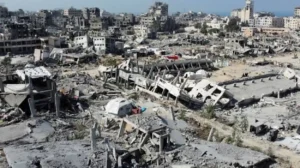
French analysis treats Middle East conflicts as interconnected rather than isolated events. Instability in Gaza, Lebanon, and the Gulf region is viewed as part of a wider escalation cycle involving multiple state and non-state actors.
This interconnected view reinforces the argument for structured engagement. Without rules, France fears that localized conflicts could merge into a broader regional war with unpredictable consequences.
The Future Of French Military Decision-Making In Iran Context
The question of why France will not join the Iran war without rules ultimately reflects a broader shift in French strategic culture. Military engagement is increasingly conditional on legal clarity, multilateral backing, and clearly defined objectives.
France is not rejecting military force altogether but redefining the conditions under which it can be legitimately used. This approach reflects an attempt to balance alliance obligations, domestic constraints, and international legal norms in an increasingly fragmented global security environment.
As the Iran-related conflict evolves, France’s insistence on structured engagement may serve both as a limiting principle and a diplomatic tool. Whether other actors adopt similar constraints will shape not only France’s future decisions but also the broader architecture of international crisis response in a system where rules, rather than raw force alone, are becoming the central point of contention.