The lapse of the New START treaty on February 5, 2026, was a key milestone in the world nuclear regulations. The United States and Russia are no longer constrained by restrictions on deployed strategic warheads, without a successor framework in place. Such regulatory vacuum has increased the strategic vulnerability that Moscow feels especially as the European nuclear powers start recalibrating their postures.
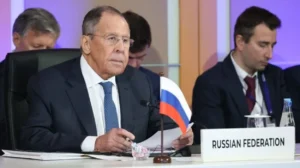
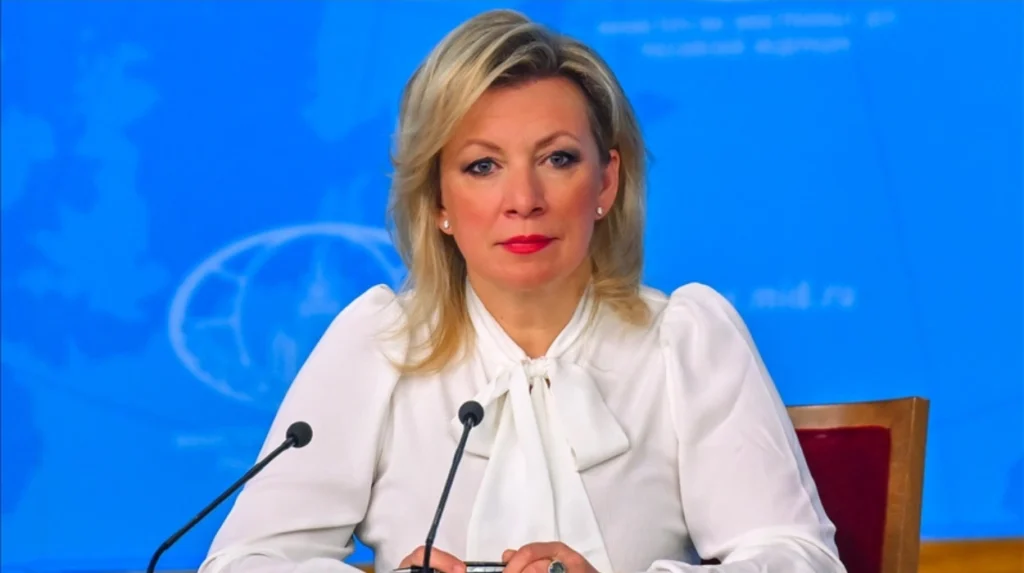
Russian authorities have positioned the recent events as destabilising. Maria Zakharova, the spokesperson of the Foreign Ministry, explained that the development of Western nuclear potential was a direct threat to the balance of deterrence. In the meantime, Kremlin spokesperson Dmitry Peskov has indicated that any future arms control dialogue should involve European nuclear powers, indicating a change in bilateral to wider multilateral thinking.
Treaty Legacy And Breakdown Dynamics
In 2010, the treaty was signed and limited deployed warheads per side to 1,550 and put in place strong verification mechanisms. It started eroding gradually with the two accusing one another of not adhering to it, with Russia leaving in 2023. By 2025, the inspection regimes were practically disbanded leaving transparency measures that had long stabilized nuclear relations.
Verification Mechanisms Collapse
The lack of physical checks and information exchanges has led to an informational vacuum. According to analysts, in the absence of these mechanisms, even regular modernization programs are at risk of being perceived as offensive expansions. This indecision is a source of strategic thinking in Moscow, which has become dominated by worst-case scenarios in its policy-making.
Strategic Trust Deficit Expands
The collapse of trust has been accompanied by further geopolitical tensions, especially after the events in Ukraine in 2025. Russian leadership considers Western military coordination such as nuclear signaling, as a broader containment strategy. This perception strengthens a type of cycle whereby defensive actions are seen as offensive motives.
UK Nuclear Posture Evolution
The United Kingdom has a rather low nuclear force level in comparison to Russia, but its strategic importance is also in its involvement in larger alliance formations. The 2025 defense review by London reaffirmed that it was determined to pursue continuous at-sea deterrence, which was based on submarine systems.
Submarine Modernization Programs
The evolution of Vanguard-class to Dreadnought-class Submarines is a survivability and stealth generational improvement. These platforms will carry more sophisticated versions of Trident missiles, which will boost second-strike capability. In the eyes of Moscow, this kind of improvement makes the Western deterrence much more resistant, making any strategic calculations difficult.
Budgetary Commitments And Long-Term Planning
The United Kingdom has invested heavily in nuclear renewal in late 2025, indicating a long-term commitment instead of a short-term adaptation. This investment highlights a larger trend amongst European states towards long-term investment in strategic capabilities, a process that is being closely tracked by Russian planners.
France Expands Nuclear Role In European Security
France has become more assertive and has based its nuclear weapons on the foundation of European security. This vision was expressed by the March 2026 speech by President Emmanuel Macron, who suggested further incorporating French deterrence into European defense structures.
Warhead And Delivery System Enhancements
The modernization processes of France involve modernization of submarine-launched ballistic missile and air-launched ballistic missile. The next-generation capabilities are an indication of a direction towards flexibility and responsiveness, in accordance with the changing threat perceptions in Europe.
European Nuclear Umbrella Concept
The fact that Macron has offered the extension of nuclear protection to European allies is a major shift to conventional national deterrence models. Although it is framed as a counter to increased security threats, the move has been viewed in Moscow as a spread of shared nuclear capability.
Numerical Imbalance And Perception Gaps
Russia has maintained the largest number of nuclear weapons in the world, thousands of warheads in diverse states of readiness. Nevertheless, strategic perception does not solely lie on numbers. Their perceived effect is magnified by the nearness of the European forces and their incorporation with alliances structures.
Deployed Versus Total Warheads
The total warhead counts are in favor of Russia, but deployed systems in Europe have more immediacy. The difference between the theoretical capacity and operational readiness defines the threat assessment, especially in situations of fast escalation.
Multipolar Nuclear Landscape
The international nuclear landscape has become more complicated. China has increased its stock of weapons considerably in 2025, introducing a third, major axis to the strategic calculations. This multipolarity makes it difficult to develop new arms control frameworks, since bilateral agreements do not reflect the full range of capabilities anymore.
Geopolitical Ripple Effects Across Europe
The post-New START environment has reshaped alliance dynamics. NATO’s evolving nuclear posture reflects both internal adjustments and external pressures, with European members assuming greater responsibility for deterrence.
Alliance Integration And Burden Sharing
Joint exercises and policy coordination have intensified since 2025, reflecting a shift toward collective deterrence. The involvement of multiple actors increases operational complexity but also enhances overall capability, reinforcing deterrence credibility.
Russian Strategic Recalibration
Moscow has responded by prioritizing advanced weapons systems, including hypersonic missiles and novel delivery platforms. These developments are framed domestically as necessary countermeasures, yet they also contribute to an escalating cycle of technological competition.
Verification Gaps And Escalation Risks
The absence of a binding arms control framework introduces new risks. Without agreed limits or transparency measures, even incremental changes can trigger disproportionate responses.
Miscalculation And Signaling Challenges
In a low-trust environment, signaling becomes more ambiguous. Military exercises, often intended as demonstrations of readiness, may be interpreted as preparations for conflict. This ambiguity increases the likelihood of miscalculation, particularly during periods of heightened tension.
Prospects For New Agreements
Efforts to revive arms control discussions face significant obstacles. Divergent priorities among nuclear states, combined with geopolitical rivalries, hinder consensus. Nonetheless, the recognition of shared risks may eventually create openings for dialogue.
2025 Developments Shaping Current Trajectory
Events in 2025 laid the groundwork for the current landscape. The gradual erosion of verification mechanisms, coupled with escalating geopolitical tensions, set the stage for the treaty’s expiration.
Policy Shifts And Strategic Messaging
Statements from Western leaders during 2025 emphasized deterrence and resilience, reflecting a broader shift toward preparedness. These messages, while aimed at reassurance, also signaled a departure from arms reduction narratives.
Emerging Security Frameworks
New initiatives, including proposals for European nuclear coordination, indicate a willingness to adapt existing structures. These frameworks remain in early stages but highlight the search for alternatives in the absence of traditional agreements.
Strategic Balance In A Post-Treaty Era
The post-New START void represents more than the end of a treaty; it reflects a transformation in how nuclear stability is conceptualized. The interplay between modernization, alliance integration, and geopolitical rivalry defines a landscape where traditional assumptions no longer apply.
As European arsenals evolve and Russian responses intensify, the question shifts from numerical parity to strategic perception. Each upgrade, exercise, or policy statement carries amplified significance in an environment lacking formal constraints. Whether emerging initiatives can restore a measure of predictability or further entrench competitive dynamics remains uncertain, leaving observers to consider how far this recalibration can proceed before new mechanisms of restraint become not just desirable, but necessary.