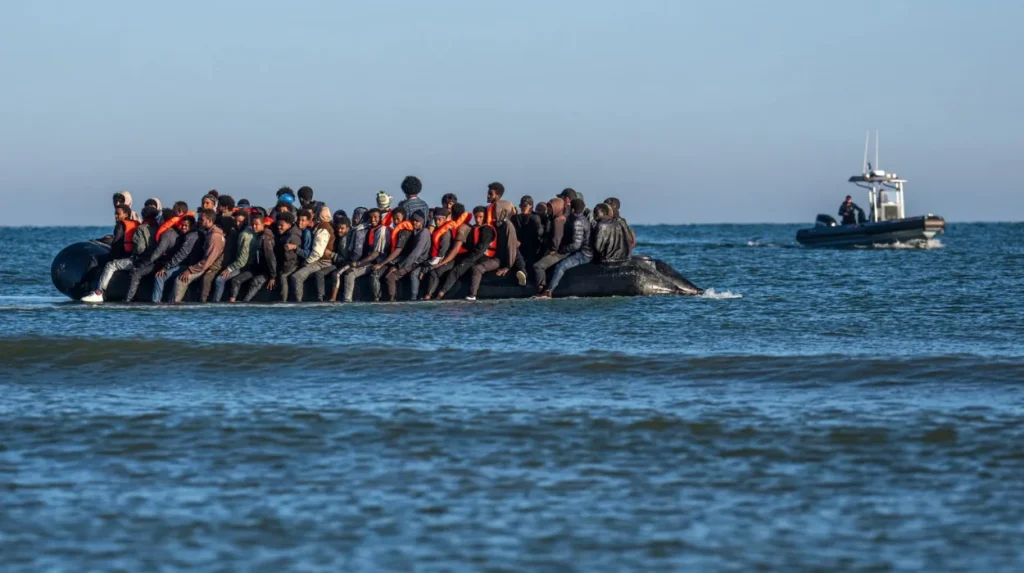
The debate captured in From £476m to £650m: Can Money Buy Security on the Channel reflects a major shift in how the United Kingdom approaches migration enforcement along the English Channel. London is preparing to expand its financial support for French coastal operations, moving beyond the existing £476 million framework toward a proposed £650 million package. The arrangement funds personnel, surveillance systems, and coordination mechanisms along northern France’s departure zones.
Officials in the United Kingdom argue that the partnership has become central to managing irregular crossings. The patrol network supported by British funding operates around key coastal areas, with nearly 700 officers engaged in monitoring, interception, and intelligence gathering. Policymakers emphasize that maintaining this presence helps disrupt organized smuggling activity before boats reach open water.
How has the existing framework developed through recent agreements?
The funding structure emerged through bilateral negotiations that intensified during migration debates in 2025. At that time, policymakers in both countries sought to formalize operational cooperation after repeated surges in small-boat crossings across the Channel.
The agreement expanded enforcement capacity by establishing new coordination centers and strengthening surveillance infrastructure. These developments created the foundation for the current proposal to increase funding, reflecting a belief that expanding existing mechanisms may produce stronger outcomes.
Why policymakers view the proposed increase as necessary
Government officials in London argue that migration routes evolve quickly and require sustained investment to manage effectively. Additional resources are expected to support broader patrol coverage, improved intelligence analysis, and expanded monitoring technology along the coastline.
Supporters of the funding increase also highlight operational continuity as a priority. By maintaining and expanding the partnership with France, the United Kingdom aims to prevent gaps that could encourage smuggling networks to adapt or intensify their activity.
Operational results raise questions about effectiveness of higher spending
Despite the growing financial commitment, analysts continue to examine whether increased funding produces measurable improvements in enforcement outcomes. Statistics from recent monitoring periods show fluctuations in interception rates, prompting discussions about how effectively resources translate into deterrence.
Officials often cite the prevention of thousands of attempted crossings as evidence that cooperation has disrupted smuggling operations. However, the persistence of arrivals in the United Kingdom indicates that enforcement efforts alone may not fully address the complexity of migration dynamics.
Data trends observed between 2025 and early 2026
Migration figures recorded throughout 2025 showed significant numbers of arrivals reaching the United Kingdom despite strengthened patrol activity. Early reports from 2026 suggested that enforcement patterns remained uneven, reflecting how quickly migration routes adjust to surveillance pressure.
These patterns have led some policy observers to question whether simply increasing financial investment will significantly alter long-term trends. Migration flows often respond to broader global conditions that cannot be addressed solely through coastal patrol operations.
Smuggling networks adapt to evolving enforcement measures
Experts studying migration routes note that smuggling groups frequently modify their strategies in response to enforcement changes. When patrol activity intensifies in one area, departure points sometimes shift along the coastline or toward alternative routes.
This adaptability means that enforcement investments must be accompanied by broader intelligence and policy coordination. Without those complementary measures, additional funding may produce limited improvements over time.
Domestic political debate shapes the funding proposal
The proposed financial expansion has also become part of a wider political conversation in the United Kingdom about border management and public expectations. Government officials argue that strengthening cooperation with France is essential to maintaining order at key entry points and protecting transport networks.
Migration policy has remained a prominent issue in national discussions since 2025, influencing how leaders present new security measures. Officials have emphasized the importance of ensuring that public spending produces visible and accountable results.
Government position under home secretary shabana mahmood
The approach taken by Home Secretary Shabana Mahmood highlights the government’s effort to frame the proposal as a strategic investment rather than simply an increase in spending. She has noted that previous cooperation disrupted tens of thousands of attempts to cross the Channel, describing the partnership as a key component of border policy.
Her department has also indicated that negotiations with France may include clearer performance expectations. These discussions involve improving data transparency and refining operational targets to demonstrate the impact of joint enforcement efforts.
Opposition concerns about long-term reliance on funding
Political figures from opposition parties have questioned whether financial expansion alone can deliver meaningful reductions in migration numbers. Critics argue that relying heavily on funding agreements risks creating dependence on external enforcement without addressing deeper structural issues.
Among those raising concerns is Chris Philp, who has emphasized the need for stronger evidence linking expenditure with concrete outcomes. Such debates illustrate how migration policy intersects with broader discussions about public accountability and governance.
French perspective highlights operational limits and legal responsibilities
While the United Kingdom focuses on expanding funding, French authorities approach the proposal through the lens of operational feasibility and legal obligations. Officials in Paris stress that coastal patrol teams already manage demanding responsibilities across busy maritime zones.
Enforcement activities involve not only preventing unauthorized departures but also responding to safety incidents at sea. French policymakers therefore emphasize that expanding operations requires careful planning to ensure that personnel and resources remain effective.
Challenges faced by patrol teams along northern coastline
Coastal enforcement units operate in an environment shaped by unpredictable weather conditions, shifting migration routes, and the need for rapid coordination between agencies. Officers must remain prepared to respond to emergency situations involving small vessels in distress.
These realities influence how additional funding is translated into practical operations. Authorities highlight that personnel training, equipment maintenance, and logistical support all play roles in determining how effectively patrol systems function.
Legal frameworks guiding migration enforcement practices
France also conducts enforcement within the boundaries of international maritime law and European human-rights standards. These legal frameworks shape how patrol units interact with migrants and how authorities manage interceptions at sea.
Officials emphasize that cooperation with the United Kingdom must remain consistent with these obligations. Any expansion of enforcement activities must therefore consider legal protections as well as operational priorities.
Migration governance extends beyond coastal security measures
The discussion surrounding From £476m to £650m: Can Money Buy Security on the Channel reflects a broader transformation in migration governance across Europe. Policymakers increasingly recognize that maritime patrols represent only one element of a complex system involving asylum procedures, international cooperation, and humanitarian considerations.
During policy debates throughout 2025, several European governments began exploring more structured migration partnerships that combine enforcement with administrative coordination. The UK–France arrangement forms part of this evolving approach.
Interaction between enforcement operations and asylum systems
Managing migration flows requires coordination between border authorities and asylum institutions. Enforcement measures may reduce immediate departures, but long-term stability often depends on how asylum claims are processed and managed across jurisdictions.
As a result, discussions surrounding the funding increase increasingly involve questions about how enforcement integrates with broader migration frameworks. Policymakers aim to ensure that operational strategies align with legal processes and humanitarian responsibilities.
Broader strategic implications for European cooperation
The Channel partnership also illustrates how migration management is becoming a shared challenge across national boundaries. Cooperation between neighboring countries has become essential for monitoring routes and coordinating responses.
Observers suggest that agreements like the proposed funding expansion may influence how future European partnerships develop. Decisions taken now could shape expectations about responsibility sharing and operational coordination across the region.
Financial expansion reveals deeper questions about channel migration strategy
The proposed shift from £476 million to £650 million underscores the complexity of relying on financial mechanisms to address migration pressures. Increased funding may enhance surveillance capacity, support additional patrol coverage, and improve operational coordination, yet it does not automatically resolve the underlying dynamics that drive people toward irregular routes.
As negotiations continue, policymakers in both London and Paris face a broader challenge: determining whether the partnership should evolve into a long-term security model or remain a flexible arrangement shaped by changing political priorities. The Channel has become more than a border zone; it now represents a testing ground for how governments balance enforcement, diplomacy, and humanitarian responsibility. The outcome of the funding debate may reveal whether financial investment alone can redefine migration management, or whether a more comprehensive framework will ultimately shape the future of cooperation across the waterway.