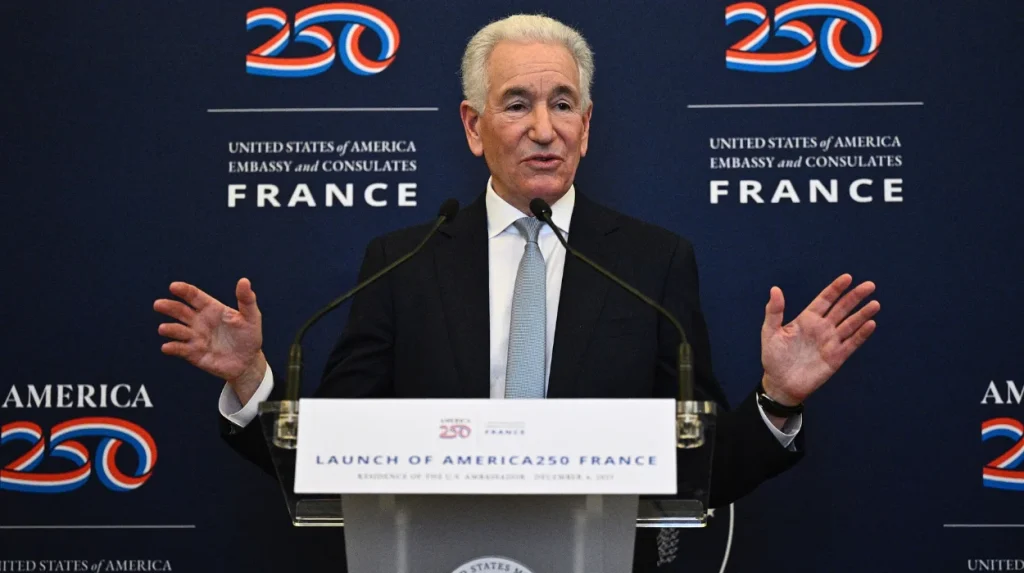
The diplomatic friction surrounding the Kushner summons unfolded between Charles Kushner and Jean-Noël Barrot, after the ambassador declined to appear at a formal summons issued by the French foreign ministry. The episode prompted a temporary restriction on Kushner’s access to meetings with senior officials, an uncommon but legally permissible response within allied relations. The dispute centers on social media commentary from the US Embassy in France, which Paris interpreted as interference in domestic affairs.
The incident occurred, at a moment when bilateral relations are symbolically significant. France and the United States are marking the 250th anniversary of their alliance, a historical milestone that contrasts sharply with the immediate controversy. While the dispute was resolved quickly, it revealed how domestic commentary can intersect with diplomatic protocol in the digital age.
Triggering Events and Public Commentary
The controversy began after posts by the US embassy and related official accounts referenced the death of a far-right French activist. The posts warned about rising political violence and suggested concerns about radicalization within France. French authorities viewed the commentary as an attempt to shape internal political discourse.
Paris summoned Kushner for clarification, citing the importance of maintaining non-interference in domestic matters. When the ambassador did not attend the initial meeting, officials escalated the matter by temporarily limiting ministerial engagement. The response reflected France’s emphasis on procedural respect rather than substantive censorship of opinion.
Escalation and Rapid De-escalation
Following the access restrictions, Kushner communicated directly with French officials and pledged that he would not interfere in France’s internal political debates. His assurance that future discussions would remain focused on bilateral priorities enabled a swift restoration of normal diplomatic engagement.
Barrot characterized the situation as unusual but manageable, emphasizing that ambassadorial summoning is a routine practice under international norms. The resolution avoided formal sanctions or declarations under the Ministry for Europe and Foreign Affairs (France), signaling that both sides intended to preserve broader cooperation.
Diplomatic Norms and Institutional Protocols
Diplomatic summons are not uncommon in international relations, but they typically address urgent clarifications rather than political disagreements. France’s decision to restrict meetings briefly underscores the seriousness with which it views sovereignty and public discourse.
The framework governing diplomatic relations derives from the NATO context and the Vienna Convention principles that guide conduct between states. Although these instruments do not explicitly regulate social media activity, they establish expectations of respect for host country sensitivities.
Ambassadorial Accountability Standards
Barrot described the summons as a “common practice” aimed at ensuring clarity rather than confrontation. By requesting direct dialogue, France signaled that concerns could be addressed through institutional channels rather than public exchanges.
Kushner’s absence from the first two invitations elevated the matter beyond routine consultation. However, once he accepted engagement and reaffirmed respect for non-interference, both governments prioritized continuity. The rapid de-escalation demonstrates how personal diplomacy can mitigate structural tensions.
Digital Diplomacy and Political Sensitivities
The episode reflects broader challenges associated with official communication on social media platforms. Statements issued online carry the weight of state authority, even when framed as commentary.
France has experienced heightened sensitivity to external influence narratives following electoral cycles in 2025, when concerns about misinformation and foreign commentary featured prominently in domestic debate. Against this backdrop, any perceived commentary on political violence becomes especially delicate.
Broader Context of United States France Relations
Despite the dispute, the structural foundation of cooperation between Paris and Washington remains extensive. Defense coordination, trade flows, and shared strategic priorities continue to anchor the partnership.
The controversy occurred as France navigates complex international challenges, including Middle East diplomacy and European security initiatives. Meanwhile, the United States under President Donald Trump is pursuing an assertive diplomatic style that emphasizes direct messaging and domestic political themes.
Historical Alignment and Contemporary Differences
The bilateral relationship has endured periodic disagreements over policy approaches. In previous years, disputes over trade tariffs, defense contracts, and global strategy created friction, yet institutional cooperation persisted.
France’s current diplomatic posture reflects its effort to balance autonomy within Europe while maintaining transatlantic engagement. The alliance remains central to both countries’ security architecture, particularly within the context of ongoing international instability.
Strategic Significance of Cooperation
France serves as a key European interlocutor for Washington on issues ranging from Ukraine to Middle East de-escalation. Disruptions in ambassadorial access, even temporary ones, could affect coordination if prolonged.
Trade between the two countries represents significant economic interdependence. While the recent incident did not escalate to economic measures, maintaining predictable diplomatic access is essential for sustained policy dialogue.
Political and Domestic Dimensions
The immediate trigger involved commentary on a politically sensitive incident within France. Domestic polarization around political violence has intensified in recent years, and public discourse can quickly expand beyond national borders.
France’s decision to restrict engagement was framed internally as an assertion of sovereignty rather than retaliation. By restoring access once assurances were provided, Paris demonstrated a preference for resolution over escalation.
Role of Leadership Messaging
Kushner’s appointment as ambassador in 2025 placed him in a context where personal diplomacy and political alignment are closely scrutinized. His approach reflects the broader communication style associated with the current US administration, which frequently emphasizes direct public engagement.
French officials, in contrast, tend to prioritize coordinated messaging through institutional channels. The divergence in communication culture contributed to the friction, even though both governments share strategic objectives.
Managing Anniversary Symbolism
The timing of the dispute, during preparations for the 250th anniversary of the Franco-American alliance, adds symbolic weight. Celebratory milestones typically emphasize unity and historical partnership.
The fact that both sides resolved the matter swiftly indicates an interest in preserving that narrative. Public statements from both governments after the resolution emphasized collaboration and mutual respect.
Implications for Future Diplomatic Practice
The Kushner summons snub illustrates how digital diplomacy can influence traditional state interactions. Even brief exchanges on social platforms may prompt formal diplomatic responses when they intersect with domestic politics.
France’s calibrated response demonstrates how allied states can assert boundaries without severing ties. By combining temporary restrictions with rapid dialogue, Paris maintained leverage while avoiding long-term disruption.
Monitoring and Compliance Expectations
Future interactions will likely be shaped by heightened sensitivity to public commentary. French authorities may continue monitoring embassy communications for compliance with established norms.
At the same time, Washington will assess how host nations interpret digital messaging within broader diplomatic contexts. Both sides appear intent on preventing similar incidents from escalating.
Institutional Resilience of the Alliance
The episode ultimately underscores the resilience of the United States–France partnership. Even amid disagreements, institutional frameworks, defense cooperation, and economic interdependence provide stabilizing anchors.
As diplomatic channels return to routine operation, attention will shift toward how both governments manage public messaging in an era of rapid information dissemination. The outcome of this episode may influence future guidelines on ambassadorial conduct, raising questions about how digital platforms intersect with established norms in transatlantic relations.