France launched the Orion 26 exercise, which is said to be the largest in the country in over three decades, to mobilize tens of thousands of personnel and advanced military hardware in the face of rising security threats.
The exercise, which continues until 30th April, involves a deployment of 12,500 French soldiers, 25 naval vessels, 140 aircraft, 1,200 drones, and soldiers from 24 allied countries. This exercise is likely one of the most ambitious military operations undertaken by European forces since the end of the Cold War. French defence officials explained that this drill aims at preparing Europe for intense warfare because there are significant fears that large-scale conflicts might soon dominate the continent.
High-Intensity Warfare and a Russia-Inspired Scenario
The scenario for the Orion 26 drills is based on a fictional war between two nations, Arnland and Mercury, but the context is widely seen to be inspired by the Russian aggression and ongoing Ukraine war.
As part of the simulation, Mercury is depicted as an aggressive power force that tries to disrupt Arnland’s stability and prevent it from entering the European Union. This is similar to Russian tactics towards Ukraine and other eastern European nations. France is leading a coalition force in the simulation, seeking to verify whether it can protect a European ally from different hybrid warfare approaches, ranging from cyber attacks to information warfare, using proxy forces, and traditional military attacks.
Massive Amphibious and Airborne Operations Planned
This operation will start with a large amphibious and airborne landing in Brittany on 20 and 21 February, which includes 700 troops and 100 armored vehicles in the Quiberon area. Amphibious exercises are rare in Europe.
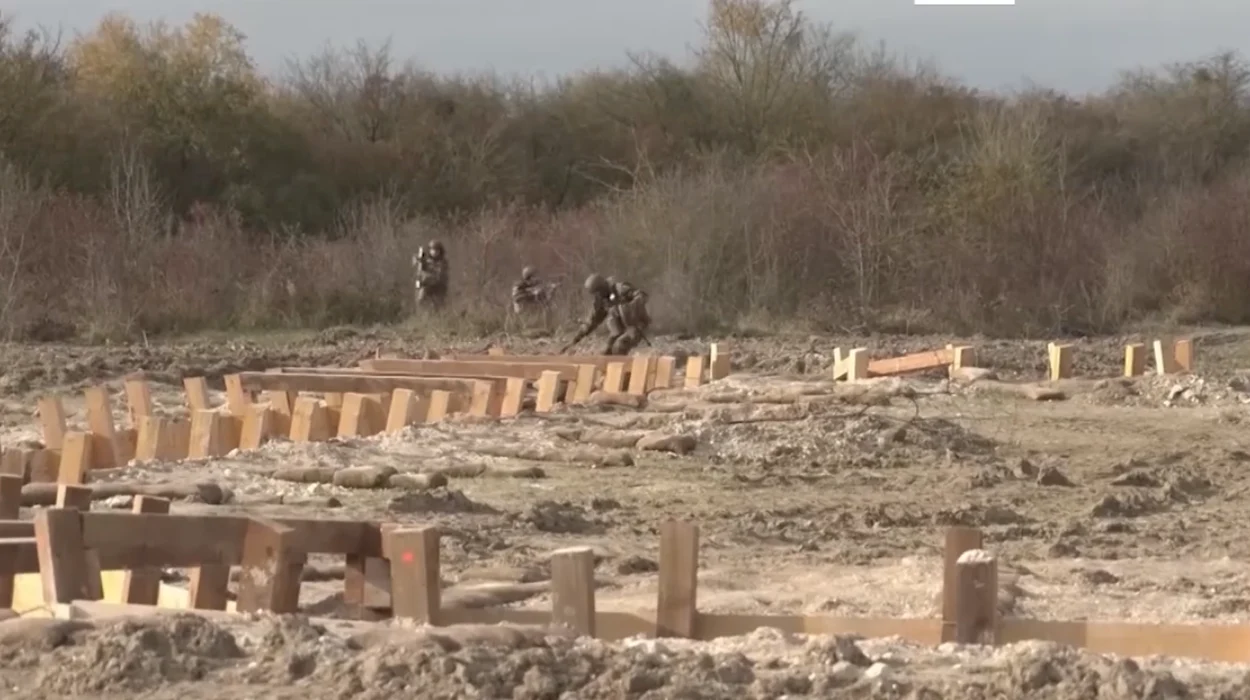
From April, the command will then transfer to NATO forces to test the interoperability of European and allied forces, in keeping with NATO’s current focus on rapid deployment, command structures, and logistics. The drills will involve three brigades, 2,150 tactical vehicles, 40 helicopters, and live fire, which will see simulated river crossing exercises over the Seine and the River Aube.
Cyber, Space, and Drone Warfare Integrated
Orion 26 will also include simulations for cyber warfare and space warfare, as these are becoming more prominent aspects of warfare due to their non-kinetic nature. The French will be using this opportunity to practice their cyber defense operations on virtual networks and carry out space warfare operations with satellite communications and observation systems.
The presence of 1,200 drones evidences the evolution of warfare since the innovations introduced by Ukraine on the battlefield, which include drones.
Also taking part are French reservists from all branches of the military, which underscores the French efforts to bolster their reserve force as European military establishments reassess manpower needs after decades of downsizing.
Broad International Participation Signals Alliance Unity
Some of the allied nations participating in the exercise Orion 26 comprise the United States, Japan, Morocco, and Switzerland, as well as European countries.
The exercise is also a test of the ambitions that France harbors for being a leading European military power, especially in the face of the ongoing discussion surrounding strategic autonomy beyond the United States and defense cooperation within the EU.
Rising Threat Perceptions Across Europe
The drills come after NATO Secretary General Mark Rutte issued a warning that Russia could pose a direct military threat to the territory of the North Atlantic Treaty Organization within the next five years due to the Kremlin’s increasing military production, recruitment, and hybrid warfare campaigns.
There has been a reported surge in suspected Russian operations detected by intelligence agencies on the European continent, including suspected Russian sabotage operations, cyber intrusions, elections interference, as well as infrastructure attacks.
As the full-scale invasion by Russia of Ukraine reaches its fourth year, with Russia bolstering its military relationship with China, Iran, and North Korea, European nations re-evaluate their state of defensiveness after decades of being demilitarized.
A Warning Signal and Strategic Recalibration
French defence officials described Orion 26 as a critical rehearsal for real-world conflict scenarios, noting that the possibility of high-intensity warfare in Europe can no longer be dismissed as hypothetical.
The scale and complexity of the drill highlight Europe’s growing recognition that the post-Cold War security environment has collapsed, and that major power conflict is once again shaping defence planning, military spending, and alliance politics.