The military junta in Niger has accused France, as well as Benin and Ivory Coast, of sponsoring an armed attack on a military base at Diori Hamani International Airport in Niamey, in a further escalation of its aggressive rhetoric against former Western allies.
The accusation was made by General Abdourahamane Tiani, who led a coup in July 2023, during a televised speech after a visit to the airbase, some 10 kilometers from the presidential palace.
As reported by Niger’s defense ministry, the attack lasted for about 30 minutes and included both air and ground attacks, wounding four soldiers and killing 20 suspected attackers. Eleven people were arrested, and according to Niger’s state television, a French national was among those killed, although this could not be confirmed.
There was no proof offered to support the allegations, and there has been no response from France, Benin, or Ivory Coast. The lack of proof casts doubt on whether the allegations are based on intelligence reports or are simply part of a political strategy.
France–Niger Relations: From Security Partner to Strategic Adversary
The situation in Niger has deteriorated considerably since the coup in 2023, which overthrew the elected President Mohamed Bazoum, a key French ally. Niger was one of the last major military bases of France in the Sahel region, with about 1,500 French troops stationed there, following the withdrawal of French forces from Mali and Burkina Faso.
After the coup, Niger’s military junta demanded the withdrawal of French troops. By the end of 2023, France had finished its military withdrawal from Niger, thus ending a near-decade-long partnership against insurgency. The military junta in Niger has since come to view France not as a former partner but as a neo-colonial force that destabilizes Niger, an increasingly common view in Sahelian military regimes.
The military junta’s leader, Tiani, in his statement,
“We have heard them bark, they should be ready to hear us roar,”
captures not only the failure of diplomacy but also the use of anti-French rhetoric to establish legitimacy at home.
Strategic Utility of Blaming France
The French government is blamed for several reasons by the Niger military government. Firstly, it shifts the focus away from the internal security threats that Niger is still facing from armed groups affiliated with al-Qaeda and ISIL, despite the military government’s promise to bring stability through military rule.
Secondly, Niger is aligning itself with Mali and Burkina Faso, other countries that are ruled by military governments and have kicked out the French military forces and accused the French government of supporting terrorism, which the French government has denied.
Together, the three countries constitute the Alliance of Sahel States (AES), which prides itself on being an “anti-Western bloc” in pursuit of “sovereign security solutions.”
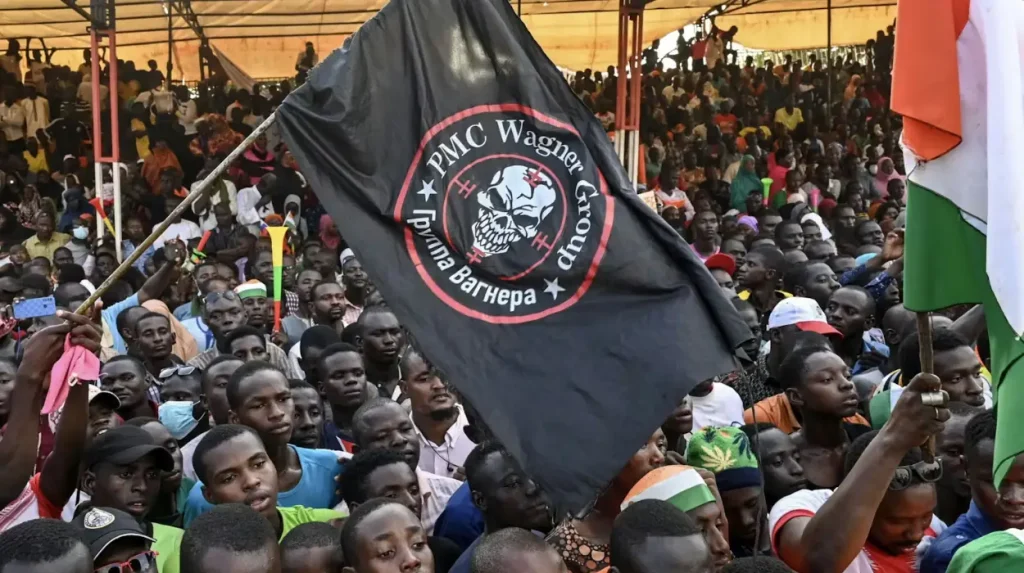
Third, the charges against France serve as a pretext for Niger’s increasing alignment with Russia, which is portrayed as a trustworthy alternative security provider in the face of what the junta sees as Western hostility.
Russia’s Expanding Role and the Decline of Western Influence
Tiani thanked “Russian partners” for their assistance in repelling the attack, which confirmed the presence of Russian troops at the Niamey base. Although Niger has not been forthcoming about the extent of Russian involvement, its cooperation is not out of pattern in the region. Mali and Burkina Faso have both sought Russian military assistance, including trainers and security personnel, after splitting with France.
Russia’s Sahel strategy is more centered on the survival of the regime and not on the protection of civilians. In Mali and Burkina Faso, the increased presence of Russia has been accompanied by the continued or deteriorating violence against civilians, and there are questions about whether Niger’s turn will help.
In a wider context, the reduced presence of France in Niger is indicative of the structural failure of the Western strategy of fighting terrorism in the Sahel, which was based on military partnerships without addressing the issues of governance, economic exclusion, and human rights abuses..
Security Reality on the Ground: Violence Continues Despite Power Shifts
Despite sweeping geopolitical realignments, Niger remains deeply insecure. Armed groups linked to ISIL in the Greater Sahara (ISGS) and al-Qaeda affiliates continue to operate across western and southern Niger, particularly near borders with Mali and Nigeria.
Since 2020, violence in the central Sahel has killed tens of thousands and displaced millions across Niger, Mali, and Burkina Faso. Humanitarian agencies warn that conflict-driven displacement, food insecurity, and climate shocks are converging into a prolonged crisis—one that military alliances alone have failed to address.
The Niamey airbase attack, regardless of who carried it out, underscores the persistent vulnerability of state institutions, even in the capital, and challenges the junta’s narrative of restored order.
Absence of Accountability and Risk of Escalation
The junta’s claims against France and other countries in the region, made without any evidence, could further militarize the region’s relations. There are also concerns about collective punishment, arbitrary arrests, and retaliation, particularly if foreigners or locals are made scapegoats.
The blame-shifting by the Niger government sidesteps uncomfortable questions about the reasons for the persistence of insecurity, the continued functionality of extremist groups, and whether the country’s militarized governance has met its promises.
France has undeniably played a controversial and often counterproductive role in the Sahel over the past decade. However, portraying Paris as the central architect of Niger’s current instability oversimplifies a far more complex crisis rooted in governance failures, elite power struggles, regional neglect, and armed group entrenchment.
Niger’s accusations against France appear less about evidence and more about redefining alliances, consolidating military rule, and reshaping public narratives. Whether this strategy will enhance security—or deepen isolation and violence—remains an open and urgent question.