The French parliament has adopted a law that will prohibit the use of social media among children under the age of 15, which is one of the most extensive efforts to date in Europe to control children’s behavior on the internet. The bill passed the National Assembly of France with 130 votes in favor and only 21 against, after a long debate that lasted from Monday into Tuesday.
The bill is now expected to pass in the Senate, which is the upper house of the French parliament, in a matter of weeks. French President Emmanuel Macron welcomed the vote as a “major step” to protect children and teenagers, who are increasingly exposed to the negative effects of excessive screen time on their mental health.
If the bill passes, France will become the second country in the world to ban the use of social media by young teenagers, after Australia, which banned the use of social media among children under the age of 16 in December.
What the Law Would Do—and When It Would Apply
The law states that
“access to an online social networking service provided by an online platform is prohibited for minors under the age of 15.”
This would include platforms such as TikTok, Snapchat, and Instagram, but not online encyclopedias or educational platforms.
The government plans to enforce the new regulations from the beginning of the 2026 school year, but only for new users. According to Gabriel Attal, former prime minister and current leader of Macron’s Renaissance party in the lower house, social media companies would then have until December 31, 2026, to turn off existing accounts that do not comply with age verification requirements.
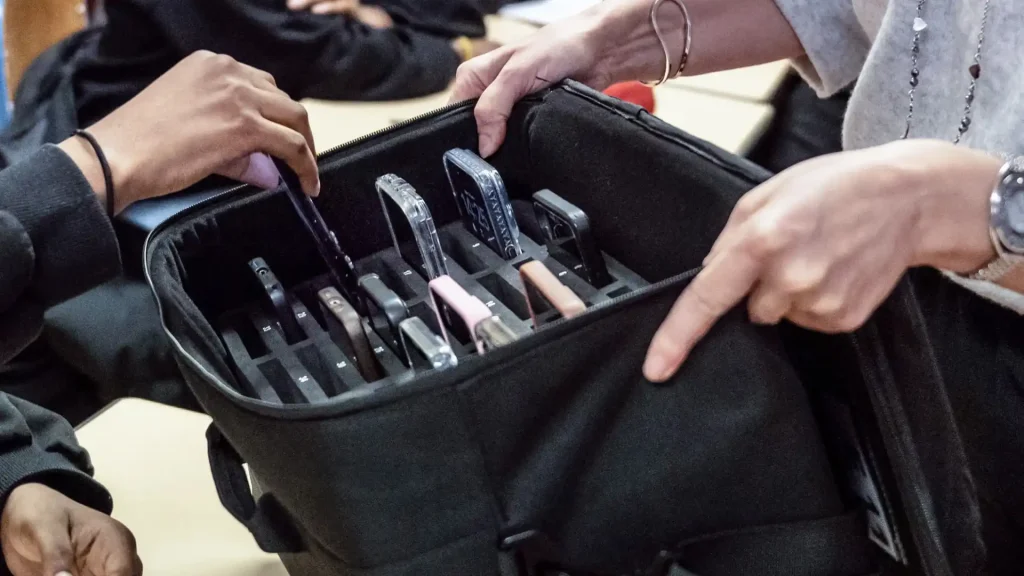
The law also forbids mobile phones in high schools (lycées), continuing a ban that already exists in junior and middle schools.
Macron’s Political Gamble on Digital Childhood
Macron has increasingly positioned the regulation of children’s digital lives as a defining issue of the final year of his presidency. Since calling snap elections in 2024 that resulted in a hung parliament, the president has been largely sidelined from domestic policymaking.
The social media ban represents a rare opportunity to reassert political leadership and reconnect with public opinion. Macron framed the issue in stark geopolitical terms, warning that children’s emotions are being exploited by foreign tech powers.
“The emotions of our children and teenagers are not for sale or to be manipulated, either by American platforms or Chinese algorithms,”
Macron said in a video address on Saturday.
The Mental Health Evidence Driving the Push
The bill draws heavily on growing scientific concern about the impact of social media on adolescent mental health. France’s public health watchdog, ANSES, said this month that platforms such as TikTok, Snapchat, and Instagram have “several detrimental effects” on adolescents—particularly girls.
Identified risks include:
- Increased rates of anxiety and depression
- Cyberbullying
- Exposure to violent or harmful content
- Distorted body image and self-esteem issues
Although ANSES stressed that social media is not the only reason for the decline in youth mental health, it concluded that it is structurally damaging when combined with engagement algorithms. International evidence confirms these concerns. Studies cited by European regulators demonstrate that adolescents who spend more than three hours a day on social media are significantly more likely to experience mental health problems such as sleep problems and emotional difficulties.
Enforcement: The Achilles’ Heel of the Law
The success of the ban depends on the development of a strong age verification process, which policy makers acknowledge has not yet been addressed. France already has a verification process in place that requires adults to verify they are over 18 years of age to view online pornography, but implementing this on social media sites is a significant technical and privacy issue.
Work on age-verification is underway at the European level, but no unified system currently exists. The state media regulator would be tasked with drawing up:
- A list of platforms deemed harmful, which would be completely banned for under-15s
- A secondary list of less harmful platforms, accessible only with explicit parental consent
Supporters See Sovereignty—Critics See Paternalism
Supporters argue the law is about more than mental health—it is also about digital sovereignty. Attal warned that social media platforms allow foreign powers to “colonise minds”, shaping opinions and behaviors through opaque algorithms.
Opposition voices, however, say the measure oversimplifies a complex problem.
Arnaud Saint-Martin of the hard-left France Unbowed (LFI) dismissed the bill as “digital paternalism”, arguing it avoids addressing platform accountability and algorithmic design.
Nine child protection associations echoed this view on Monday, urging lawmakers to regulate platforms, not exclude children outright.
Divisions Even Within Government Ranks
Not all former government figures are convinced. Elisabeth Borne, another former prime minister, expressed skepticism, cautioning that enforcement remains weak even where bans already exist.
“It’s more complicated than that,”
she told broadcaster France 2.
“We first need to make sure that the ban is properly enforced in middle schools.”
France banned mobile phones in colleges (ages 11–15) in 2018, but compliance has varied widely across regions.
A European and Global Trend Gains Momentum
France’s proposal aligns with a broader international movement. In Europe:
- Denmark, Greece, Spain, and Ireland are considering similar measures
- The UK government launched a consultation this month on banning social media for under-16s
Australia’s law, passed in late 2025, is being closely watched as a test case for enforcement and legal durability.
Legal Risks and Past Failures
The current bill has already been redrafted following scrutiny from France’s Council of State, which reviews draft laws for compatibility with French and EU law.
That step was crucial: a 2023 French law proposing a similar ban was ultimately ruled inoperable after courts found it violated European legal standards.
Lawmakers are keen to avoid a repeat, especially given the likelihood of legal challenges from tech companies citing free expression, privacy rights, and EU digital market rules.
Fast-Tracking the Law Amid Legislative Gridlock
Macron has urged Prime Minister Sébastien Lecornu to use a fast-track legislative procedure, allowing the bill to pass with a single reading in each chamber. Without it, the legislation risks being buried under a growing backlog caused by Lecornu’s struggles to pass a national budget.
With fast-tracking, the government hopes to have the law enacted by September 2026, aligning implementation with the school calendar.
Protection or Precedent?
France’s proposed under-15 social media ban sits at the intersection of child protection, digital regulation, and political strategy. Supporters see a pioneering move that could reshape childhood in the digital age; critics warn of ineffective enforcement, legal pitfalls, and the outsourcing of responsibility from platforms to families.
As Europe watches closely, the French experiment may determine whether banning children from social media becomes a continental norm—or a cautionary tale.