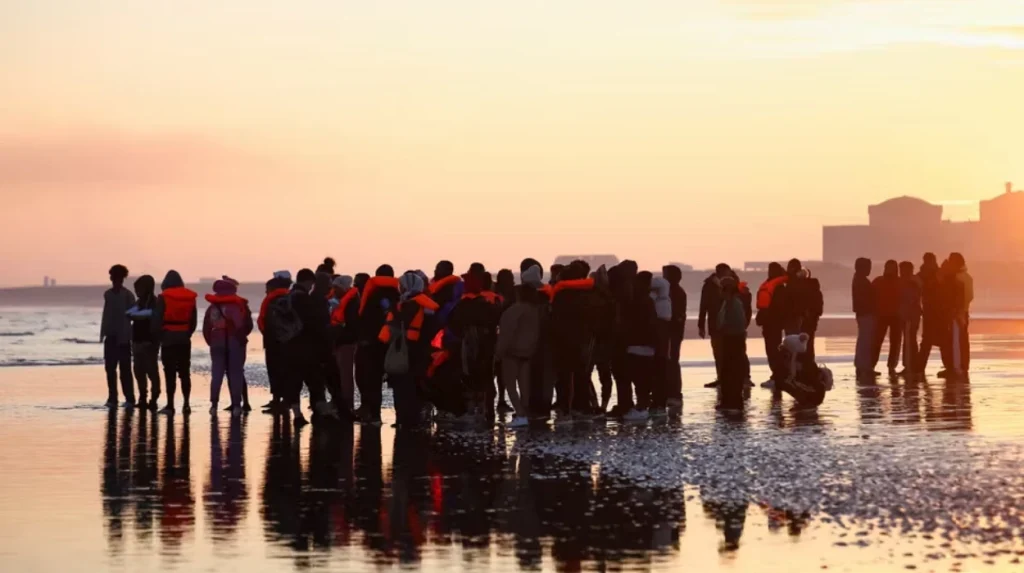
In an unusual move, France has excluded ten members of the far-right cohorts known as “Raise the Colours” from entering France, which comprised citizens of Britain. According to the statement by the Interior Ministry, this decision was based on “serious public disorder” contributed by these activists in their anti-immigrant campaigns across the northern coastline and Pas-de-Calais areas of France. Such moves by French authorities clearly depict their resistance against the rising challenge posed by transnational far-right extremism.
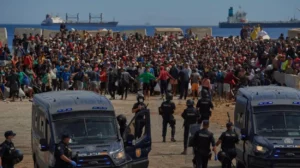
The move follows a growing humanitarian crisis in the English Channel, where a record number of migrants are making attempts at crossing into the United Kingdom. The announcement also speaks volumes about the issues associated with bilateral agreements, as well as the rising strength of far-right ideologies in Britain and Europe.
Aggressive actions by British activists
According to French authorities, the ten banned activists were actively sabotaging migrant crossings, engaging in multiple forms of illegal conduct. Among the reported actions:
- Destruction of small boats used by migrants for Channel crossings. This not only endangered lives but also interfered with lawful rescue and border management operations.
- Verbal and physical assaults, including a widely reported incident on the night of September 9–10, 2025, in Grand-Fort-Philippe near Dunkirk. Four men, waving English and UK flags, confronted migrants, telling them they were “not welcome in England” and stealing personal belongings, according to Félicie Penneron, coordinator of Utopia 56.
- Publicizing attacks on social media, with a dedicated account, Raise the Colours Operation France, posting videos of their activities. These posts suggest an attempt not only to intimidate migrants but also to recruit or inspire other extremists to commit similar acts.
These activities are illegal under several pieces of legislation in France, including laws that govern assault, robbery, and endangering public security, with possible infringement of international law concerning the protection of refugees. More than that, the activities of this group of activists symbolize an ideological struggle involving the international diffusion of extreme right ideology in Europe, focused on one of its most vulnerable groups.
The scale of the migration crisis in the English Channel
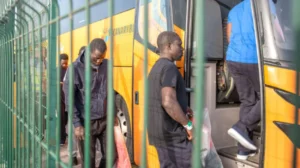
The actions of the French government are taking place when migrant numbers are at a record high. In 2025, a total of 41,472 migrants successfully made it across the Channel, beating previous records set in 2022. The majority of migrants come from countries that are experiencing war, poverty, and/or political oppression, among them Syria, Afghanistan, Sudan, and Eritrea.
Crossings are highly hazardous. Refugees arrive in overburdened rubber boats or in boats, which expose them to the risk of hypothermia, tipping over, and drowning in waters heavily traveled by commercial and military ships. Rescue efforts, state and NGO, are overwhelmed, and interference by the far-right makes crossing even more perilous.
This rise in crossing numbers coincides with growing anti-immigrant sentiments in the United Kingdom, amplified by the rising profile of the Reform UK party, and pressure on Prime Minister Rishi Sunak to demonstrate that he controls the borders. Critics say this may be linked to the political rhetoric demonizing immigrants and how it has indirectly emboldened far-right vigilante violence-acts that transcend national boundaries to “enforce” anti-immigration policy.
France-UK agreements and limitations
This summer, France and the UK signed a deal aimed to reduce small boat crossings. Under the terms of the deal, migrants who arrive in the UK via small boats will be returned to France, while the UK accepts a corresponding number of migrants already present in France through a “one-for-one” process.
While this deal is taken care of with regard to the immediate logistical challenges, the very important roots of migration, such as conflicts, persecution, poverty, and human trafficking networks, are not tended to. Human rights campaigners say such policies are an affront, shifting the focus from protection to deterrence and border control.
This agreement also reveals that there is a flaw in international law enforcement because individual countries have the ability to establish agreements with other countries on cooperation in this area, while non-state actors like extreme right-wing vigilantes are operating independently in these circumstances, thereby hampering the efforts of governments to ensure the safety of immigrants. This point was aptly demonstrated by the activities of “Raise the Colours”.
Transnational far-right extremism in europe
The incident that took place in the north of France is illustrative of the wider phenomenon of cross-border far-right activities that are taking place in Europe. The far-right groups are increasingly networking across borders through the use of social media platforms.
In the UK and in France, such groups take advantage of the concerns of the citizens regarding migration by using political narratives in recruiting adherents. Such groups lie between political activism and criminal activities, as they end up condoning violence by vigilantes in the name of securing borders.
Legal experts warn that such groups pose three major threats:
- Public safety risks: Violent actions against migrants can escalate local tensions, provoke retaliatory attacks, or endanger first responders.
- Undermining law enforcement: By taking extralegal measures, these groups interfere with the ability of police and border agencies to maintain order and enforce immigration laws.
- Challenging international law: Refugees and asylum seekers are protected under the 1951 Refugee Convention and European human rights law. Far-right violence against these populations constitutes a breach of both domestic criminal law and international obligations.
France’s decision to ban the ten activists is therefore not merely punitive; it represents an acknowledgment that cross-border far-right extremism is a serious national security issue.
The political and societal implications
Activities by Raise the Colours are also an indication of the convergence of political extremism with migration crises. The internal political setting within the UK, with the growing popularity of Reform UK as well as anti-immigrant sentiments, may have increased the internal impetus that has empowered far-right vigilantes to act outside the UK.
For the French government, such episodes illustrate the difficulties of dealing with a humanitarian crisis on the borders of the nation while navigating the presence of foreign political elements with ideas to achieve. The French government finds itself between a rock and a hard place regarding the handling of migrants.
In addition, the emergence of far-right transnational networks might trigger copycat attacks in other European countries that are under pressure due to migration, such as Italy, Spain, and Greece. This is a demonstration of the need for the coordinated development of European policies that would monitor, disrupt, and prosecute such transnational networks of extremists.