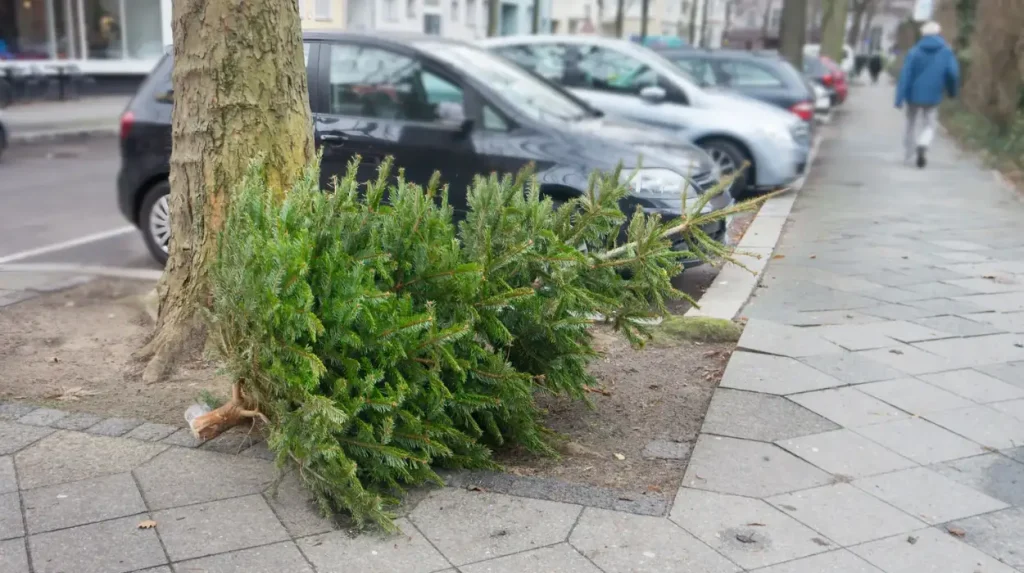
Every year at the end of the holiday season, households all over the world must remove their Christmas trees. What do you do with your tree once the holidays are over? This is still a practical question. When it comes to their holiday fir trees, French people have two main traditions: some families keep their trees up until Epiphany, while others find inventive ways to recycle them.
Throughout 2026, communities and local councils will implement a number of environmentally friendly waste management systems. The most popular techniques and legal requirements are presented in the guide. alternatives that are sustainable and available throughout France.
Why proper disposal matters
Before diving into the “how,” it’s worth understanding why responsible disposal of Christmas trees is important:
- Environmental impact: Millions of natural trees are sold annually. Improper disposal contributes to landfill waste.
- Recycling value: Christmas trees can be chipped into mulch, used for biomass energy, or repurposed for erosion control.
- Local regulations: Many French communes have specific rules and timetables for tree collection. Fines may apply for illegal dumping.
Municipal (commune) collection services
What is communal collection?
Street pickup services and special collection points operate throughout most French cities and towns during the first week of January. Many households find this disposal method to be the most common and convenient solution.
How does it work?
Each commune sets its own schedule — typically in the first two weeks of January — for collecting Christmas trees. Prior to pickup:
- Remove all decorations, lights, tinsel, and stands.
- Ensure the tree is completely bare (metals and plastics can contaminate recycling streams).
- Some communes ask residents to place trees in specific collection zones or at the edge of the street on designated dates.
Examples of how some cities handle collection:
- Paris: Provides free curbside pickup and numerous drop‑off points in each arrondissement after the holidays.
- Lyon: Sets designated squares where trees are gathered for recycling into mulch.
- Nice: Operates special eco‑points staffed by municipal workers for safe disposal.
Residents should check their commune’s official website or municipal newsletter for precise dates and rules.
Drop‑off at eco‑points and recycling centers
What are eco‑points?
Across France, many communities operate “éco‑points” or recycling centers where residents can bring bulky items — including Christmas trees — year‑round. These facilities accept a range of waste that doesn’t fit in standard household bins, such as garden waste, wood, and green materials.
Benefits of eco‑points
- Flexible timing: Unlike limited‑time street collections, eco‑points are open on regular schedules.
- Recycling priority: Trees dropped here are more likely to be processed into compost or chipped for agriculture.
- No cost: Most municipal eco‑points are free to residents.
To find the nearest location, use your local mairie (town hall) website or the Dept. of Environment’s recycling locator site.
Private tree recycling and collection services
Commercial alternatives
Private companies provide door-to-door Christmas tree collection and recycling services for payment in major cities. These services may appeal to residents who miss municipal pickup times, live in apartment buildings, or prefer a convenient, scheduled pickup.
Service features often include:
- Scheduled collection window
- Pooling trees from multiple households
- Transfer to biomass or mulch production facilities
Some services partner with environmental organizations, offering charitable donation options for every tree recycled.
Creative and eco‑friendly alternatives
1. Mulch and Composting
Many communes chip collected trees into mulch, which is used in public parks, gardens, or sold locally. Residents with access to garden areas can also consider:
- Renting a wood chipper
- DIY composting (cut tree into manageable pieces)
- Using branches for garden paths or erosion control
2. Habitat and Garden Uses
Some gardeners and environmental groups reuse old trees for:
- Bird habitats — placing tree tops in gardens to create shelter
- Fence windbreaks — supporting soil stabilization in rural areas
- Pond filters — underwater branches can provide micro‑habitat
Always check local wildlife protection rules before placing trees in natural habitats.
3. Biomass Energy
Cities such as Bordeaux and Toulouse have piloted programs where chipped Christmas trees are converted into biomass for district heating systems.
Rules and do’s and don’ts
What you must do:
- Strip all decorations, hooks, and metal parts
- Comply with your commune’s schedule — trees left on streets prematurely may be considered illegal dumping
- Use authorized collection points or services
What you shouldn’t do:
- Burn the tree in a fireplace or backyard — untreated wood may be safe, but many trees sold commercially have been sprayed or treated
- Dump the tree in forests or natural spaces — this can disrupt ecosystems and carries fines
- Leave trees with lights, stands, or ornaments: these contaminate recycling streams
Special considerations for residents and renters
Apartment Buildings
If you live in a multi‑unit residence, disposal often depends on:
- Whether your building’s syndic (property manager) contracts communal pickup
- If your coop collects discarded trees during scheduled municipal service days
Rural vs. Urban Differences
In rural communes, residents should:
- Check mairie notices early
- Use local eco‑points
- Coordinate with neighbors for bulk drop‑offs
Digital tools and information sources
As 2026 approaches, French communes increasingly use digital platforms to share disposal guidance:
- Municipal websites with dedicated “Déchets de Noël” pages
- Apps that send alerts about collection days
- QR‑coded notices on public bins and eco‑points
National recycling databases and the Ministry of Ecological Transition portal also provide updated info on disposal rules by department.