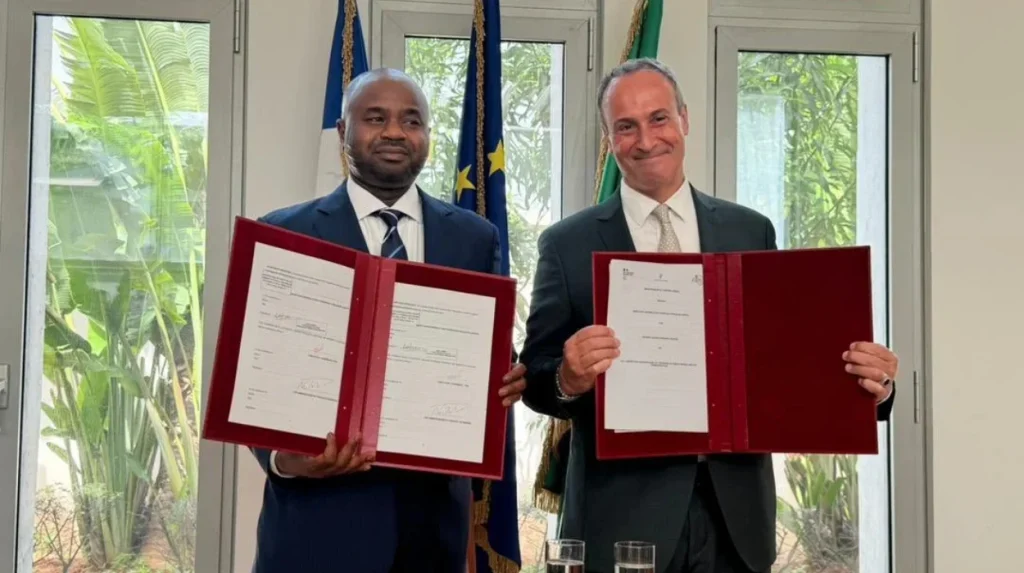
Nigeria’s Federal Inland Revenue Service accelerated its modernization agenda on December 10, 2025, by signing a memorandum of understanding with France’s Direction Générale des Finances Publiques. The agreement focuses on digital tax administration, technology transfer and compliance tools intended to strengthen revenue collection in Nigeria’s rapidly expanding digital economy. Positioned just weeks ahead of the transition to the Nigeria Revenue Service in January 2026, the partnership elevates France as a key driver of Nigeria’s next phase of fiscal transformation.
The pact outlines a cooperative approach to improving data analytics, automated taxpayer support and AI-powered audit systems. These tools are designed to address long-standing challenges in Nigeria’s tax landscape, including fragmented reporting, informal economic activity and weak cross-border enforcement mechanisms.
Digital Transformation Commitments
France’s commitments include support for automated interfaces and enforcement tools built around AI and machine learning. Nigerian officials argue these systems are essential for combating increasingly sophisticated tax evasion and cybersecurity threats. FIRS Chairman Zacch Adedeji underscored this point, noting that Nigeria must “embrace global best practices in digital taxation” to remain competitive and secure.
The partnership simultaneously opens channels for Nigeria to align its systems with OECD Base Erosion and Profit Shifting norms. This alignment aims to limit the ability of multinational companies to shift profits outside Nigeria, a recurring concern in sectors where digital platforms dominate commercial activity.
Capacity Building Provisions
Human resource development forms a central pillar of the MoU. Thousands of Nigerian tax officers are expected to receive training in leadership, compliance methodology and digital enforcement. These programmes mirror French administrative models that emphasise structured career paths and professional certification.
Leveraging French IT Models
France’s experience with advanced tax IT infrastructure is set to inform Nigeria’s rollout of new analytics dashboards, automated support systems and secure interfaces for taxpayer engagement. Nigerian reforms in 2025 increasingly rely on bilateral partnerships to accelerate implementation timelines.
Context Of Regional Reform Trends
The MoU fits within a broader continental pattern, where African states—facing high debt servicing costs—seek foreign technical support to expand tax bases. Nigeria’s partnership with France is one of several bilateral arrangements in 2025 aimed at reducing leakages and stabilising public finances.
Data Exchange Dynamics
Automatic information sharing is the most sensitive element of the pact. The agreement allows for cross-border flows of taxpayer data, including digital platform records and corporate filings, to strengthen audits and transfer pricing reviews. For Nigeria, this structure promises unprecedented visibility into foreign-linked transactions.
However, the reciprocity of the arrangement exposes asymmetries. France’s far more advanced analytic systems may enable deeper insights into Nigerian markets than Nigeria can claim in return. This imbalance reinforces debates on how developing economies navigate data governance when partnering with technologically dominant states.
Sovereignty Risks In Practice
Concerns continue to surface around the storage, transfer and secondary use of Nigerian taxpayer data. Because some datasets may be processed through foreign systems, questions arise regarding jurisdictional control and safeguards against misuse. Nigeria’s 2023 Data Protection Act remains in early stages of enforcement, and 2025 monitoring reports highlight limited capacity to oversee foreign compliance.
Critics caution that certain categories of data—particularly corporate ledgers and high-net-worth individual records—could be vulnerable to indirect intelligence uses if regulatory boundaries are unclear. The challenges echo broader debates on balancing openness with constitutional protections for fiscal confidentiality.
Alignment With Global Norms
The MoU closely follows OECD frameworks for the automatic exchange of information, which by 2025 have been adopted by more than 100 countries. This positioning reinforces Nigeria’s commitment to international transparency, but also highlights structural inequities. France’s stronger privacy regime and institutional capacity give it disproportionate influence over the technical parameters of the exchange.
Nigeria’s external debt stock, estimated at around $100 billion in late 2025, further complicates the political optics. Observers note that global tax cooperation often overlaps with creditor priorities, making it important for Nigeria to establish firm boundaries on data categorization, retention periods and audit triggers.
Fiscal Autonomy Implications
Nigeria’s willingness to trade data access for enhanced capacity raises important questions about the depth of its fiscal independence. Although the reforms promise improved revenue administration, they also introduce forms of reliance on foreign systems, frameworks and expertise. Fiscal autonomy, rooted in post-colonial economic sovereignty, depends on the ability to maintain control over critical revenue levers.
Improved compliance and reduced leakages could lift Nigeria’s tax-to-GDP ratio above the 10 percent recorded in 2024, inching toward the 15 percent target projected for 2027. Such gains are central to Nigeria’s strategy of reducing dependence on oil revenues and external borrowing.
Revenue Mobilization Gains
Modern technology could significantly reduce losses estimated at up to 40 percent of potential revenue in 2025 audits. By improving audit accuracy and limiting discretionary loopholes, the MoU supports the Nigeria Revenue Service’s mandate to broaden the non-oil revenue base.
French-supported capacity building also aims to professionalize a workforce of more than 20,000 tax officials. Comparable reforms in Kenya’s iTax platform offer a precedent for how digital systems can raise compliance rates while standardizing administrative procedures.
Power Asymmetries Exposed
France’s superior administrative structures give it leverage in interpreting technical aspects of the MoU, including cross-border audit cooperation. This influence could shape dispute resolution outcomes involving multinational liabilities.
Impact On Investment Negotiations
Nigeria’s growing sovereign wealth fund and its 2025 push for renegotiating bilateral investment treaties depend on tight control over sensitive financial information. If foreign regulators gain greater insight into fiscal operations, Nigeria’s negotiation power could diminish.
Judicial Concerns And Oversight
Autonomy may erode if data flows circumvent domestic courts or if enforcement processes rely too heavily on foreign verification systems. Similar concerns have surfaced in EU-Africa taxation debates, where legal asymmetries complicate mutual trust.
Broader Geopolitical Context
The MoU aligns with a surge in Euro-African tax diplomacy during 2025, driven by G20 efforts to curb illicit financial flows estimated at $100 billion annually from the continent. France positions itself as a partner in Africa’s fiscal reforms at a moment when China’s infrastructure financing maintains strong influence across the region.
Nigeria’s leadership views the collaboration as essential for establishing credibility in global markets and meeting developing-country obligations under evolving WTO-compliant tax frameworks.
Regional Precedents And Lessons
South Africa’s 2024 tax cooperation agreement with Germany generated notable revenue gains but also faced legal challenges on data localization. These developments inform Nigerian policymakers as they integrate safeguards into the new framework.
ECOWAS initiatives in 2025 highlight the value of collective tax negotiation rather than isolated bilateral agreements. For Nigeria, diversification away from oil—which still funds roughly 60 percent of the budget—heightens the importance of resilient, autonomous revenue systems.
Domestic Political Ramifications
The MoU is likely to spark significant debate within the National Assembly, especially as opposition lawmakers push for detailed impact assessments ahead of the 2026 fiscal year. Public trust remains fragile following controversy around the 2024 fuel subsidy reforms, making transparency essential for broad acceptance of the agreement.
Officials stress the need to integrate local technology firms into the digital overhaul to avoid perpetuating foreign dependency. The success of the initiative may hinge on whether indigenous developers become central to future system upgrades.
As Nigeria adjusts to this new model of data-capacity exchange, the true test of fiscal autonomy will be visible in the early performance indicators of the Nigeria Revenue Service by late 2026. The depth of foreign influence, the resilience of domestic safeguards and the strength of administrative reforms will shape whether the deal becomes a catalyst for sovereign tax capability or a precedent for subtle external dependence. The lingering uncertainty prompts reflection on what forms of control nations must retain to remain autonomous within an increasingly interconnected global digital tax regime.