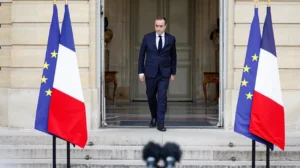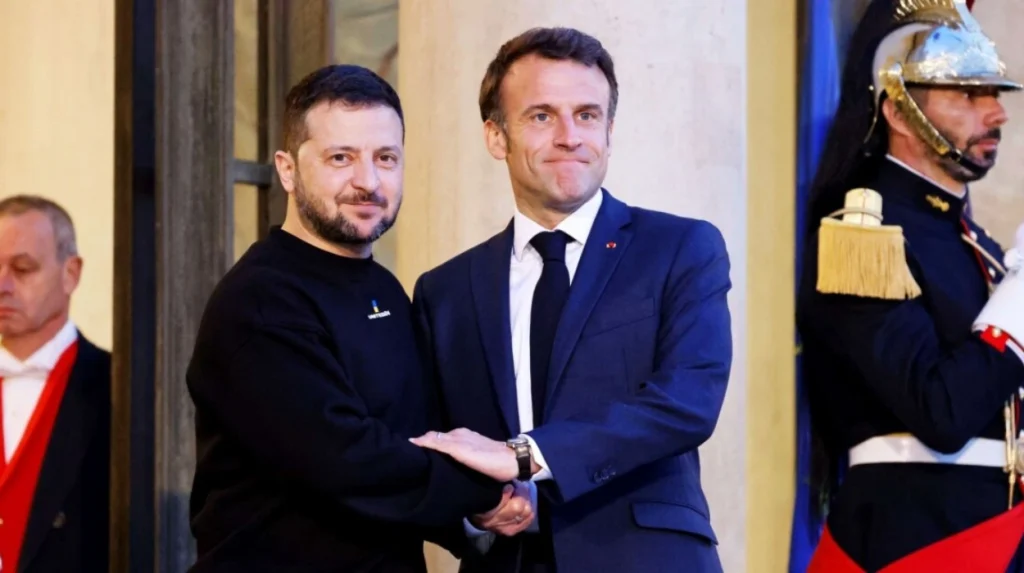
French President Emmanuel Macron used his December 5, 2025, stop in Chengdu to reassert cohesion among Western partners after a Der Spiegel report claimed he had privately questioned U.S. reliability in conversations with German Chancellor Olaf Scholz. He rejected the report outright, stating that unity between Americans and Europeans remained the foundation of effective support for Kyiv. Macron framed transatlantic alignment as indispensable for any path to a durable settlement, emphasizing a broad coalition that includes Europeans, Americans, Canadians, Australians, and Japanese.
His remarks followed the November 30 Paris consultations where allies began testing Russia’s willingness to engage through U.S. mediation led by envoy Steve Witkoff. Macron linked diplomatic coordination with military and economic pressure, noting that no single actor could impose a stable outcome. This positioning matched France’s long-held view that both Washington and Europe must act in concert, particularly as battlefield conditions evolve through the winter of 2025.
Leaked transcripts and private doubts
Der Spiegel’s December 4 report alleged that Macron and Scholz expressed concerns about the future of American commitments during calls held earlier in the year. According to the publication, the remarks suggested anxiety that shifts in U.S. domestic politics could weaken Ukraine’s negotiating position. Macron dismissed the account, and the Élysée insisted that no conversation questioning Washington’s reliability had taken place.
The leak emerged as Witkoff held follow-up meetings in Moscow intended to clarify whether Russia would consider structured talks. U.S. Senator Marco Rubio described the sessions as productive, though he noted that clear gaps remained over security guarantees and territorial expectations. Ukrainian President Volodymyr Zelenskyy reiterated after the Paris meeting that Ukraine alone defines its borders, aligning with Macron’s insistence that any settlement must preserve Kyiv’s agency. The interplay between leaked concerns, official denials, and active diplomacy illustrated the tension between public solidarity and complex private exchanges.
Diplomatic leak implications
The leaked transcripts introduced uncertainty over allied cohesion at a delicate stage of mediation efforts. While dismissed by French officials, the report highlighted the strategic weight placed on U.S. durability as the war enters its fourth year. Ukraine’s partners are attempting to balance active military support with new diplomatic channels, and claims of doubt—substantiated or not—risk complicating that balance. Even as Macron continued projecting confidence, the episode underscored how political narratives can shape battlefield expectations, particularly in Washington where aid debates intensified through 2025.
Allied coordination mechanisms
In October, a joint statement by 17 leaders, including Macron, Zelenskyy, and British Prime Minister Keir Starmer, endorsed an immediate ceasefire along current lines as a basis for negotiations while increasing pressure on Russian revenue sources. The Paris reaffirmation at the end of November repeated that commitment and introduced further sanctions targeting Russia’s defense industry, maritime logistics, and the network of ships described by European officials as the “ghost fleet.” Macron said these measures represented the most comprehensive effort since the war began and were designed to restrain Moscow’s capacity to prolong the conflict.
European and transatlantic partners have supplied more than $200 billion in assistance since 2022. With long-term challenges including reconstruction financing, leaders outlined plans to direct frozen Russian state assets toward compensating Ukraine. The architecture for doing so is still being debated, but officials in Brussels indicated in December that a framework could be finalized by early 2026.
Sanctions pressure and economic leverage
New sanctions are intended to limit Russia’s access to dual-use components, energy transport revenue, and external financing. European officials noted that pressure on Russian oil revenues had intensified since the summer of 2025, although Moscow continued redirecting exports through discounted Asian markets.
Frozen assets and reconstruction debates
The use of frozen assets reflects a broader push to secure Ukraine’s post-war capacity. Legal questions remain over how far governments can go without triggering challenges in European courts, but momentum has increased amid rising costs and political uncertainty.
Coordinated defense support
With frontline conditions shifting through the autumn, allied states accelerated air defense transfers, including additional European-built systems. Macron tied these tactical steps to the broader diplomatic push, arguing that negotiations require leverage to be credible.
U.S. mediation role evolution
Macron described American mediation as essential, praising Witkoff’s outreach mission as an attempt to determine whether Russia is prepared for structured dialogue. U.S. lawmakers emphasized that any interim arrangement must align with Ukraine’s requirements, particularly regarding territorial integrity. Zelenskyy maintained that Kyiv would not concede land as a precondition for talks, while Macron clarified that territorial issues fall exclusively under Ukrainian decision-making.
Transatlantic consultations are also examining what a long-term security framework could entail. European governments are pressing for a system that binds the United States into future guarantees while expanding Europe’s own responsibilities. These discussions remained open as of early December, with officials citing the need to balance deterrence with political realism during an evolving conflict.
Negotiation parameters under review
European diplomats noted that no detailed peace proposal exists. Instead, the discussions focus on clarifying Russian intentions and aligning Western expectations before any formal process begins. Macron stressed the need to avoid unilateral efforts that may divide the coalition.
Kyiv’s strategic position
Ukraine has continued to focus on holding on external military assistance and strengthening air defenses to reduce the Russian attacks. Odessa and the devastation of Dnipro in December once again confirmed the destruction threat that Ukraine continues to experience despite the momentum in its diplomacy.
US–Europe burden distribution
The mediation position is a separation of labor where Washington uses its connections with Moscow and Europe supports the political and economic standing of Ukraine. The remarks of Macron in China made this more of a symbiotic arrangement, but not a dependency.
European strategic autonomy push
The Unity Plea by Macron is in line with the old argument by France that Europe has to enhance its decision making ability as it is solidly based on the transatlantic system. The visit to China aimed at gaining the cooperation of President Xi Jinping towards achieving de-escalation and humanitarian access. Chinese officials accepted the overture, but reiterated their position that dialogue should incorporate the concerns of both Ukraine and Russia.
The fact that Macron leaked information that he had cautioned Zelenskyy that the U.S. could change its policy further ignited the discussion on whether Europe would be responsible in the long term in terms of security. The denial notwithstanding, the implications strengthened the Macron narrative that Europe cannot afford to depend on external factors only to be in a state of stability. This was reflected in the European Council debates later in 2025, especially when it comes to scaling up the defense industries and diversifying energy.
China diplomacy integration
The fact that Beijing was included in the story made by Macron is an indication of the diplomatic realities in the year 2025. China is the only one among the major powers who have remained in touch with both Moscow and Kyiv. Macron stated that sustainable peace should be based on multilateral action, and not bilateral concessions. His remarks in Chengdu pointed at collective world interest in discouraging additional aggravation, but the disparity between the Chinese claims of neutrality and the expectations of the Western nations is broad.
Geopolitical ramifications
The conflict in Ukraine is still ongoing, and it is affecting the internal politics of NATO and the wider transatlantic agenda. The urgency of the need to be supported in co-ordination was supported by Russian missile attacks in early December despite the increasing diplomatic routes. Authorities in Europe also observed that to influence the terms under which a ceasefire is possible, military assistance, implementation of sanctions, and political pressure are synchronized. The words of Macron implied that the ability to stick together is becoming a strategic weapon of its own, particularly given the way Russia is pushing the limits of the West by means of disinformation and winter attacks.
As the Unity Plea by Macron depicts, a fine line that leaders should walk between the unity of people and the privacy of the negotiation is critical. With sanctions escalating, mediation lanes becoming more profound, and geopolitical actors re-cutting themselves, the main question remains whether long-lasting unity can pass the uncertainties of 2026. The course of negotiations, the situation in the battlefield, and changes in political life will define whether the transatlantic formula will stabilize, or new tensions will transform the structure of security commitment in Europe.