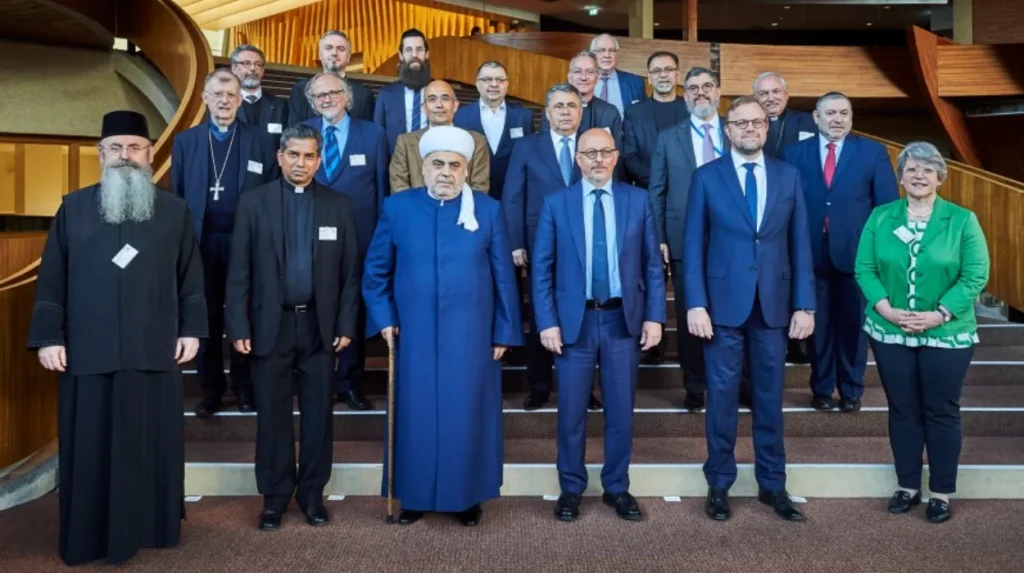
Strasbourg holds a special position in European political memory and Franco-European relations, and the centuries-old conflict, reconciliation, and institution-building have created it. Its position along the French German border has seen it become a symbolic landmark of the changing political situation in Europe. Over the course of the nineteenth and twentieth centuries, Strasbourg has passed between French and German occupation: this is where a multiple identity has been laid down, which points to continental tensions and ambitions.
It was a deliberate move to make the city the home of peaceful and democratic institutions after the destruction of World War II. This was a shift in a place that was once disputed among competing forces to one that is a European civic space. The history of Strasbourg is now used as a reminder of the issues of reconciliation and the stability of inter-border collaboration.
How History Shapes Contemporary Perceptions?
To most policymakers and historians Strasbourg is the symbol of the European dedication towards seeing to it that war is not repeated again in the future. Its institutions. Such symbolism still informs the perceptions of France and European allies on their shared accountabilities, especially in 2025 when there have been growing arguments over growing extremism, disinformation, and a decline in democracy on the continent.
The Postwar Reconstruction Context
The city of Strasbourg still had the identity that was founded on the wider European reconstruction. Being the seat of the Council of Europe since 1949, the city was linked to the legal protection, observation of human rights, and cultural collaboration. These were in line with the desire of France to root European stability on the basis of common values and supranational structures whereby the re-emergence of militarized nationalism was to be averted.
Strasbourg’s Role As A Practical Hub For Peace And Rights Governance
The symbolic significance of Strasbourg is not lower than its practical significance. It acts as a hub of European control in matters of human rights, legal co-operation, and democratic control, which provides a framework that facilitates dialogue at the continental level.
Hosting Europe’s Judicial And Human Rights Architecture
The European Court of Human Rights (ECHR) lies at the centre of Strasbourg applicability. The Court rules on reported offenses against the European Convention on Human Rights and offers a continental legal solution that is available to millions. Its decisions affect the policies of the member states, as it is also the case in France where decisions made by the court usually trigger the domestic reform of the law or the reconsideration of the administrative practice.
The Parliamentary Assembly of the Council of Europe and several specialized institutions that deal with anti-corruption observation, minority rights, and freedom of the press are also located in the city. All these institutions together constitute one of the most expansive governance ecology in Europe.
A Platform For French-European Dialogue
Strasbourg is a common meeting point of policymakers as they discuss human rights, peacebuilding, and democratic governance. Its meetings forums provide a platform to engage both its French officials and other European officials where they can be able to articulate their concerns about the issues like asylum policy, digital regulation, and counter-extremism as they react to developments across the continent.
In 2025, the role of the city as a stable point between the organization of national and European policies has been highlighted again, previously based on the migration flows, the threats of cybercrimes, and the organization of judicial collaboration.
Contemporary Developments Strengthening Strasbourg’s Relevance
The role of Strasbourg is not historical alone, as it still dictates the changing policy priorities and diplomatic practices in 2025. The emerging security challenges and governance issues are causing Europe to reevaluate the instruments that they can use to protect their rights and stability.
France’s Strategic Engagement With Strasbourg
The governments of France have continuously maintained this position of centrality of Strasbourg in the institutional architecture of Europe. French involvement on a high level is used to keep the city at the forefront, amid occasional debates on whether or not to divide the functions of the EU or COE between various cities. France claims that Strasbourg strengthens the independence and geographical heterogeneity of the institutional system of Europe.
Arguably, French policy developments have also used Strasbourg platforms to promote discussion around the artificial intelligence regulation, protection of vulnerable populations and monitoring of the rule of law. These efforts take advantage of the fact that there are well-established networks of legal professionals, civil society groups, and institutions in the city which help in making policies refined.
Strasbourg’s Role In Multilevel Governance
Strasbourg presents the case of a remarkable example of multilevel decision-making, with local, national, and supranational institutions overlapping. This governance culture encourages the use of policy instruments dealing with citizen engagement, minority inclusion and social resilience to the international interest in 2025 citing states in search of democratic models with the capacity to react to polarization and mistrust.
Expanding the City’s Diplomatic Footprint
Diplomatic scope of the city is ever expanding with conferences, security forums and law workshops within its institutional structure. Such meetings bring together human rights ombudspersons, justice ministers and civil societies and come up with cross border proposals that shape discussions in capitals throughout Europe.
The Political Dynamics Surrounding Strasbourg’s Influence
The fact that Strasbourg is at the centre of human rights governance also creates a political controversy. With the ECHR tackling politically sensitive cases, such as police oversight, digital surveillance, and more, the member states are under pressure to respond so that domestic policy can be brought in line with European standards.
Balancing National Interests And European Obligations
There has been a feeling of frustration by some governments over judicial limits imposed on the Court, specifically where the Court judgments have crossed over into security policy or electoral politics. France, nevertheless, still focuses on compliance as one of the pillars of its European investment. Further adaptations in legislation regarding policing, conditions of detention, and digital monitoring, carried out in 2025, seem to demonstrate how the institutions of Strasbourg directly impact the national practice.
Civil Society Engagement
Strasbourg is still living up to its reputation as a haven of non-governmental organizations that promote civil liberties, transparency, and the rights of migrants. Their existence adds to the policy discussion but also increases social criticism. These actors regularly approach European institutions and demand investigations, offer regulatory refinements or point out lapses in state responsibility.
Public Perceptions And Democratic Legitimacy
According to public opinion polls in Europe, the institutions of Strasbourg enjoy relatively high rates of trust among their citizens who view these institutions as a check against domestic political overindulgence. This trust is however, subject to institutional transparency and sustained effectiveness of judgments.
Strasbourg’s Future As A French-European Dialogue Hub
The symbolism and the realities of governance continue to make Strasbourg a hub of the discussions of Europe in its future. The more digital rights, migration, and security tensions arise, the more the city devoted to the legal regulation and peaceful negotiations will be appreciated.
The unique geographical location of Strasbourg makes us consider how geography, architecture and collective memory can be used as a means of establishing long lasting political collaboration. The shifting role of the city poses a challenge to the durability of the European rights frameworks and the ability of the democratic institutions to react to emerging crises and remain rooted in their principles at the same time.