The EUFOR-Althea mandate of the United Nations Security Council was renewed, giving the mission in Bosnia and Herzegovina one more year. Resolution 2795 was unanimously adopted restating international determination to stability in Chapter VII with Bosnia and Herzegovina being unable to contain almost 30 years of incessant political disintegration, almost 30 years after the Dayton Agreement.
The mandate of EUFOR-Althea focuses on ensuring that the environment is safe and secure and assists in the implementation of the Dayton framework. The resolution confirms that strong peacekeeping assistance is vital in regard to avoiding a new outbreak of ethnic strife and maintaining political stability in a nation where political balance is weak.
Unanimity in the Security Council has been conspicuous on broader geopolitical fractures, and it is remarkable that a collective awareness has existed that the stability of Bosnia and Herzegovina is a fundamental European and international community security interest. Legal and operational continuity of the mission proves that the need to curb escalation is still high among the members of the EU and the UN system in general.
France’s Role As Diplomatic Anchor And Security Contributor
France occupies a special status of a permanent member of the Security Council, witness state in the Dayton Agreement and an important contributor to EUFOR. In the reread of the mandate, French delegates restated their position on Bosnia and Herzegovina and its sovereignty, constitutional framework, by stating their adherence to the peace settlement and integration into the Euro-Atlantic.
French diplomatic communications gave prominence to the recent political actions in Republika Srpska following the National Assembly action of October 18 to repeal six secession-oriented laws. French officials applauded the ruling and urged further compliance with state competencies and consultations in the constitutional system in Bosnia. This coincidence shows the diffusion of rule-based stabilization and institutional resilience on the long-term investment of France.
Paris has always been against secessionist rhetoric and policies in the Western Balkans, expressing that constitutional challenges and parallel institutional frameworks threaten peace in the long term. In line with this, the French policy has been emphasizing that the development towards European Union integration provides Bosnia and Herzegovina with the long-term avenue to political normalization.
France’s Witness Role To Dayton Agreement
France’s position as Dayton witness provides historical and legal weight to its diplomatic interventions. The reference to that status during the Council session reinforced the legitimacy of international engagement and continuity of obligations undertaken in the 1990s.
Security Commitments And Military Presence
French forces embedded in EUFOR maintain readiness to act under executive authority, enabling deterrence against destabilization. This military role complements its diplomatic portfolio, shaping a balanced approach to stabilization.
Engagement With Bosnian Leadership
The fact that Zeljko Komsic, the chair of the rotating presidency in Bosnia, was present in the Security Council session indicated that France and the EU continued to support multi-ethnic institutional frameworks and non-discriminatory governance.
European Union Security Framework And Regional Priorities
The EU is the key political and security ally to Bosnia and Herzegovina and it incorporates both military confidence and institutional and economic involvement. In New York, EU officials again stated that it was necessary to maintain the Dayton Agreement and promote reforms that are the foundation of Bosnia becoming closer to Europe.
The EU was concerned with political processes in Republika Srpska and actions opposing the state authority. The authorities demanded that the integration and alignment with the decisions of the constitution must precede the plausible advances of the EU accession. The 2025 enlargement monitoring document by the European Commission referred to the judicial reform, media freedoms and transparency in elections before the 2026 general elections scheduled in Bosnia.
EU Support For Electoral Integrity
Democratic consolidation entails fair elections. The European diplomatic outlets once again approved the roles of protecting the electoral standards and making reforms to provide proportionality and legal adherence.
Croatia’s Support And Regional Interests
Having a neighbor in the EU, Croatia, insisted on equal political representation of all ethnic groups. The inclusion of Zagreb highlights the institutional short-term regional interest of the EU in stability and inclusive rule.
Integration With Broader EU Strategy
The EU strategy can be linked to the wider Western Balkan policies of reinforcing resilience and avoiding foreign interference and new periods of nationalistic confrontation.
Security Council Dynamics And Global Context
The renewal debate unfolded under the Russian presidency of the Council, intensifying scrutiny of diplomatic exchanges. Russia raised objections regarding the High Representative’s role, alleging Western overreach in domestic governance issues. Yet Moscow did not block the resolution, reflecting an understanding of the risks posed by potential instability.
This outcome demonstrates pragmatic convergence despite wider tensions in European security affairs. The decision to avoid confrontation over polarizing issues, including the High Representative’s decisions, preserved focus on mission continuity and immediate peacekeeping needs.
France and European partners navigated the negotiation process by anchoring discussions on international legal commitments and the operational necessity of EUFOR support. The ability to maintain consensus underscores ongoing diplomatic capacity within the Council to address peacekeeping mandates even amid global strategic competition.
Evolution Of EUFOR-Althea Mission Structure And Capabilities
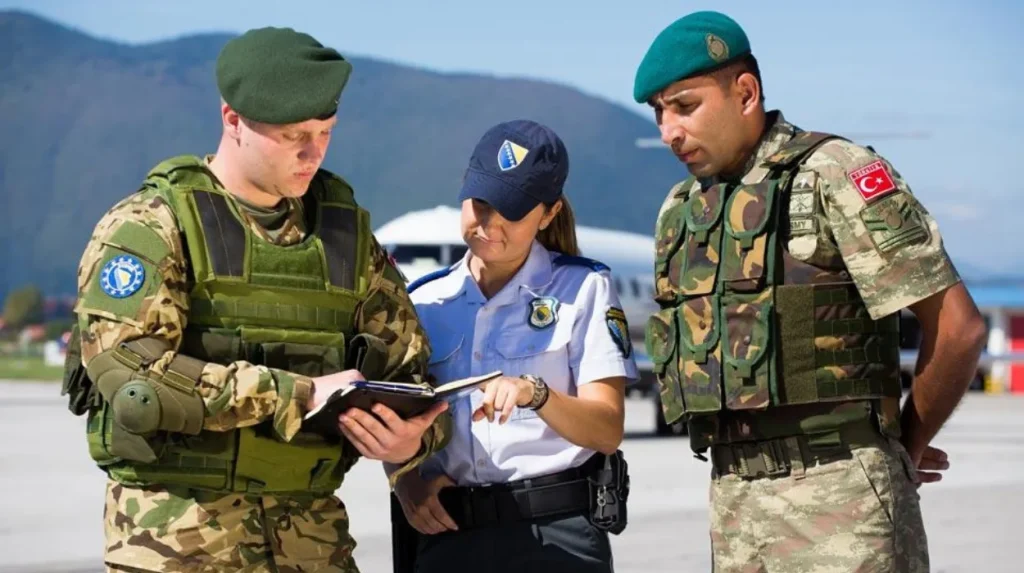
EUFOR-Althea has also transitioned to the post-war enforcement of high intensity to the stabilization, monitoring and capacity support of the armed forces in Bosnia. Nevertheless, the executive authorities are not lost to prevent violence and to react to the decrease in security. EUFOR is prepared to send more forces when needed and they are supplemented with NATO reserve forces that are based nearby.
The security ecosystem between EUFOR and NATO headquarters in Sarajevo and Bosnian defense institutions is developed to maintain the stability. Further drills in 2025 proved to be preparedness towards hybrid threats, political instability, and even external interference. Other reforms supported by the mission are defense reforms that are in line with the Euro-Atlantic standards.
The ability to maintain a secure environment is still important as a way of maintaining reform momentum and good governance. Devoid of this, any political conflicts might result into the risks of fragmentation, which would threaten the peace settlement in Bosnia and stability in the region.
Peacebuilding Environment In The Western Balkans
The Balkans are one of the areas, where past resentments collide with the modern political demands. The ethnic split still exists and institutional power sharing is still delicate. The international support remains a stabilizing mechanism as Bosnia and Herzegovina is set to enter into new election periods and constitutional arguments.
The European and French authorities still focus on political discourse, institutional changes and compliance to constitutive procedures as the key to long-term stability. The malign influence efforts, the disinformation networks, and the geopolitical rivalry also influence the regional engagement efforts.
With key political milestones of Bosnia and Herzegovina approaching in 2025 and 2026, the ability of France and the European Union to remain on track in diplomatic rhetoric, security positioning and integration incentive will shape the future of peace and institutional strength. The survival of the EUFOR-Althea mandate is indicative of the overall acceptance of the reality that peace in the Western Balkans must be achieved via an application of the correct balance of deterrence, diplomacy, and long term economic and political involvement.
The future stability of Bosnia and the future of the region’s security will depend on the extent to which the local leadership, the European allies, and the United Nations maintain the cooperation, introduce changes, and prevent destabilization initiatives. The changing mission shows that sustainable peace is dependent on continuity in international and domestic readiness to fulfill basic accords as a way of developing a roadmap that will lead to further integration of Europe.