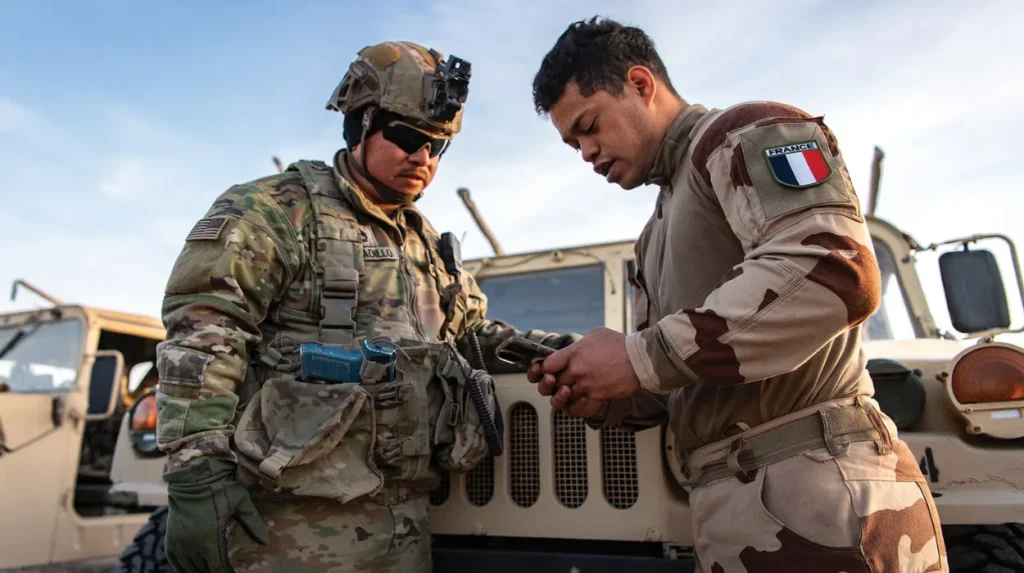
The military efforts by France at the end of 2025 are an analytical reaction to increased Iranian aggression in the major sea routes. The presence of French military in the Gulf is a focus on the redeployment of the Charles de Gaulle carrier group towards the Gulf, which is the largest feature of projecting the force by Paris close to the Iranian waters since 2018. The move was termed by defence officials as a preemptive measure where it was aimed at discouraging aggressive behavior and protecting international trade routes that could fall victim to asymmetric attacks.
The French interests were put further at stake due to a series of events in the Red Sea and Bab al-Mandeb Strait such as harassment of French-flagged commercial shipping and orchestrated cyber attacks on military logistics bases in Djibouti. Such upsets strengthened views in Paris that Iran and its proxy groups were pushing the boundaries of the West beyond the known theatres of Syria and Iraq.
Although the French naval forces are a component of national command, the mission is in line with wider Western interests to combat Iranian interests. The relocation reflects French attempts over the past years to enhance maritime security in disputable areas without being constrained by the United States and establishing autonomy to operate alongside its alliances but not basing its sovereignty goals on alliance commitments.
Paris’s defence objectives and evolving calculus
The susceptibility of the world energy flows to disruptive operations in the Red Sea and Gulf of Oman has been reiterated severally by French authorities. As Europe continues to revise its energy supply system following the Russia-related unrests, unbroken access to maritime routes has become the focus of French defence and economic strategy.
The carrier group will have the capability of the guided-missile-enabled frigates, and Rafale fighters, which will augment the French interdiction capabilities against drones and cruise missiles, which have become a threat linked to Iran-based formations in Yemen and Iraq.
Defining strategic autonomy in practice
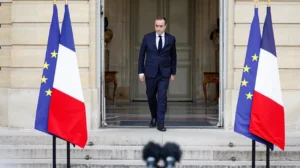
The presence of the French troops underlines the effort by Paris to have European strategic independence, except that Paris operates at the same level with the Western powers. Defence Minister Sebastian Lecornu has emphasised that France will protect international shipping and guarantee regional stability by themselves, and in the time needed, together with partners.
This is indicative of the vision that France has larger: a collaboration, but not subordination, and an indication to European defence leadership that they must possess credible and self-sustained deployments in high-risk theatres.
Reinforcing deterrence in a shifting Middle Eastern landscape
Greater geopolitical circumstances have increased French action. In the Gulf of Oman, Iranian naval exercises against Russians coupled with the testing of long-range missiles by Tehran-supportive militia, fuelled the concern that the failure by the West to engage in Iranian affairs would only empower its ambitions. French analysts cite the experience in Syria and the Sahel where the perceived lack of action on the part of the West enabled the competitors to occupy the gaps in security.
Regional context and recalibrated priorities
The intelligence tests of late 2025 had shown redeployments of Iranian-supported missile units around the key shipping routes and made resurgence of militias in western corridor of Yemen. The French military planners believe that the Iranian proxies have become strong forces that can now project their forces outside the conventional battlefields, through the use of cyber tools, maritime drone and portable missile systems to threaten commercial and military targets.
From Sahel focus to maritime vigilance
The withdrawal of the French forces in Sahel and restructuring of the African security alliances have been paralleled by an increased maritime posture by France. Paris wants to prove that strategic withdrawal is not the failure to demonstrate his ability and readiness to protect international norms. The pivot highlights how land-based counterinsurgency is undergoing a shift to maritime defence and mixed containment of threats.
Coordination with the US and regional powers
France is not mentioned among the new US-led coalitions but intelligence and surveillance sharing is still intimate. American leaders have in secret referred to the French participation as a multiplier of the Western deterrence measures owing to the Charles de Gaulle developed air-defence systems as well as the aerial attack capabilities.
However, visual independence of operations is maintained. France is involved in collective maritime awareness systems, yet national command chains, as a measure indicative of an even handed approach to alliance collaboration and national decision-making.
Engagement with Gulf partners
Consultations on maritime crisis-response frameworks have gone on by French envoys in Riyadh and Abu Dhabi. Both Gulf allies consider France a useful diplomatic and military foaming action to an increasingly electoral-political posture in Washington. The policy of deterrence through diplomatic interests that is proposed by Paris is attractive to the regional states that want to diversify security affiliations.
European implications and strategic signalling
The French deployment has brought back the discussion in Brussels with regard to the capability of Europe to defend the trade routes beyond its neighbouring countries. Having over a third of EU related maritime freight sailing through the Suez and Red Sea route, the stakes involved are well beyond the French interests.
The deployment was described by EU security chief Josep Borrell as a sign that Europe needed to be ready to act in ways where its interests were threatened. The quote demonstrates the growing European recognition of the fact that the naval presence cannot be ignored when it comes to global relevance.
Strategic autonomy narrative tested
The credible out-of-area capacity is the key to the future defence identity of Europe. The French action challenges the new doctrine of European preparedness and raises a question of whether a cohesive European naval force can come to fruition eventually or Europe will remain dependent on the impromptu national operations with infrastructure backup by NATO.
Hybrid escalation risks and cyber dimensions
The French cyber teams have stepped up the counter-offensives against networks that are evaluated to be connected to the Iranian intelligence agencies. These activities have been said to interfere with efforts to disrupt naval coordination platforms and transport systems that were transported via ports.
The application of cyber and maritime defence as complementary facets is in line with the French military thinking, whereby information security and kinetic deterrence enhance operational resiliency.
Risk of proxy retaliation
Iran has criticized the French deployment, threatening that the escalation of foreign military will not be met with any other action. Analysts warn that Iran-linked militia might want to test the will of the French by disrupting or harassing French-associated logistics links within East Africa by way of cyber attack. It is quite possible that the risk of miscalculation is significant; one success of the interception or one of the falsely claimed drone attacks can become a source of a broader conflict.
Future scenarios and strategic consequences
In the event the threats continue, other states within Europe might be involved in synchronized patrol arrangements or logistics alliances. The experience of France can be used as a model of the European operations in disputed maritime areas stretching into the Indo-Pacific as far as the Indian Ocean.
The reaction of France to the threats of Iran is a good example of the turning point in the development of European defence. The presence of the French troops is not only an indicator of defence of sea passages, but also a declaration of strategic will in the period of geopolitical turmoil. With Iran, Russia and even non-state players investigating the world maritime corridors the question now is whether the resurgence of European forcefulness can be reconciled with its diplomatic and non-violent policy.