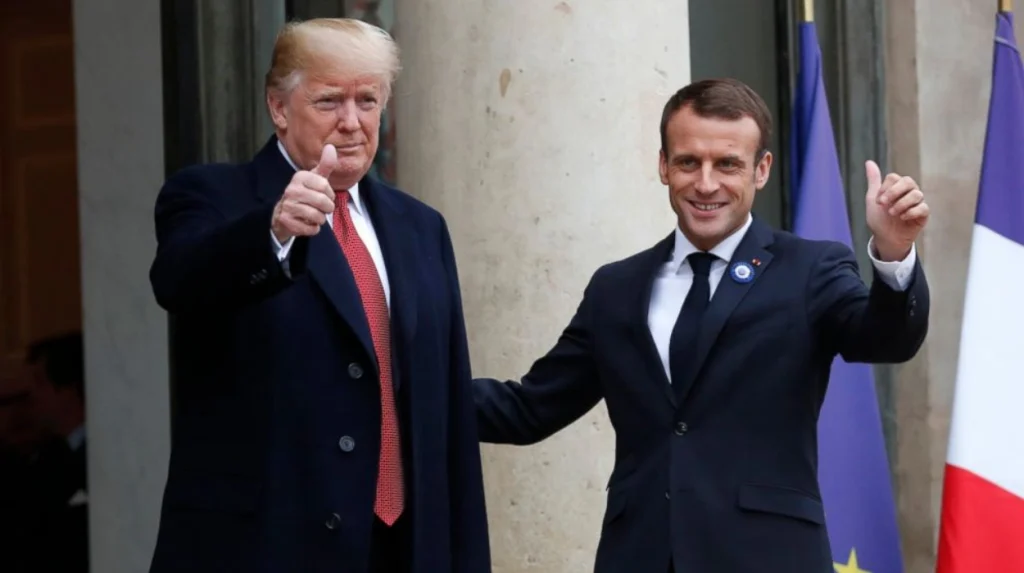
Transatlantic diplomacy is based on the foreign policy relationship of France and the United States. The relations were founded on common principles of democratic government and the common adherence to international law, and have been modified throughout history in response to the shifts in world powers.
In 2025, it will have a new topicality in the context of growing geopolitical uncertainty, such as a long-lasting consequence of the Russia-Ukraine conflict, escalating tensions in the Indo-Pacific, and a new threat to multilateral regulation. Such circumstances highlight the necessity of active diplomacy, which is why the bilateral convergence between the United States and France is an essential measure.
Historical foundations and core principles
The two countries started their relationship in the 18th century when France assisted the American Revolutionary War through military and diplomatic involvement. With time, the relationship developed into a multi-faceted partnership, which is supported with common devotions to civil liberties, rule of law, and a democratic principle. Such principles are still guiding the foreign policies of the two nations despite the fact that they use varying approaches in order to attain shared objectives.
During the cold war and after it, the two nations have been proponents of institutions such as the United Nations and NATO to take collective action. They have defied the times of periodical tensions over tactics and sovereignty by their adherence to a rules based international order.
Strategic autonomy and alliance-based security
France has always thrived on the importance of strategic autonomy especially in the defense policy. This is a legacy of the policies of Charles de Gaulle in the middle of the 20th century and it can be found in the French independent nuclear deterrent and reserved nature of their integrated military commands. Although France is an active NATO member, it retains independent operation under the nuclear doctrine and strategic choice-making.
On the contrary, the United States still values the alliance integrity and superpowership by NATO and other unions. This structural difference generates some friction but also sets stage to an active partnership whereby each partner contributes some complementary advantages to the common problems.
Strengthening security and defense coordination
In the future, France and the United States are on the same security priorities in 2025. The Russian aggression towards Ukraine has strengthened them further, as the two nations have continued to deepen military support, economic sanctions and humanitarian aid to Ukraine. The leadership of France in the European Union adds to the U.S. strategic influence in NATO to coordinate the European continent.
In addition to Europe, the two countries have strengthened their collaboration in the Indo-Pacific. Combined military patrols, enhanced defense consultations, and exchanging information on regional hot spots are some examples of how they have collectively reacted to the Chinese maritime aggression. Their collaboration has also spread to cyber defense with the two exchanging threat information and supporting resiliency efforts against state-sponsored cyberattacks.
Economic resilience and technological innovation
France and the United States are also collaborating in order to strengthen economic stability and sustainability. The major initiatives are joint investment in green technologies, research on nuclear energy, and infrastructure of electric vehicles. Both nations are also trying to cut down on dependence on unstable world supply chains and ensure innovation in essential technologies through the Bilateral Clean Energy Partnership, as well as by being part of the Minerals Security Partnership.
France plays a significant role in the NASA Artemis project in the space domain as well as in diplomacy. Its participation underscores U.S.-led initiatives to institute international space governance norms and augments protracted scientific and technical partnership between the two partners.
Diplomatic divergences and friction points
France has a more dialogic and balanced policy towards China compared to that of the United States, trying to maintain openings of cooperation in the trade and climate fields without getting alert on the security problems. The issue of multipolarity and European strategic autonomy is frequently stressed by French policymakers when forming the Indo-Pacific engagement.
In comparison, the United States sees China mostly as a strategic rival with its Indo-Pacific policy being based on deterrence and containment. Such tone and policy focus disparity has necessitated subtle diplomacy to prevent a breakdown in the cohesion of the entire alliance.
Managing fallout from the AUKUS pact
In 2021, the United States, United Kingdom and Australia signed a deal in the form of the AUKUS agreement, which led to the cancellation of a French submarine deal with Australia, which created a major diplomatic tension. France retaliated by short term diplomatic withdrawals and fierce popular denunciations. In spite of the fact that the crisis has mostly passed by the year 2025, it still has its implications on bilateral trust dynamics.
The two countries have since undertaken confidence building. Periodic senior-most conferences, more consultations on defense, and new cooperation in the Pacific area have served to mend the breach. Nevertheless, the episode itself marks a study of how weak alliance politics can be and the need to have open coordination between the strategic partners.
Emerging priorities and forward-looking strategies
The promotion of European strategic autonomy by France still dictates the foreign policy of this country. President Emmanuel Macron has demanded a more independent European Union that complements NATO and not depends on it especially in areas including defense procurement, intelligence sharing and crisis response. This outlook occasionally rubs against U.S. preferences of NATO-based security frameworks, yet it has the power to share burdens and be innovative.
The sovereignty of the French is not incompatible with its multilateralism. France continues to be a dynamic advocate of concerted effort on climate change, arms reduction and financing of development. In these areas, the United States and France can tend to be in agreement, regardless of the rhetorical formulations and institutional leanings.
Joint responses to global security threats
In addition to the customary matters of defense, France and the United States are collaborating to overcome disinformation campaigns, avert violent extremism, and enhance preparedness to pandemics. Joint task forces are dealing with cybercrime, interference of elections, and illegal financial flows that are compromising global governance.
Increased engagement in Indo-Pacific consultations, such as strategic deliberations with India, Japan and Australia, has given France a beneficial European voice to U.S. initiatives. This enlarges the area of transatlantic collaboration and proves the international scope and extent of the alliance between France and the U.S.
The partnership of evolving foreign policy of France and the United States in 2025 is a manifestation of tension and synergy of the two powers facing a period of complexity and competition. Their views of sovereignty, integration of defence strategies and their approach to regional strategies might diverge but the commitment to the democratic ideals and international stability is their strong force of bind. The adaptability, coordination, and leadership that France and the United States have been able to achieve together is becoming increasingly important to defining the contours of the 21 st -century geopolitical order as global challenges become more and more interconnected.