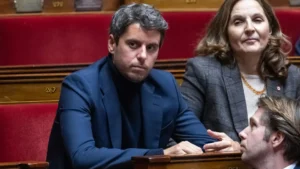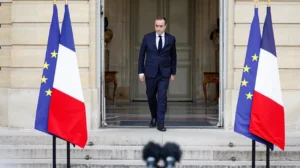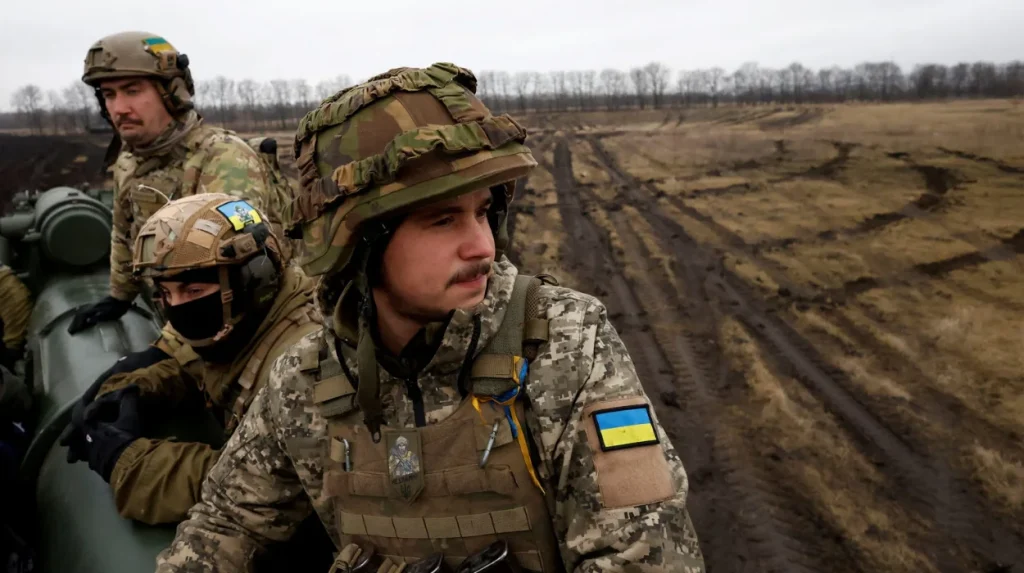
France and Germany committed together in late August 2025 to increased air defense assistance to Ukraine following a stinging rise in Russian drone and missile attacks. A recent kill-and-dozen attack on Kyiv resulted in the deaths of at least 23 civilians and dozens more injured, raising the urgency of Ukraine in seeking high-tech defense capabilities to protect cities and key infrastructure.
German Chancellor Friedrich Merz and French President Emmanuel Macron announced in a common statement that:
“Despite intensive international diplomatic efforts, Russia shows no intention to end its war of aggression.”
The updated backing is an interesting acceleration of France Germany air defense Ukraine cooperation, indicating a transition into a more formal military coordination between the two European giants and Kyiv.
Germany has already initiated the delivery of Patriot missile systems. Defense Minister Boris Pistorius confirmed that additional Patriot units would follow, contingent upon procurement of replacements to ensure Germany’s own defense posture remains intact. France, for its part, has committed to parallel deliveries of key defense assets as part of a unified European response.
Strategic Defense Cooperation Deepens Amidst Crisis
Germany has committed to sell two Patriot air defense systems to Ukraine, and they will be delivered in stages over the next several months. Having the capacity to intercept ballistic missiles and drones, these systems are deemed vital in protecting high-stake urban and military targets that are currently being recurrently attacked by the Russian forces.
France also increases its investments by dispatching radar and mobile launch systems that can be used in NATO infrastructure. This practice is a break away with previous support cycles which are reactive. Rather, the two countries seek to have a lasting delivery pipeline, whereupon Ukraine can reasonably foresee and prepare with more operational certainty to changing threats.
Such coordination between France and Germany is indicative of commitment to short-term survival of Ukraine, as well as long-term defense alignment. Technologies and interoperability measures guarantee that Ukrainian forces will be able to better incorporate Western systems into their command structure.
Joint Strategic Dialogue On Nuclear Deterrence And Security Policies
Parallel to material support French and Germany declared strategic dialogue to harmonise their own defence policies, and especially in the area of nuclear deterrence. This initiative acknowledges the destabilizing role of nuclear signaling from Moscow and the need for a coordinated European response.
Describing nuclear deterrence as “a cornerstone of NATO’s security,” both governments highlighted the necessity of establishing a “common strategic culture” across the continent. The dialogue, although not altering France’s independent nuclear status, facilitates greater transparency and policy coordination. It also conveys a wider message to the partners of NATO that the integration of European defense is still a priority though the national doctrines are different.
Such strategic congruency places the air defense partnership in the framework of the all-encompassing approach, targeting the urgent risks and long-term security requirements. It also confirmed Europe as a serious partner in the transatlantic alliance.
Challenges And Geopolitical Context Surrounding Deliveries
The President of Ukraine Volodymyr Zelensky has been urging western allies to significantly raise the amount and speed of weapons supply. He warned that:
“Every week of delay costs lives,”
encouraging the European allies to keep a safe and fast shipping route in place to offset the increasing Russian capability in the aerospace threat.
The defense calculus of Germany is still limited by the domestically and NATO-grounded commitments. The repeated difficulty is captured by the words of Minister Pistorius that any further Patriot transfers would be conditional upon backfilled replacements, and how to equip Ukraine efficiently without undermining national defense preparedness. This balancing exercise is even more complicated in 2025, when European countries strengthen their own defensive systems in the context of wider instability in Eastern Europe.
France is not bound by the same logistical hurdles, but has also undergone a debate at home regarding the magnitude and permanence of its military engagements. Nevertheless, Macron has placed the security of Ukraine as a key to European peace claiming that
“If Ukraine falls, Europe’s security will be irrevocably altered.”
This kind of framing has been used to gain parliamentary support of greater aid in recent months.
The Broader Western Coalition’s Role
The added contribution of France and Germany is contained within a broader initiative of several states in NATO and the EU. In 2025, the United States continues to contribute the most with a package worth 7.8 billion in funding focused on navigation systems, long-range munitions and hi-tech defense systems in Ukraine.
Other European countries like Denmark, Norway and Netherlands have also liberalized their support with much emphasis on training, logistics and equipment transfer. These concurrent support streams are evidence of a multi-level coalition, with every partner contributing the capabilities based on their strategic position and industrial capability.
Such collaboration helped Ukraine remain resilient even when attrition rates were high, and infrastructure has been destroyed. Nevertheless, analysts still express doubt regarding the uniformity of this assistance after 2025, in particular, due to the possible political change in the Western capitals and economic pressures in the world.
This individual has addressed the subject, with the most vehement urging of the vital importance of Franco-German collaboration, and the strategic need of timely arms shipments to Ukraine to save regional security and democracy in Europe:
France and Germany promised to give Ukraine more air defence systems.
— Tim White (@TWMCLtd) August 29, 2025
A joint statement after the 25th Franco-German Council of Ministers in Toulon, also pledged a broader connection between the two countries' security policies. pic.twitter.com/ZsvvdQS5Hc
In their examination, they point out the potentially far-reaching effects of any delay or discontinuity in the defence commitments of Europe, not only to Ukraine, but also to the credibility of collective deterrence generally on the continent.
Operational Impacts And The Strategic Outlook
The newly resumed air defense shipments should have a big impact in fortifying Ukraine with its defensive cover over major cities, such as Kyiv, Kharkiv and Odessa. As Patriot and other systems are put up in a layered system, Ukrainian forces will be more flexible to counter missile and drone threats before they strike the populated targets.
Operational commanders have observed that when the systems Western supplied are employed in conjunction with Ukrainian radar equipment, the level of interceptions has improved. Nonetheless, complete coverage is still inclusive due to just the sheer number of attacks. The attrition tactics of Russia, whereby mass salvos are used to overwhelm air defenses, still challenges the strength of Ukraine.
The issue to come is the need to provide a constant resupply, technical support, and training, and particularly, when Russia changes its tactics. Both France and Germany have committed to train more Ukrainian air defense personnel, as well as to provide easier maintenance logistics to ensure that deployed systems are used to maximum uptime.
Longer-Term Strategic Ramifications
In addition to tactical defense, the Franco-German project is part of the wider European security structure in which there is an increasing normalization of defense integration. This development has a wider concern to EU strategic autonomy discussion and transatlantic burden-sharing paradigms.
France and Germany are stepping out of the traditional diplomatic postures and into strategic leadership positions by taking a more aggressive role in direct military support. This shift has the potential to define future European policy on defense- especially with uncertainties as to the commitments of the United States after the 2024 presidential election.
What This Partnership Signals About Europe’s Security Future?
The 2025 France Germany air defense Ukraine project sums up a decisive point of view in Europe. It shows how continental powers are adapting to long-run threats by operationalizing their defense promises and toward common strategic planning. The overlap of military assistance, strategic dialogue, and the more overall alliance coordination is a demonstration that this is not the case of reactive assistance- it is the development of an increasingly proactive European security posture.
With ever increasingly sophisticated and destructive aerial campaigns conducted by Russia, the next few months will reveal whether this Franco-German endeavor can be transformed into long-term operational benefit to Ukraine. It will also put to the test the intention of Europe in supporting its allies in democracy beyond mere platitudes and cement its position in shaping the future of the security architecture in the continent.