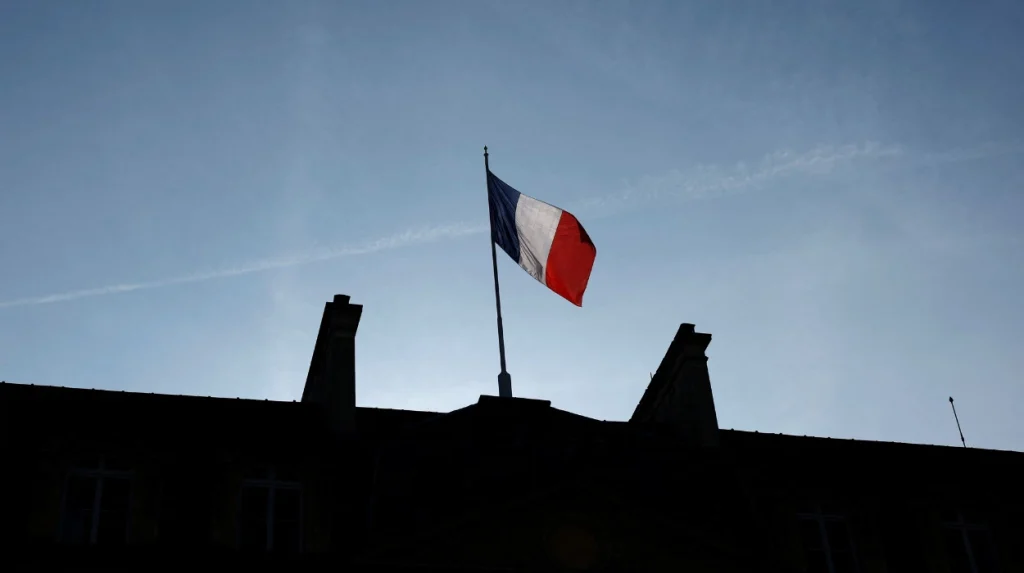
In September, the French President Emmanuel Macron stated that France was going to formally recognize the State of Palestine at the United Nations General Assembly. The statement was a turning point of France’s Middle East policy, as it repackaged the determination to a two-state solution and solidified the idea of Palestinian self-determination that was a key to regional peace.
Macron stated,
“France will recognize the State of Palestine,”
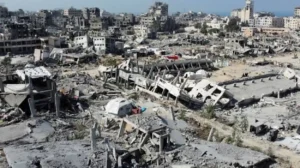
setting the decision in the context not only of a legal statement but of a moral necessity amid the protracted Israeli-Palestinian conflict. The relocation was declared in a phase of unparalleled humanitarian suffering in Gaza, where more than 59,000 Palestinians have been murdered since October 2023. Macron emphasised the need of an immediate ceasefire, hostage release and continued humanitarian access, putting recognition as a means to restore diplomacy, rather than as an end itself.
The French president emphasized that the action of recognition was not symbolic but an active diplomatic strategy of impacting a worsening situation in the region. It aimed to promote perspectives of long-term coexistence and de-escalation by protecting international law.
Impact On International Relations And Regional Dynamics
The recognition of Palestine by France unilaterally set up a rift between European consensus on the matter. Though a number of EU countries had already conditionally offered their support to the Palestinian statehood, the action of France avoided preconditions and offered the recognition as an immediate moral and political need. The splitting has elicited silent reevaluations in the capitals of Europe, especially in Spain, Ireland and Belgium, where there has been a growing popular movement toward Palestinian sovereignty.
Political leaders were cautious with regard to responding in London and Ottawa. British Foreign Secretary Amara Wells proposed that recognition would be conditional upon making specific commitments of peace and Canada reiterated the need to see a two-state solution to the issue with the right security guarantees. The move by France on the other hand can be seen as a break with incremental diplomacy and has given more strain to allies to elucidate their stances.
The Palestinian Authority was categorically positive in its reaction. The decision was hailed as a bold move to justice and international legitimacy by President Mahmoud Abbas. But the Israeli leadership made blunt rebukes. Prime Minister Benjamin Netanyahu said that France was rewarding terrorism and Defense Minister Israel Katz said the move would encourage extremism and destabilize security in the region. These extremist reactions highlight the debatable consequences on the current alliances and peace structures.
Regional Players And Broader Geopolitical Implications
The announcement by France has also had impacts on wider alignments of the Middle East. Saudi Arabia, which has held low-profile normalization talks with Israel over the past few years, reacted by asserting that it was in support of Palestinian statehood as well, though not the time frame suggested by France. Others likely to appreciate the move cautiously were Egypt and Jordan who indicated that the move would assist in stabilizing negotiations that have given unfair advantage to the narratives of Israeli security within the negotiations.
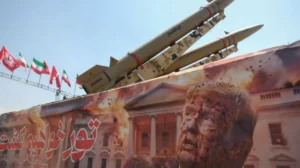
Its ripple is also experienced on other non-Arab actors. Turkey gave a very powerful support of the recognition considering it to be a strengthening of its long-time pro-Palestinian stand. In the meantime, Iran took the opportunity to accuse the west of finally realizing the decades of injustice, however, the participation of the Iranians in the proxy wars continues to make peace efforts difficult.
During a turbulent election process in 2025, the United States came out with a non-committal declaration again stating its position on dialogue and peace without directly speaking on the action by France. This response indicates that Washington is very cautious in its strategies because it balances regional alliances and domestic political sensitivities.
France’s Diplomatic Balancing Act And Vision
President Macron has insisted that France’s recognition of Palestine is not an endorsement of any armed group but a strategic affirmation of legitimate governance and dialogue. In his words,
“We distinguish the Palestinian Authority as a partner for peace. We reject Hamas and its ideology of violence.”
This difference highlights the fact that France was trying to navigate an international diplomatic treadmill: she was against terrorism and yet found it difficult to deny the legal and moral right to Palestinian statehood.
Through his definition of recognition as a denial of Hamas, Macron is trying to cut hardliners off and to legitimize moderates. The strategy was motivated by the achievements of other leaders such as Yitzhak Rabin who insisted on promoting peace and security simultaneously. In support of his arguments Macron cited the doctrine of Rabin which was paradoxical: fight against terrorism as though there is no peace process and build peace as though there is no terrorism.
This recognition gesture is therefore embedded in an even bigger French policy of stabilizing the region by use of diplomatic currency, humanitarianism, and institutional legitimacy. The difficulty of Macron is to convert this gesture into practical impact on the ground whereby factionalism, violence, and historical resentments exist.
French acknowledgment, here, is not simply the practice of statecraft, but a bid to renegotiate the contours of interactions in a region traditionally defined by the existence of cyclic violence and frozen negotiations.
Implications For Multilateral Diplomacy And Global Narratives
The move taken by France to stand alone without involving a wider EU structure is an indication of a shift in European politics. European states, traditionally considered to be reluctant and polarizing, have tended to follow U.S. led action. The aggressiveness adopted by France can also redefine Europe as a more aggressive facilitator in the future negotiation, especially when other states emulate the action.
This rebranding also comes in the context of broader discussions of European strategic autonomy in external politics. With the changing power centers around the world, and the changing alliances, France is developing itself as an autonomous player that can exercise moral leadership and rational risk-taking in international relations.
Reinvigorating Multilateral Forums
Conversations in the United Nations and the Arab League have already been affected by this decision with France pushing to get a new world to be involved. During the September UN session a draft resolution in support of recognition, co-sponsored by a number of non-aligned countries is expected to be tabled. It is unlikely that the resolution will pass, but it will provoke a new discussion on whether the UN can contribute to the development of conflict management and make parties answer to the international law.
The action of France also puts in a more spotlight institutions such as the International Criminal Court and UNRWA as the issues of occupation, status of refugees and rebuilding become pressing. Macron has also pledged an extra amount in terms of funds to the UN humanitarian activities to strengthen the argument of France that their works are rooted in the pragmatics of the undertakings and not mere political window dressing.
What Does This Means For The Path Ahead?
The acknowledgement of Palestine by France is much more than the symbolic politics. It reinvigorates diplomatic alliances, undermines conventional patterns of interaction, and forces a reassessment of Europe in the context of the resolution of international disputes. Even though the move has received both praise and criticism, it represents a certain re-entrance of France into the very fabric of Middle East diplomacy- not as one mediated by other countries, but as that guided by national conviction.
The months ahead will tell whether this recognition move will be a turning point or it will be one off. A lot will hinge on the reaction of the actors in the region, whether the violence grows out of control or helps defuse it and whether the international community can convert this diplomatic reversal into a larger peace movement. The persistence of the French influence can be based on its capacity to convert moral stance to durable diplomatic capital- a feat not achieved by many countries in this protracted and deep-rooted confrontation.