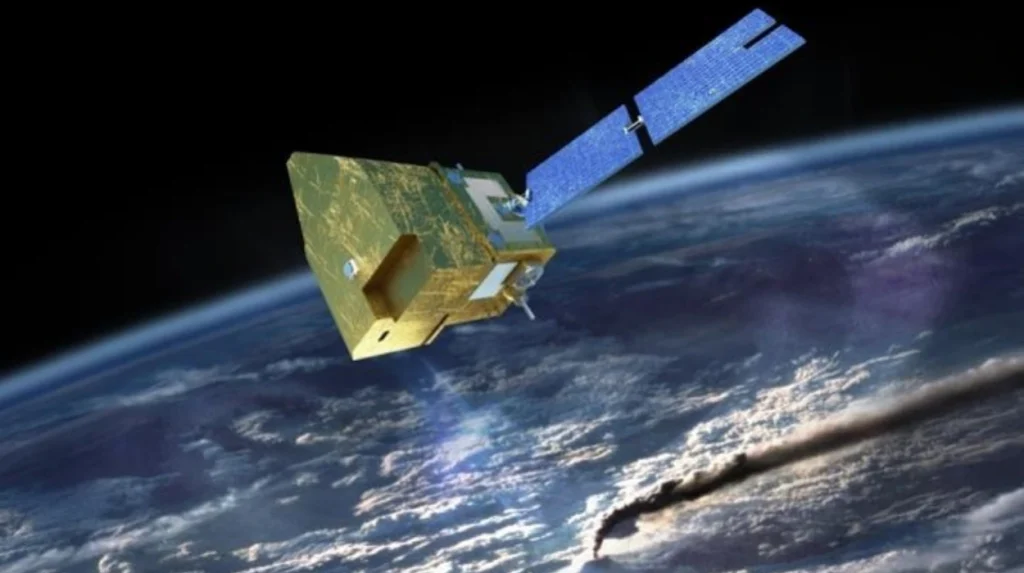
The UK-France MicroCarb satellite that was launched on July 26, 2025 is a major milestone in the world attempts to gain knowledge about climate change and strive to mitigate it. MicroCarb is the first European satellite dedicated to carbon dioxide (CO 2 ) measurement in the atmosphere to very fine location and spectral resolution (developed co-funded by the UK Space Agency and the French space agency, CNES).
MicroCarb has a highly sophisticated infrared spectrometer on board that operates in a Sun-synchronous orbit and flies at 650 kilometers orbiting the earth and being able to measure CO 2 concentrations of the atmosphere and that of oxygen at the same time in several bands of the spectrum. They are sensitive enough to the variation of CO 2 to the extent that they can notice changes of one part per million, which is important to notice the subtle differences in the patterns of emissions and sinks.
Targeting Urban Carbon Hotspots
The most influential aspect of MicroCarb is a feature that allows it to plot emissions as low as cities. It covers a spatial pixel of 2 km by 2 km or so and has the capacity to detect emissions across crowded cities that contribute to more than 70 percent of the total emissions of CO2 in the world. This amount of detail assists local and national governments to pinpoint urban hotspots of emissions and determine the success of regional mitigation policies.
Bridging Emissions With Natural Sinks
In addition to tracking the emissions, the satellite also checks the natural sinks of carbon like forests and oceans. MicroCarb includes Solar Induced Fluorescence (SIF) functionality and can measure photosynthetic activity in plants and provide new insights into the health of vegetative cover and ecosystems and how they are able to take up CO 2. This capability of dual monitoring not only provides the ability to include a debt and credit perspective on the carbon cycle but also has the capacity to provide a global picture of the carbon cycle.
Enhancing Global Scientific Capacity And Transparency
MicroCarb will publicly disclose the data that will form a new standard in emissions transparency. Computers and institutes like University of Edinburgh are already busy in converting the raw telemetry data of the satellite into useful tools, such as emissions heat maps of major metropolitan regions and the real-time visualisation of global carbon movements.
The Chief Executive of the UK Space Agency, Dr. Paul Bate, hailed the satellite as a
“our eyes in the sky, a vital global sensor system driving evidence-based climate action.”
Evidence is one of his focuses, which reflects an international call to verified reporting of emissions as climate policy shifts toward binding carrots and sticks, measurements based on performance.
Supporting International Agreements
The mission is a technological precursor to Copernicus Anthropogenic Carbon Dioxide Monitoring (CO2M) constellation, which is planned to be launched in the next few years. Data of MicroCarb will be used to both prove its calibration and validation to this larger European climate-monitoring effort, and also add to this embryonic effort to build a global greenhouse gas monitoring network that is being put together by various space-faring nations.
Precursor To A Broader Satellite Network
The mission acts as a technological forerunner for the Copernicus Anthropogenic Carbon Dioxide Monitoring (CO2M) constellation, expected to launch in the coming years. Data from MicroCarb will support calibration and validation efforts for this larger European climate-monitoring initiative, while also contributing to the nascent global greenhouse gas monitoring network coordinated by multiple space-faring nations.
A Showcase Of UK-France Technological Synergy
The majority of the UK contribution (about 15 million) to the mission was the fabrication of the instrument payload by the Airbus Defence & Space and the assembly of the spacecraft by Thales Alenia Space UK.
My company Thales Alenia Space UK, which has the CEO Richard Thorburn who stated that
“Our collaboration with CNES and the UK Space Agency places Europe at the forefront of climate change research innovation.”
This inter-agency collaboration is not just a technical capacity but it is a mutual strategic alignment in the field of climate intelligence.
The European investment in the cutting edge environmental monitoring has also been denoted by the support of EUMETSAT and alignment with the EU Horizon 2020 research funding.
Operational Complexities And Analytical Opportunities
Integrating Satellite And Ground Data
A central challenge of leveraging MicroCarb’s capabilities lies in integrating satellite data with ground-based measurements and economic indicators. Atmospheric variability, cloud cover, and aerosol interference can introduce data uncertainty, demanding continuous calibration and modeling. Institutions like the National Physical Laboratory provide essential calibration tools, while real-time feedback loops from academic researchers help interpret evolving data trends.
Enhancing Climate Decision-Making
Effective use of MicroCarb’s data extends to climate-focused institutions such as national environment ministries, UN agencies, and intergovernmental research bodies. These organizations now have access to more precise inputs to refine climate models, assess progress toward net-zero targets, and identify where intervention is most urgently needed.
This scientific depth is matched by political and policy urgency. The UN’s Global Stocktake scheduled for late 2025 will be among the first to utilize satellite-verified CO₂ trends as part of its benchmarking process, elevating MicroCarb’s real-time impact.
Expanding The Global Monitoring Ecosystem
MicroCarb does not operate in isolation. It complements international satellite missions from the United States (OCO-3), Japan (GOSAT-2), and China (TanSat), contributing to a mosaic of data that will underpin a unified greenhouse gas monitoring system.
Toward Full Earth Coverage
Future iterations of MicroCarb, potentially supported by UK–EU programs or through extended CNES-ESA partnerships, are expected to move toward near-continuous Earth observation. The goal is a permanent, shared repository of emissions data that supports transparent, fair climate negotiations and enables subnational actors—from cities to industrial zones—to track performance accurately.
This expansion reflects mounting pressure from both civil society and scientific communities demanding tools that measure what matters and accelerate the transition to climate accountability.
Public Awareness And Stakeholder Engagement
This person has spoken on the topic: French astronaut and space scientist Thomas Pesquet emphasized the wider relevance of the satellite on his platform. He stated:
“MicroCarb heralds a new era where satellite tech and international partnerships create critical climate transparency tools, key to meeting global emission targets.”
🌍🚀 Comme je le disais très récemment sur LinkedIn (à lire ici : https://t.co/HRjiBZPQkE) : le spatial est au service de la planète.
— Thomas Pesquet (@Thom_astro) July 26, 2025
🎯 Lancement réussi hier soir depuis le Centre Spatial Guyanais, à Kourou, pour #MicroCarb, un satellite franco-britannique qui va mesurer le… pic.twitter.com/MKCOb5FQKG
Pesquet’s voice adds momentum to broader awareness campaigns that aim to link advanced science with everyday climate action.
Space-based sensors like MicroCarb foster citizen engagement by providing accessible and verifiable information. Through educational tools, interactive dashboards, and public access to emissions data, communities and researchers alike can monitor local air quality, contribute to data validation, and advocate for environmental accountability.
Reinventing Climate Policy Through Data Precision
The strategic significance of MicroCarb lies not only in its scientific capacity but in its influence over governance models. The availability of consistent, verifiable, and high-resolution data enables a shift from predictive to responsive climate policy. Cities can now deploy localized strategies based on objective emissions mapping. Near real time determinations are possible to achieve through the identification of industrial inefficiencies and what needs to be done to adapt the carbon pricing mechanisms.
Since economic growth is gradually coming to terms with the environmental urgency, machining products like MicroCarb can provide a way to achieve this relationship between growth and sustainability. They shed light on the connection between ambition and accomplishment and can become a starting point of a new age of climate responsibility.
As climate crises escalate, there is a stronger emphasis on monitoring the environment in timely and transparent measures. MicroCarb is a demonstration of how a combination of developed scientific instrumentation, bilateral collaboration, and shared community infrastructure can work together to fulfill that need, and make vision a reality and verify its progress. As 2025 unfolds, the satellite’s success may influence not just emissions reports—but the very politics of planetary survival.