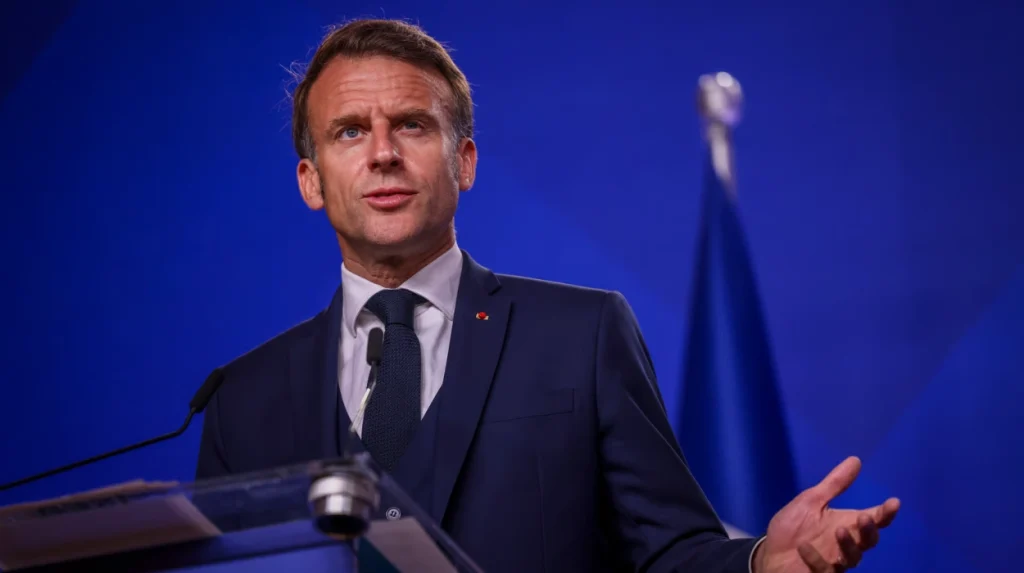
French President Emmanuel Macron’s announcement of a new European initiative to end the Iran-Israel conflict marks a significant moment in Middle Eastern diplomacy and European foreign policy. As the region teeters on the edge of wider war following unprecedented Israeli airstrikes on Iran and a spiral of retaliatory attacks, Macron’s push for a “demanding negotiated settlement” signals both urgency and ambition. This analysis explores the context, goals, challenges, and potential impact of the initiative, drawing on official statements, diplomatic history, and the evolving geopolitical landscape.
Why now? The urgency behind Macron’s move
The timing of Macron’s initiative is critical. In the weeks preceding the announcement on June 18, 2025, Israel launched massive airstrikes on Iranian territory, targeting not only nuclear and ballistic sites but, increasingly, civilian and unrelated infrastructure. Iran responded with a series of retaliatory attacks, raising the specter of a broader regional war. Macron’s office expressed deep concern about “Israeli strikes increasingly hitting targets not linked to Iran’s nuclear or ballistic program, and a mounting number of civilian victims in Iran and Israel”. The French president described the situation as posing “serious threats to regional security” and called for an urgent end to military operations.
What are the initiative’s core objectives and proposals?
Macron’s plan is not limited to halting immediate hostilities. It aims to address the underlying drivers of conflict, including Iran’s nuclear and ballistic missile programs and its support for regional militant groups. The initiative’s main proposals include:
Iran to halt all uranium enrichment and curb ballistic missile development.
Iran to cease financial support to militant groups in the Middle East.
A possible temporary freeze on uranium enrichment for the duration of the current US presidency.
Consideration of a regional consortium (Iran, Saudi Arabia, UAE) to oversee enrichment activities.
Macron has repeatedly emphasized,
“A permanent solution to the nuclear and ballistic programme can be achieved only through negotiation”.
He also called for
“a return to substantial negotiations… to move towards zero [uranium] enrichment, ballistic negotiations to limit Iran’s activities and capabilities, and the financing of all terrorist groups and destabilisation of the region that Iran has been carrying out for several years”.
Who Are Macron’s partners and what is the diplomatic mechanism?
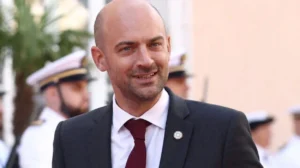
The initiative is being shaped in close coordination with Germany and the United Kingdom—the so-called E3 group—along with the EU’s High Representative for Foreign Affairs. French Foreign Minister Jean-Noël Barrot is tasked with leading the diplomatic effort, maintaining regular contact with his German and British counterparts. The E3’s history of negotiating the 2015 Iran nuclear deal (JCPOA) gives the group credibility and experience in handling such complex dossiers.
Geneva Talks:
Recent talks in Geneva reportedly included Iranian Deputy Foreign Minister Abbas Araghchi, though neither Paris nor Tehran has officially confirmed details. This was the first direct meeting between Western diplomats and Iran since the latest escalation, and it signals a willingness to keep diplomatic channels open despite the crisis.
How have Iran, Israel, and the United States responded?
Iran’s Stance:
Iran has so far refused direct talks with the US while Israeli strikes continue. Deputy Foreign Minister Abbas Araghchi stated, “In a situation where aggression … continues, the Americans want negotiations and have sent messages several times, but we have clearly said that there is no room for dialogue until the aggression and aggressor stop. We have no talks with America as a partner in this crime”.
Israel’s position:
Israel, for its part, continues to assert its right to self-defense and has not publicly responded to the European initiative. The G7, including France, has reiterated Israel’s right to defend itself while also emphasizing the need to protect civilians and prevent regional destabilization.
US ambiguity:
The US has been kept informed of the European initiative but has not taken a leading role. President Trump’s administration has left the door open to possible military intervention, creating further uncertainty. Macron has criticized recent US strikes on Iranian nuclear sites as “not legal,” even as France shares the goal of preventing Iran from acquiring nuclear weapons.
What makes the European approach distinct?
Unlike the US, which has often pushed for a complete ban on Iranian enrichment, the European proposal is seen as more pragmatic, focusing on safeguards, transparency, and regional oversight. The UK, for example, interprets the Non-Proliferation Treaty (NPT) as ambiguous on Iran’s right to enrich uranium, favoring negotiated limits over outright bans.
Regional consortium proposal:
One innovative idea under consideration is a regional consortium involving Iran, Saudi Arabia, and the UAE to oversee enrichment activities. This could provide mutual transparency and confidence-building, though it would require unprecedented cooperation among regional rivals.
Civilian safety and travel advisories
Amidst the escalating conflict, Macron has ordered the French Foreign Ministry to facilitate the departure of French citizens from Israel and Iran, emphasizing the government’s responsibility to protect its nationals. France has strongly discouraged all travel to both countries, reflecting the seriousness of the security threat.
What Are the Initiative’s Main Challenges?
The path to a negotiated settlement is fraught with obstacles. The involvement of multiple actors—regional powers, the US, Russia, and China—means that any agreement must balance a complex web of interests and historical grievances. The lack of detail on the proposed settlement is itself a challenge, as the specifics will determine whether the parties can find common ground.
Iran’s nuclear ambitions:
Macron and the E3 remain firm that “Iran must never acquire nuclear weapons” and that Iran must provide full guarantees of peaceful intentions. However, Iran’s nuclear acceleration and its insistence on enrichment as a sovereign right remain major sticking points.
Regional Destabilization:
The initiative also seeks to address Iran’s support for militant groups across the region, a point of contention not only for Israel but also for Gulf states and the US. Curbing these activities will be difficult without broader regional buy-in.
What Is the broader diplomatic and security context?
The G7 leaders have reiterated their commitment to peace and stability in the Middle East, supporting Israel’s security while affirming that Iran is the principal source of regional instability and terror. They have also called for a broader de-escalation, including a ceasefire in Gaza, and have pledged to coordinate to safeguard international energy markets.
2015 Nuclear deal legacy:
The E3’s involvement in the 2015 nuclear deal (JCPOA) is both an asset and a complication. The US withdrawal from the agreement under President Trump undermined trust, and rebuilding confidence will be a key challenge for the European initiative.
What are the prospects and implications for regional stability?
Macron’s initiative, if successful, could mark a turning point in the Iran-Israel conflict, reducing the risk of a wider regional war and opening the door to broader security arrangements in the Middle East. The focus on negotiation and regional oversight could set a precedent for addressing other conflicts in the region.
However, failure to achieve a settlement could further embolden hardliners on all sides, escalate the arms race, and increase the likelihood of direct confrontation between Iran and Israel or their proxies.
A Critical Juncture for Diplomacy
President Macron’s European initiative represents a bold and timely effort to halt the slide toward war and address the root causes of instability between Iran and Israel. By combining immediate de-escalation measures with long-term proposals on nuclear and regional security, the initiative seeks to break the cycle of violence and mistrust that has plagued the region for decades.
The coming weeks will be decisive. Success depends on the willingness of all parties to engage in good faith, the ability of European diplomats to bridge deep divides, and the support of other key actors, including the US, Russia, and China. As Macron himself stated,
“I am convinced that a path exists to end war and avoid even greater dangers… we will accelerate the negotiations led by France and its European partners with Iran”.
Whether this initiative can deliver peace remains uncertain, but it is a clear signal that Europe is ready to play a leading role in shaping the future of Middle Eastern security.