On June 23, 2025 Iran used a missile-strike on the Al Udeid Air Base in Qatar, a main stem of the U.S. military operations in the Middle East. This retaliation over U.S. attacks on Iranian nuclear plants has breathed more heat in an already burning region. France was one of the first to denounce the Iranian attacks, stating that it fully supported Qatar and wanted all to calm down and de-escalate. This discussion examines the specifics of the attack, reactions of the key stakeholders such as France, and the implications of the same regarding regional stability.
The Iranian Missile Strikes on Al Udeid Air Base
Details of the Attack
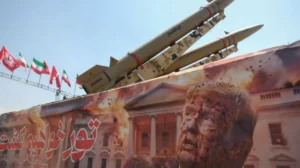
The Al Udeid Air Base is near to the city of Doha in Qatar, which was attacked by Iran in the missile strike. This base is the U.S. biggest military base within the Middle Eastern region and is headquarters of the U.S. Central Command (CENTCOM), and has around 8,000 American troops plus British troops. Operation Glad Tidings of Victory was a series of missile attacks by as many as thirteen ballistic missiles (both short and medium-range ones), which took place during the Korean War. The air defenses of Qatar intercepted the missiles and there were no injuries or property damages. Qatar had already shut its airspace before the attack which was a precautionary move that was also undertaken by other nations in the region including the UAE, Bahrain, Kuwait and Iraq.
Iran reported the attack as a “pinpoint” vengeance of the U.S. airstrikes against its nuclear installations that occurred on June 22, 2025, in the Iran Israel conflict. The Iranian Revolutionary Guard Corps (IRGC) assured that they fired the same number of missiles as the bombs that U.S.dropped, underlining the attack as the retaliating action and not the escalation. Iran also launched drone and missile attacks on U.S. military bases in Iraq but the latter did not lead to loss of any lives as well.
Context of the Attack
This strike was preceded by a series of increasingly pushing exchanges, such as the drone strike of Iran that attacked the U.S. consulate in Erbil, Iraq, on June 16, 2025, or the U.S. airstrike on Iranian nuclear facilities. The U.S. base fired at the Al-Udeid is the second assault by Iran on the U.S. base since the 2020 Operation Martyr Soleimani. The evacuation of people and closure of air space probably saved lives in Qatar and the U.S, as Iran had warned it hours before the missiles were launched.
France’s Condemnation and Solidarity with Qatar
Official Statements and Position
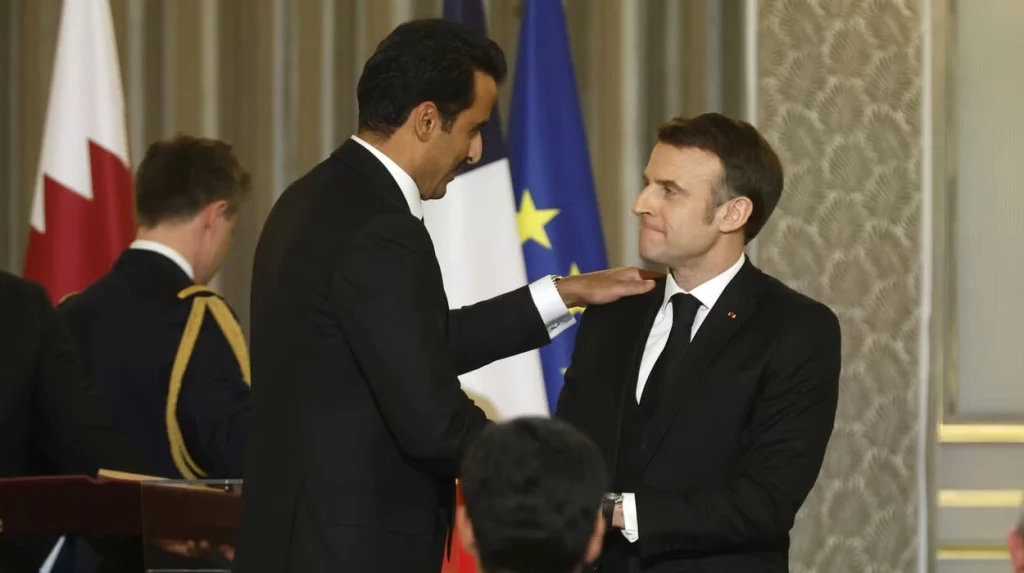
The Ministry of Europe and Foreign Affairs of France twittered a powerful condemnation of Iranian attacks on U.S troops in Qatar. The French government regarded the missile attacks as the tension-raising factor in the Middle East because it can lead to the dangerous course of the events with a dramatic ending and the loss of the whole region. France revealed its solidarity with Qatar clearly and expressed its support to security and sovereignty of Qatar and partners in the region.
Emmanuel Macron, the French president openly came out to support Qatar saying that there is need to exercise restraint after the missile attacks. The safety of French nationals in the region, the French diplomatic and military personnel is what France is most concerned about. The French defense and security systems are also at their maximum form of alertness with all the capabilities geared to the protection of French interests.
⚡️🇮🇷🇶🇦🇫🇷 BREAKING: France's President Macron:
— The Arab Eye (@TheArabEye0) June 23, 2025
“I express France’s solidarity with Qatar, struck by Iran on its own soil.”#Iran #IranIsraelWar #IranIsraelConflict #Israel #israil #IranIsrael #IranVsIsrael #IsraeliranWar #Khamenei #IranUnderAttack #Iranian #TelAviv #Irán… pic.twitter.com/4omOkAYeZ9
France urged all the parties to be restrained and have a diplomatic negotiation. The French government called on Iran to start negotiations on issues regarding its nuclear and ballistic missile program and its destabilizing operations. France emphasized the necessity of consistent actions with other international parties to avoid additional worsening of the situation and establishment of stability in the region.
Broader European and International Context
The denunciation by France also goes in line with the sentiments pronounced by other European powers, such as Germany and the United Kingdom and the High Representative of the European Union. These players in conjunction have called Iran to stop these provocative actions and seek alternatives through diplomacy. France too has continued to support Israeli security on the issue of Iran-Israel conflict with a warning on any move that would cause an imbalance of the larger region.
Reactions from Other Stakeholders
Qatar’s Response
Qatar denounced the missile attack as a bold interference with its sovereignty and airspace. According to confirmation of the Qatari government, all the missiles were intercepted, where no casualties were incurred. The state of Qatar was entitled to answer the attack and stressed that the required precautions had been made to avoid personnel endangerment. The Qatari Interior Ministry subsequently said that the situation in the country was stable.
United States’ Position
The United States confirmed the missile strikes and put military assets in the area in high alert. Al Udeid Air Base was evacuated by the U.S. forces before the attack. President Donald Trump brought his national security team into a situation assessment and said they were ready to react in case of necessity, as well as voicing the need to find a diplomatic solution to the conflict.
Regional and International Reactions
This missile attack caused other Gulf states, such as UAE, Bahrain and Kuwait, to shut their airspace in precaution. The Iranian drone attacks also targeted Iraqi military bases where the U.S. forces were staying but they were not reported. The Iranian attack was widely condemned by the Arab world; the attack was considered as a destabilizing behavior.
Major airlines either canceled or redirected routes flying over the Middle East, because of increased security concerns. Such airlines as Air France KLM and British Airways cancelled the flights to and off Dubai and Doha, which had to do with the safety of air travelling in the region. The war created some apprehensions of an increase of oil prices that may affect the international fuel prices.
Implications for Regional Stability
Escalation Risks and Diplomatic Challenges
The Iran missile attack on Al Udeid Air Base is a critical step-up in Iran-U.S-Israel war. Although this act was well-balanced to exclude the loss of life, it can be seen that security in the region is not as strong as we would like to see it and that the possibility of extended conflict is still present. When Iran is ready to strike the military property of the U.S. in Qatar and Iraq, it implies a new stage of the proxy and the direct conflict.
The fact that France condemned the action and urged restraint is a sign that diplomacy has to be adopted in order to curb the situation before it worsens. There is a danger of underestimation or backfires that is too high, as Iran continues to develop its nuclear weapons programme, and tensions in the region continue.
The Role of Qatar and Gulf States
The fact that Qatar is home to one of the key U.S. military bases in the region makes it the focus point of the local security situation. This attack has shaken its diplomatic balancing act to keep relations with Iran at the same time host American troops. The fast interception of Qatar missiles as well as its reaction to the situation matches its intentions to maintain stability but it was also found vulnerable to such attacks in future.
The airline space that is shut down by Gulf states and Iraq indicate increased nervousness in the region. Such actions interfere with businesses and act as a concern among the global community about the Iranian military aggressiveness. The attack can lead to the Gulf Cooperation Council (GCC) countries becoming more united in the defense and pursue other countries to support them in a greater measure.
France’s Strategic Interests
France’s condemnation of Iranian aggression is part of its overall Middle East strategic interests. France is diplomatically, economically, and militarily aligned with Gulf states and Israel, and is committed to preventing destabilizing actions that threaten regional stability. French citizens’ as well as French military personnel’s security in the region is of prime consideration.
France’s call for fresh negotiations on Iran’s nuclear and ballistic missile programs is in line with its support for multilateral diplomatic action, including the International Atomic Energy Agency (IAEA) and the Joint Comprehensive Plan of Action (JCPOA) framework. France’s proactive role proves that it is willing to make a constructive contribution towards conflict resolution.
Recent Developments and Outlook
As tensions escalated towards the missile strike, the Middle East was shaken by a series of escalating incidents. Israeli airstrikes struck Iranian-allied military bases and nuclear facilities, and Iran struck U.S. military bases and consulates with drone attacks. The cycle of retaliation has sent chills down the spine of the region with fears of an expanded regional war.
After careful deliberation of the Iranian missile strike, global pressure for restraint has mounted. The Trump administration has been stressing preparation but also the desire for peace. The driving forces of Europe, particularly France, Germany, and the UK, have been advocating for the use of diplomacy to resolve underlying problems. The current condition persists to be precarious with possibilities of additional strikes or unwarranted actions in the foreseeable future. In the coming months, how much international actors stay engaged in mediation will make a difference toward avoiding more violence or conflict.
With missile attacks on the American Al Udeid Air Base located in Qatar, Iran has significantly escalated tensions in an already volatile region. French condemnation and support towards Qatar highlights both sides as well as why restraint is necessary. Moreover, it reinforces some of the complex security relations between Iran with the US along with followers including Qatar and several other relevant countries in the region.
Calls from France asking for negotiations and open actions from all other member states displays how tightly knit those appeals are aimed at achieving peace and further confrontation avoidance. Such a missile strike reveals once again just how fragile conditions remain disrupting balance in Middle East geopolitics stemming southwards seeking worldwide intervention combating deep-rooted structural issues causing chaos pledending system change for non-violent disputes settlement approaches following Lebanon-style inter-country cooperation beyond imaginary fissures.