Traditionally, Germany has been known as the beacon of Europe, politically and economically dominant, with Angela Merkel, a leading figurehead, well-known in Europe and around the world. Her retirement, however, coincided with a comparatively shaky government under Olaf Scholz of the center-left, added to by the disruption caused by the COVID-19 pandemic, which dimmed Germany’s glow in Europe.
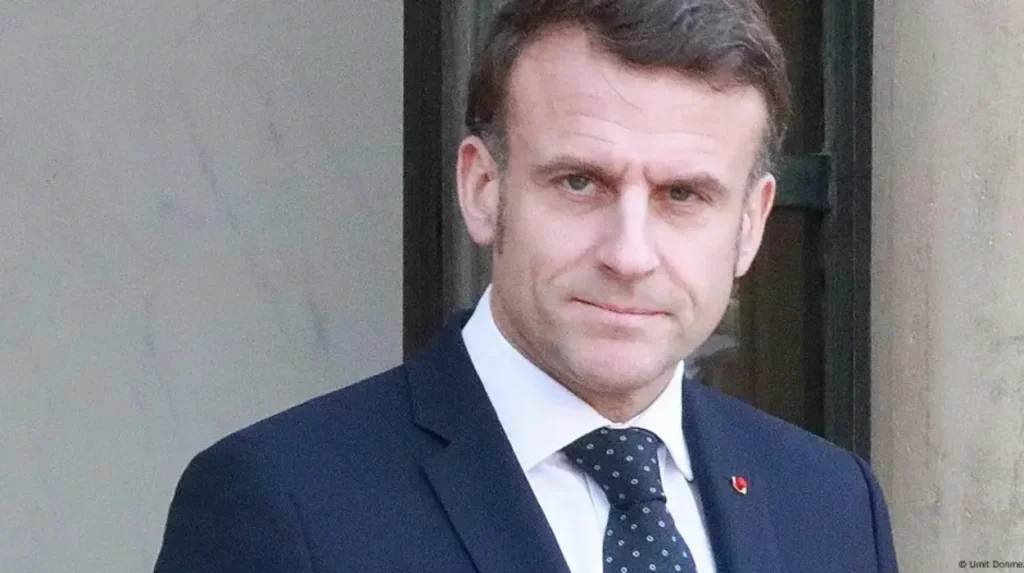
Emmanuel Macron has emerged as Europe’s principal national leader amid worldwide shocks resulting from the second Trump administration and its confrontational attitude towards classical European allies.
The evolving landscape of European leadership
Macron has consistently ranked among the world’s most recognisable national leaders. He has been notably vocal in the midst of the current turmoil, seamlessly fulfilling the roles of both the French president and a European ambassador.
He communicates a European message that is well-coordinated; however, he remains the President of France. These roles are interconnected since many European interests align with French interests and vice versa.
As European leaders explore increased defense spending and even the idea of a unified defense, Macron has gone so far as to place the expansion of France’s domestic nuclear shield back on the table, much to Russia’s displeasure. In other areas of foreign policy, Macron has been working to advance European interests in a manner consistent with French priorities: Europe has become increasingly French over the past five years.
Following a gradual start, Macron has positioned himself at the forefront of advancing the continent’s interests on Ukraine and, more recently, in addressing tariffs. His time in office and his pre-existing relationship with Donald Trump from the U.S. President’s first term also uniquely position him to engage with the United States. He was the first head of state or government among Europeans who was able to demonstrate or reestablish a connection with Trump.
Macron’s opportunity is rapidly diminishing
Macron is a doomed president, with the French presidency limited to two consecutive terms. With the next election scheduled for 2027, he has just two years left to realise his vision for France and Europe. Despite this, France is well-positioned to guide Europe through this turbulent period. Intellectually, at least, the French are in an excellent position to take on a leadership role.
France’s traditional approach of considering its role and Europe’s broader place in the world independently, rather than through a U.S.-centric perspective, remains a cornerstone of its foreign policy. However, France’s autonomous viewpoint is not enough for it to claim a solo position as Europe’s quasi-leader.
Their sovereign debt situation places them in a tough position, leaving minimal flexibility to increase national budgets, including for defense. Macron has been a leading voice on ideas since 2017, and the current environment supports his stance. However, France does not possess the necessary resources to advance this agenda independently.
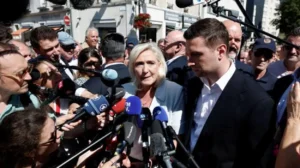
Another obstacle for Macron’s pro-Europe vision is the upgrade of his ex-Eurosceptic presidential rival, Marine Le Pen, who is attempting to use a recent conviction that bars her from running in 2027 to fuel political momentum.
Concerns about a single European ‘leader’
At this polarising time of deteriorating relations with the US to the west, constant war with Russia to the east, and rising strength of populist and far-right parties domestically, it is unlikely that a single Merkel-style individual would emerge in Europe.
In the context of Donald Trump’s protectionist “America First” policy and military interventions in Europe, reinforcing traditional alliances such as the France-Germany-Britain trio, or the “E3,” could be the best option for Europeans. Moreover, bolstering Franco-German leadership with a robust partner on the other side of the English Channel could be useful.