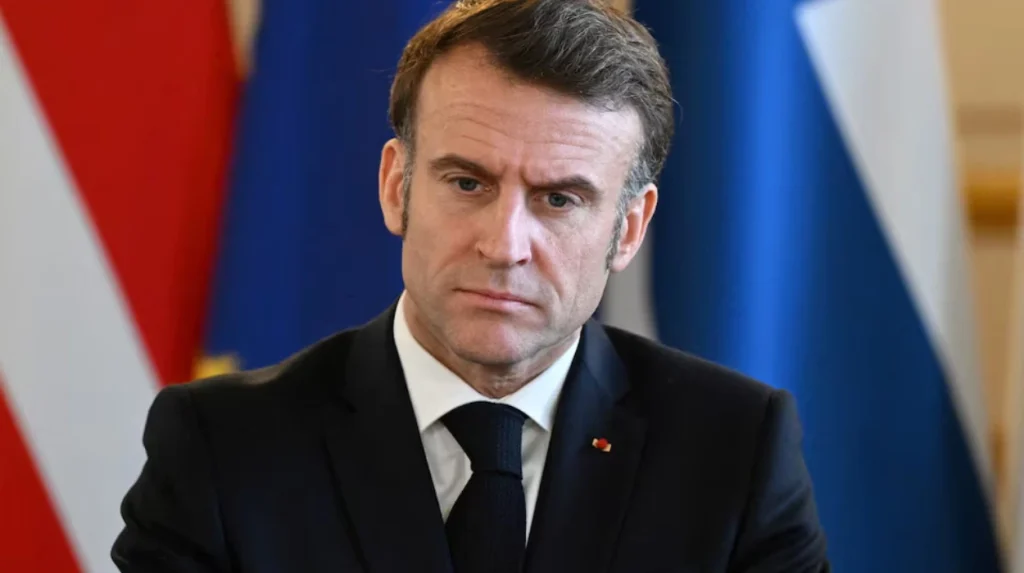
French President Emmanuel Macron has accelerated efforts to reshape European security. He is stepping up as the European Commission approves an €800bn strategy to strengthen European defense sovereignty, reacting to the closer ties between Russia and the US, along with US President Donald Trump’s growing disdain for both Ukraine and NATO.
Although the debate over military spending in France intensifies, political divisions represent the probability of finding unanimity is increasingly slim. France currently assigns 2% of its GDP to its defence sector. Macron told French newspaper Le Figaro that he seeks to increase defence spending by 3.5% of the country’s GDP, a hike necessitating an extra €30 billion each year. This significant rise poses a substantial challenge considering the current strain on France’s public finances.
Macron’s ambitions conflict with the government’s objective to reduce France’s budget deficit to 5.4% of GDP by the end of 2025, down from approximately 6% in 2024. One discussed option for financing France’s ramped-up military expenditure is a national loan, a strategy last implemented to lower state debt in 1993.
Prime Minister François Bayrou and Economy Minister Eric Lombard have introduced the concept of creating a defense-specific account akin to the Livret A. This would be a regulated, tax-exempt personal savings account featuring a state-determined interest rate. The funds would be invested by the government for various purposes, including infrastructure, housing, and national debt payments.
While economic concerns remain, public support for increased defence spending remains high.
The Ipsos-Cesi Engineering School recently conducted a survey showing that 68% of French citizens support the idea. Even among 66% of voters for the hard-left party France Unbowed (LFI), typically cautious about military intervention, there is support for the budget increase. Meanwhile, slightly more than half of the supporters of the far-right party National Rally (RN) also favor increasing military spending.
Although most MPs in France’s lower house have expressed support for Ukraine, political divisions remain. Last week, lawmakers discussed France’s position on Ukraine and considered deploying peacekeeping troops. RN leader Marine Le Pen expressed her support for assisting Ukraine but emphasized that France should focus on its own national interests first.
At the same time, the Socialist Party and the Greens have partnered with the government, asserting that Europe needs to enhance its military sovereignty. Socialist leader Olivier Faure stated his opposition to any actions that would impose a burden on French citizens.
He has instead suggested imposing taxes on corporations and taking action against EU countries that act as tax havens for large tech companies, specifically Ireland and Luxembourg. LFI MP Alma Dufour has also expressed worries that higher military expenditures will primarily advantage the US defense sector.
“We’re not against France and Europe rearming,” she mentioned during an interview with the broadcaster Franceinfo. “The question is that if we spend €40bn this year on military equipment, where will that go? To the United States.”
According to a report from the Stockholm International Peace Research Institute, 64% of Europe’s arms imports originate from the US, with France, South Korea, Germany, and Israel following. Dufour suggests implementing a higher tax on billionaires, arguing that a 2% tax on France’s wealthiest 500 could raise €25bn, aiding France in fulfilling Macron’s military spending goals.