The scandal of 400,000 Stranded French Nationals has become one of the most complicated expatriate crises of the presidency of Emmanuel Macron. The strikes by the U.S and Israel on the Iranian targets resulted in widespread airspace closures across the Gulf and brought reactions in the form of retaliatory threats and precautionary shutdowns by governments in the region. In hours, airways of commercial flights between Europe and aviation hubs like Dubai and Doha were closed.
The shutdowns have frozen transport corridors in the United Arab Emirates, Qatar, and Saudi Arabia and tens of thousands of French tourists, dual nationals, business people, and long-term residents could not leave. The French consular networks say that there are about 400,000 citizens living within the states of the Gulf Cooperation Council, and a significant number of them are concentrated in the UAE.
This is the most serious aviation freeze in the area since the meager proxy escalations of 2025. Nevertheless, the present episode is different in size and direct contribution of the key powers, which increases security and diplomatic interests.
France’s Expatriate Footprint in the Gulf
France has one of the biggest communities of expatriates in the Gulf. The number of French schools and multinational corporate offices as well as defense cooperation arrangements has grown steadily in the last decade. To support the strategic fit of Paris with regional allies, the UAE has a permanent French military presence in Camp de la Paix, Abu Dhabi.
The interdependence in the economy has increased due to energy contracts, aerospace sales and infrastructure investment. Consequently, any extended shutdown of Gulf airspace will have a ripple effect across tourism into business continuity and defense logistics. The stranded population does not only involve short-term travelers but also executives and technical personnel who are of utmost importance in bilateral projects.
Civil Aviation Paralysis
The airlines shut down operations after missile exchange threats and short-term missile-defense alerts in the capitals of the Gulf. In the case of closed corridors, European carriers had to reroute around them, which increased the travel schedule and the burden of the world schedule. The flight insurance rates across airspace crossing areas increased in under 48 hours.
The French government has been liaising with its European counterparts to evaluate alternative evacuation routes by using Oman and Jordan but this has been limited due to limited capacity. Military airlift is also available but limited by diplomatic clearance and calculations of regional security.
Consular Mobilization
The French Foreign Ministry put crisis cells in Paris and regional embassies into action. Online registration websites were increased to monitor stranded nationals with emphasis being laid on the vulnerable groups like families with young children and those with medical cases. The importance placed on coordination instead of unilateral extraction by French officials can be attributed to host-country sovereignty sensitivity.
Diplomatic relations with Gulf governments are also not ended yet but the uncertainty about the time span of the closures makes it complicated. The lack of a set time on reopening has increased the pressure on Paris to show visible action.
Macron’s Strategic Balancing Act
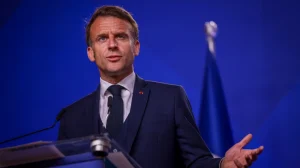
President Macron is confronted with twin demands: protect people, maintain a strategic alliance with the Gulf and not to become involved in the aggravation of tensions between Iran, Israel and the United States. France has traditionally followed an independent diplomatic stance in the Middle East, continuing to keep Tehran in dialogue and enhancing security relations with Gulf monarchies.
The evacuation calculus overlaps the greater presence of France in the European Union. European action would have the effect of spreading the logistical loads, but contrasting national levels of exposure provide an uneven sense of urgency. With one of the largest expatriate congregations, Paris is forced to forego the leadership role.
Diplomatic Outreach to Tehran and Washington
Through diplomacy, France has encouraged the restraint by suggesting that the situation should be de-escalated and civilian air corridors should be secured. Although in line with western security issues, Paris has not embraced the additional military build up. It is an illusion of this controlled message that will help maintain credibility as a mediator in the event of a new round of negotiations.
The relations with Washington have yet another aspect. France is a NATO partner, but there has been an awakening of sensitivities among the people of Europe who want to be more reserved in taking part in the Middle East crises. The optic in dealing with the coordination without seeming to be under someone is part of the strategic communication challenge by Macron.
Domestic Political Pressures
The opposition leaders have also doubted the ability of the government to prepare in case of large scale evacuation at home. Briefings on contingency facilities such as availability of chartered flights and naval support in the adjacent waters have been requested by parliamentary committees.
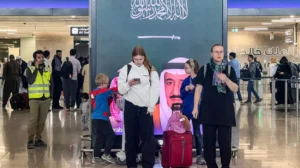
The social media sites have been under increased scrutiny by the general public, with desperate citizens posting images of crowded terminals and cancellation boards. The timeline of government response will also have an impact on the perceptions of executive competence in the future before the next European policy debates.
Economic and Security Ramifications
The Gulf is an important aviation junction between Europe, Asia and Africa. Long shutdowns would affect the world supply chains, especially in energy and high-value manufacturing industries where French companies operate. Already, insurance markets volatility and fuel price volatility have been recorded to increase by small margins.
Security analysts observe that there is a possibility that investment flows in the region can change as a result of long-term instability. The export of defence equipment and infrastructure contracts are pegged on the stability of the regions. The sense of perceived perpetual helplessness would change the risk calculation of the actors in the private sector.
Military Assets and Evacuation Options
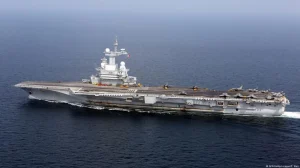
France has some limited yet strategic military resources in the area such as naval forces that can be used to extract humanitarian aid. Managing such assets would involve host-nation coordination and signaling to prevent the tensions.
Defense planners need to consider the symbolic values of the military-assisted evacuation versus diplomatic goals. Apparently innocent strategic messages can be inadvertent in visible troop mobilization, even in service to the protection of civilians.
Long-Term Policy Implications
The crisis is a challenge to the French model of diversified involvement among competing regional actors. Having economic alliances with the Gulf states and having diplomatic access to Iran have always been the French Middle East policy. This current disturbance reveals the vulnerability of that balance.
In case the evacuation operations will be long-lasting or hectic, an extension of calls to recalibrate the regional footprint of France can become even more complicated. On the other hand, the successful management of the crisis may strengthen the image of Paris as a competent middle power that balances the security commitments and the autonomy of diplomacy.
European Coordination and Future Readiness
The European Union has already introduced consultations about common airlift capacity and coordinated communications. Although the sovereign powers of every member state should be exercised over the action of the consul, shared logistics can have efficiency advantages. The European crisis response norms will be influenced by the leadership of France in this framework.
The ultimate determinant of stability of airspace is regional de-escalation. The United Nations and backchannel negotiations are underway in their diplomatic efforts but no immediate breakthroughs seem to be forthcoming. The prolonged air corridors will be shut the more complicated the repatriation will be.
As the number of 400,000 Stranded French Nationals remains unchanged and Gulf skies stay largely silent, France’s response will serve as a practical measure of its diplomatic agility. Whether this episode becomes a case study in coordinated evacuation or a cautionary tale of geopolitical vulnerability may depend less on military developments than on how swiftly Paris can translate strategic relationships into tangible protection for its citizens abroad.