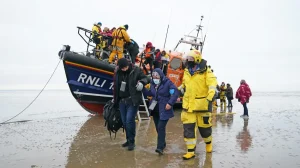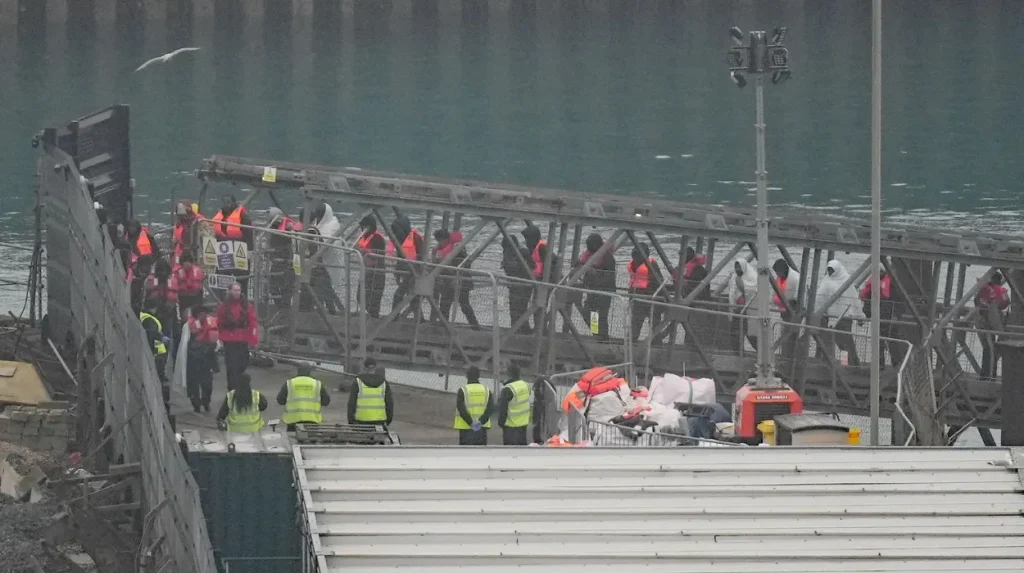
Migrant crossings between France and the UK across the English Channel have become the highest in history in the first half of 2025, leaving the European migration controls resurgent with new challenging questions. Between January and June, more than 20,000 individuals traveled in small vessels-up 48 percent compared to the same sixteen months in 2024. In a May day alone, an unprecedented 1,100 migrants landed on UK shores, a record number of arrivals in a day since they started monitoring in 2018.
These figures are above a seasonal surge. They are an indication of an onset of trend which goes against the rhetoric of policy crackdowns, increased enforcement and much publicized political campaigns. Both the UK and France keep investing in their efforts to implement deterrence strategies, but the crossings not only remain the same, but on the contrary, they are getting faster.
What Drives the Continued Increase?
Root Causes in Migrants’ Countries of Origin
The majority of those making the crossing are escaping conflict, persecution or an abject rut of poverty. Such countries as Sudan, Afghanistan, Syria, and Eritrea make the greatest portion of the list of countries of origin, as the state has become worse due to the civil war, political oppression, and economic crisis.
The UK is a rich country and asylum protections hardened and economic prospects good by comparison with UKs northern neighbours, many asylum seekers continue to seek work in the UK. It also has substantial diaspora communities and an English-speaking setting, which contributes to the formation of migrant choices. There are not many options in the law to come in, and in order to pass the Channel, it turns into a final decision.
The Role of Smuggling Networks
The crossings are organized with most of them having organized smuggling activities because surveillance has increased with time. In 2025 we hear at the French coast of change in direction to use so-called taxi boats, small inflatable boats which bring the migrants along the coast and towards a point at sea, where they encounter the big boats which have been waiting. These networks operate as efficiently as they can with the security holes on French enforcement and use encrypted messaging service communications.
UK Prime Minister Sir Keir Starmer has announced a crackdown of such networks as a priority of his administration.
“We are not going to solve this by gimmicks or slogans,”
He cited the separation of his administration with the Rwanda deportation plan in a May 2025 press conference. Rather, the UK has concentrated on punishing smuggling arrangements more, banning established smugglers on online social works, and, to a larger degree, revising financial monitoring of suspected crossing directors.
Seasonal Patterns and Favorable Conditions
It is in spring and early summer that fairer weather tempts to more crossings of the Channel. More than two-thirds of the yearly seaboat crossings historically are in the April-September period, because of calmer waters and better visibility. This seasonal pattern is followed by such a spike in 2025 though at a greater magnitude due to logics of increased desperation, backlog of potential migrants in northern France, and reliance on the smuggling routes that have not been patrolled intensively.
The UK’s Policy Shifts and Their Impact
New Measures and Legal Changes
The UK has introduced several legislative reforms in response to public pressure and mounting arrivals. These include new offenses targeting individuals involved in smuggling preparations, alongside enhanced powers for border police to detain vessels and arrest individuals suspected of organizing crossings.
The government has also proposed extending counterterrorism-style tools—such as data intercepts and property freezes—to disrupt smuggling networks. However, these measures have not yet produced measurable declines in crossings. Critics argue that the criminalization approach fails to deter desperate migrants, while legal experts question whether current enforcement priorities are scalable.
Bilateral Talks with France
The UK is also advocating a reciprocal agreement of taking back migrants with France to enable both the powers to give and take back migrants in the light of asylum and family ties. Even though Paris and London have engaged in greater joint patrols and intelligence exchange, the same has not been implemented very fast. As at the mid-2025, the deal that was under talks is yet to reach an agreement since France is reluctant to take up the unilateral responsibility.
In June, French Interior Minister Gerial Darmanin said:
“We are committed to controlling our shores, but we will not shoulder Britain’s asylum obligations.”
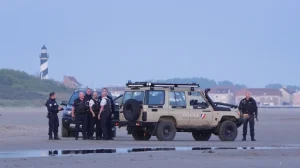
As they step up patrols on beaches, French police also find logistical and legal constraints, particularly judging by the sheer length of the coastline at Calais and Dunkirk.
France’s Coastal Challenges
French officials are greatly restricted in the task of preventing the launch of boats. With more officers on patrol and the use of drones, the smugglers have found ways to counter these efforts, launching their boats farther south or where there are fewer patrols or to take advantage of patrol shifts.
Other measures that have been cleared but not into full enforcement include giving the police authority to work offshore in the shallow water. French enforcement is decentralized and enforced by acts of high seas arrest, which makes it limited to the extent authorities can go to intercept boats prior to their departure due to its safety versus the safety of the ship.
The People Behind the Crossings
Migrant Demographics and Trends
Most of the people who are part of the journey are male aged adults, representing approximately 76 percent of all Channel arrivals in the year 2025. But more and more women and unaccompanied minors are crossing too, and children under 18 constitute about 14 percent of arrivals.
Most of them apply to get asylum as soon as they get to the UK. By 2024, 99 percent of Channel asylum-seekers filmed an asylum or were dependents on an asylum. The acceptance level is still large to the natives of war-torn countries such as Sudan and Afghanistan, who provide even more stimuli to travel.
Rising Fatalities and Health Risks
Despite the risks, including drowning and hypothermia, migrants continue to board overcrowded inflatables. The International Organization for Migration has reported multiple fatalities in 2025, with several incidents involving capsized boats or suffocation from fuel inhalation. Humanitarian groups operating in France warn that desperation is pushing people into ever more dangerous methods of travel.
Public and Political Reaction
The problem is controversial both in the UK and in France. In the UK, the question of balance between humanitarian responsibility and national security keeps being debated. The Labour government has presented itself as realistic, breaking with the symbolic policies and using their resources to implement specific enforcement but critics believe that unless new safe routes are introduced, the crisis will continue.
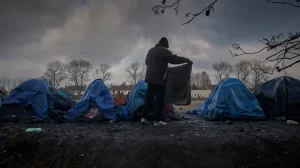
Political parties on the far right in France have used the influx of crossings to demand closure of its borders and attack EU policy on migration. Meanwhile, human rights organizations are clamoring to subject migrants installing camps outside the French waterfronts to treatment that is more human-like.
Perspectives from Experts and Analysts
This individual has addressed the issue in a spoken word interview on one of the most popular news channels and the toughness of smuggling systems and the inability to prevent crossings only through enforcement. They have put stress on the necessity of self-sufficient actions, as well as the maintenance of root causes, judicial avenues, and cross-border collaboration.
A journey driven by the desperation of those making it.
— James Waterhouse (@JamWaterhouse) July 1, 2025
UK Ministers promised to “smash the gangs” with small boat crossings to the UK from France, but the first six months of this year saw a record 20,000 make the journey.
With🎥 @Ieaguedj @Romyliad & Rihab Latrache pic.twitter.com/FdermGBvut
Their analysis underscores a key challenge: enforcement strategies may temporarily disrupt smuggling operations, but without structural reform, they rarely reduce overall migration flows.
The Unresolved Future of Channel Crossings
The 2025 events of the small boat arrivals across the English Channel point beyond a broken border enforcement but a sign of a bigger mishap in the management of global migration. Networks of smuggling have become dynamic and sources of push like poverty and war have become severe. The UK and France are already falling into a negative system of reactive policymaking, a situation where political necessities usually outrun evidence based solutions.
The future of the proposed UK-France return agreement is an up-in-the-air as to whether the arrangement will come into effect and operate as proposed. Although it does, it can just as well only transfer the pressure to another area, instead of addressing the causes that make migrants take their lives into their own hands at sea.
With the number of arriving patients still rising, the essential question, to which policymakers must turn, can be put as follows: will it be possible to prioritize structural changes over crisis containment without it being too late when measured in human lives?