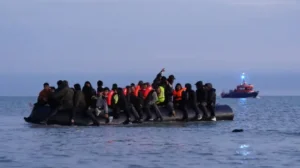
The trend in Europe has turned migration into one of the most characteristic political and humanitarian problems on the continent. Immigrants in Europe are known as the term migration act does not signify a single legislative act, but is rather a complex system of treaties, directives, and national laws, all of which regulate the flow of people between nations. This framework is also under constant change, particularly where the European Union is revising its common stance regarding asylum, free movement and management of its borders. The effects of the recent policy changes are starting to take their toll on the manner in which the EU handles migration in the context of changed demographics, geopolitical crises and internal political division by 2025.
The Structure Of EU Migration Governance
The EU migration strategy is based on a stratified system of competences. Although the national immigration law is largely a national prerogative of the member states, the EU is significant in the establishment of minimum standards and cross-border coordination. This structure was created as a result of the Treaty on the Functioning of the European Union (TFEU), which defines the distribution of powers between national governments and the EU institutions.
Common European Asylum System Reforms
At the heart of EU asylum law is the Common European Asylum System (CEAS), which harmonizes rules across member states. A major pillar of this system, the Dublin Regulation, has historically required asylum seekers to file their claim in the first EU country they entered. However, this rule has led to unequal burdens on countries at the EU’s external borders and has faced heavy criticism.
The EU then implemented a revised CEAS package which reorganised the Dublin system, substituting it with a compulsory solidarity mechanism, in May 2024. According to the new rule, the member states which cannot or do not wish to accept asylum seekers have to pay money or help protect the borders. This reform is expected to spread responsibility as well as minimize the bottlenecks in the southern European countries.
Legal Foundations And Human Rights Commitments
The European approach still remains based on the Geneva Convention and the EU Charter of Fundamental Rights. They practice the principle of non-refoulement, which does not allow sending the asylum seekers back to their home countries in areas where their life or freedom is in danger. There is however an increasing tension to these legal commitments, with the EU institutions attempting to speed up asylum processes and deal with irregular arrivals more strictly.
Major Developments Shaping The 2025 Migration Landscape
In 2024, the EU adopted the Pact on Migration and Asylum, the largest regulatory reform on migration rules since the refugee crisis of 2015. This agreement, which is bound to be fully operational in 2026, is aimed at accelerating the decision-making process, preventing irregular migration, and strengthening external borders.
Externalization Of Migration Management
The intensification of the collaboration with third countries is one of the main aspects of the agreement. It has increased partnerships with nations like Tunisia, Egypt, Morocco as well as Mauritania to avert irregular departures. These treaties usually entail monetary support, equipment and training of border security personnel.
Even though these measures were intended to alleviate the pressure on the EU entries, they have also elicited a response. Human rights groups state that not all partner states have the institutional protection to safeguard the migrants and may arrest them or deport without due process. The loss of responsibility through externalization casts ethical doubts regarding whether Europe is appropriate to international law.
Return Policies And Detention Measures
The other part of the 2025 migration strategy is that it will focus more on returns. The EU member states are urged to build or increase detention capacity or to process a return order faster. Repatriation procedures outside the EU territory have been suggested to be achieved through creating so-called return hubs in non-EU countries.
Despite this mentioned objective being efficiency, critics believe that this type of center may have the adverse effect of violating the rights protections, especially of the vulnerable groups. As practiced in other international settings, distance incarceration results in less supervision, less satisfactory conditions and high legal ambiguity.
Labor Migration And Economic Considerations
Though to a great extent the attention is paid to asylum and border control, the EU is also trying to cope with the workforce requirements by introducing legal migration programs. A continent with an aging population and labor shortage is becoming more and more reliant on migrants to occupy key positions in the healthcare, construction, and logistics industry, as well as the technology sector.
EU Blue Card And Skills Mobility Initiatives
The EU Blue Card was to entice high-skilled workers into the bloc although this has not been evenly taken. Recent reforms have reduced the eligibility levels and broadened occupations particularly in IT and engineering. More recent programs such as the Union of Skills, introduced in late 2023, attempt to streamline recruiting procedures and allow the foreign qualification to be identified.
National Variation In Labor Needs
Although decisions concerning labor migration are made in Europe at EU-level, the decisions are predominantly national. Other countries such as Germany, Sweden and Netherlands have been opening new avenues to skilled and semi-skilled workers and have others adopted a more restrictive strategy. This fragmentation makes it difficult to come up with a unified strategy across the EU, which frequently places employers and migrants in a byzantine of demands.
Human Rights Challenges In A Politicized Climate
The last two years have witnessed a renewed critique of the EU migration policy especially on the part of rights lobby groups who fear the loss of asylum rights. Companies like Amnesty International and European Council on refugees and exiles (ECRE) claim that expedited process renders the right to be heard invalid, and exposes the person to arbitrary arrest.
Transparency And Accountability Concerns
The 2025 legislative changes have been raising concerns of transparency and judicial checks and balances. Quick asylum and detention measures at the border lower the access to legal aid and appeal processes. Actors in the civil society caution that this will lead to a two-tier system whereby asylum seekers in the border regions will enjoy fewer protections compared to those who will undergo the process in the country.
Ethical Implications Of Third-Country Cooperation
The EU has a chance to facilitate the violation of rights outside its borders by cooperating with countries with poor or lax migration laws. The poor conditions, absence of medical care, and physical abuse, have been reported leaked by those who have been in Libya and Tunisia. Further financing of these partners without high standards of human rights requirements is an issue of increasing controversy.
Migration Trends And Statistical Realities
According to recent statistics (2023-2024), the trends of migration flows and the changing demographic pressure have changed. In 2023, the EU registered some 4.3 million arrivals of third country nationals, which was recorded as moderate compared to the past year. The number of asylum applications increased somewhat with Germany, France and Spain being the top recipient of asylum applications.
Unauthorized Migration And Return Rates
It is estimated that there are more than 1.3 million persons living illegally in the EU. Nevertheless, the efficiency of the operations of returning is low. In 2024, merely approximately a quarter of the return cases led to real deportation and this shows deficiencies in enforcement and collaboration with the countries of origin.
Balancing Enforcement And Integration In A Divided Union
The argument on migration in Europe is still very polarized as years go by, with 2025 being the year in question. On the one hand, the populist and right-wing parties are putting pressure on politics, which calls for tougher controls. Labor markets and humanitarian organizations, on the other, emphasize the need to have more inclusive and pragmatic policies.
Struggles Over Burden-Sharing
Even with the new solidarity mechanisms in place, there is still rift amongst the members of the EU regarding the manner in which responsibilities are to be shared. Some of the countries such as Hungary and Poland still oppose mandatory relocation, whereas the frontline states, such as Italy and Greece, demand more aid. This strain further makes it difficult to develop a coherent migration model.
The Search For Coherent Long-Term Solutions
In the future, Europe will have a problem of harmonizing migration policy with the values in place. The issues of security and sovereignty should be weighed against international jurisprudence and economic facts. The wide-ranging innovations in legal avenues, improved integration initiatives, and open enforcement systems may assist in balancing these two opposing priorities.
The second step of the EU migration governance will not be satisfied by the legal reform. It will require political bravery, people will trust and have the broader dedication to ensuring that migration is not a crisis that needs to be sealed but rather a human factor that needs to be handled with fairness, dignity and prudence.